
Summary
- atNorth plans to invest about €2bn in the 28.6 hectare FIN05 development in Salo.
- The first phase has 75MW of secured power and 60MW of planned IT capacity, while the wider campus has a stated path to 230MW gross power and 160MW IT capacity.
- Power availability for the first phase is planned for Q3 2028, with a Fingrid connection, power purchase agreements and heat reuse under consideration.
atNorth has announced plans for a new data centre campus in Salo, Finland, with power secured for a 75MW first phase and a stated route to as much as 230MW of gross campus power capacity.
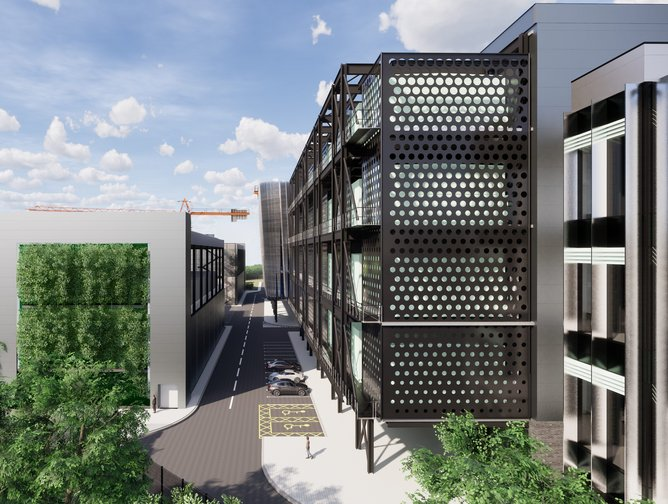
The Nordic operator expects to invest about €2bn in FIN05, which will occupy a 28.6-hectare site in southern Finland. atNorth’s dedicated project page separates the eventual campus figures from the initial build: it lists 230MW of gross power capacity, up to 160MW of IT capacity and 60MW of IT capacity in the first phase, with power availability for that phase planned for the third quarter of 2028.
Those distinctions put the development at a more defined stage than a project described only through a headline megawatt figure. The 75MW first phase is the capacity for which atNorth says power is secured, while the 230MW figure describes the wider campus path rather than an already connected or commissioned load.
FIN05 is planned to connect through a Fingrid substation. That gives the project a defined route into Finland’s transmission system, but delivery of the wider campus will still depend on the additional electrical infrastructure, construction programme and customer demand needed to move from the first phase towards the eventual 230MW envelope.
Power delivery shapes the development sequence
Finland has attracted large data centre proposals partly because of its power system, cool climate and access to low-carbon electricity, yet rapid growth is increasing pressure on the connection process. New computing loads can reach hundreds of megawatts, so the difference between land ownership, a connection application, reserved power and an energised site has become central to project assessment.
atNorth says it intends to use long-term power purchase agreements with local energy suppliers and is exploring flexibility arrangements that could support the transmission system. The company has not published the detailed operating design for those arrangements, so the amount of load that could participate in flexibility services should not be assumed from the campus capacity alone.
Large computing facilities generally need firm power for occupied halls, while any flexibility has to come from equipment and operating practices capable of changing their demand without interrupting contracted workloads. Batteries, staged commissioning and controllable supporting systems can all contribute, but the workable combination depends on the final electrical design and the customers occupying the site.
Salo also broadens atNorth’s southern Finnish footprint. The site lies around 1.5 hours from Helsinki and about 40 minutes from Turku, while the operator publishes one-way latency estimates of 9ms to Frankfurt, 9.4ms to London and Amsterdam and 11.2ms to Paris. Those figures support the site’s positioning for workloads that need Nordic power economics without becoming isolated from major European network hubs.
Heat reuse will depend on local demand
Heat recovery is built into atNorth’s development narrative for FIN05, with the company saying it will work with local stakeholders to identify potential uses for surplus heat. The operator has already deployed heat reuse elsewhere in the Nordic region, including a project at FIN02 in Espoo that supplies recovered heat to a neighbouring Kesko supermarket.
A similar arrangement in Salo would still require a heat user, distribution infrastructure and temperatures that suit the receiving system. A data centre produces heat continuously once IT load is established, whereas local heating demand can vary by season and by time of day. The amount of recoverable heat also rises as the site fills, so an export scheme has to accommodate the customer ramp as well as the final design load.
The project therefore combines several elements that are already defined with others that remain conditional. The site has been announced, the first 75MW of power is described as secured, the Fingrid connection route has been identified and the first 60MW of IT capacity has a Q3 2028 power target. The larger 230MW gross campus capacity and 160MW IT potential remain later development stages.
That phasing is commercially important because it separates an investable first build from the much larger number associated with the completed campus. Customers and suppliers can plan around the initial phase while atNorth works through the further power, construction and contracting needed to expand beyond it.
If those later stages proceed, FIN05 would add another large load to a Finnish market that is increasingly forcing data centre developers to coordinate transmission planning, energy procurement and local heat infrastructure from the beginning of the project. The Salo plan is consequently as much an electricity and infrastructure programme as a building development, with the pace of expansion set by how quickly each of those systems can be delivered together.

