
Summary
- A special parliamentary session on 25 November examined the proposed Nickelsdorf development.
- Opposition politicians have questioned electricity availability and proposed a more distributed infrastructure strategy.
- Regional development conditions address cooling water consumption, land sealing, and ecological protection.
Austria’s Burgenland regional parliament has scrutinised plans for a large data centre at Nickelsdorf, with political representatives divided over the availability of electricity infrastructure and the conditions under which the development could proceed.
The special parliamentary session on 25 November followed a request from the Freedom Party of Austria (FPÖ), which sought further information concerning the project’s electricity consumption, potential network costs, land requirements, and environmental effects.
FPÖ parliamentary leader Christian Ries said his party was not fundamentally opposed to data centre construction but questioned whether the proposed development could be accommodated without adversely affecting other electricity consumers and surrounding communities.
The Austrian People’s Party (ÖVP) expressed similar concerns, with regional party chairman Christoph Zarits advocating an alternative strategy involving smaller, interconnected computing facilities distributed across Burgenland.
Representatives of the Social Democratic Party (SPÖ) and the Greens defended the regional framework for data centre development, referring to criteria established in October.
Green parliamentary leader Margit Paul-Kientzl identified ten development criteria and outlined proposed conditions for Nickelsdorf, including a closed cooling circuit intended to reduce water consumption, requirements addressing land sealing and landscaping, and approximately 68 hectares of ecological development areas.
The project has been under discussion since the summer, when reports identified a potential development site extending across approximately 41 to 50 hectares near the Hungarian border. Its intended electrical capacity and final development configuration have not been established in the available parliamentary coverage.
Electricity availability influences site selection
Burgenland’s renewable electricity resources offer potential advantages for computing infrastructure developers, although regional generation figures do not establish how much electricity can be delivered continuously to an individual site.
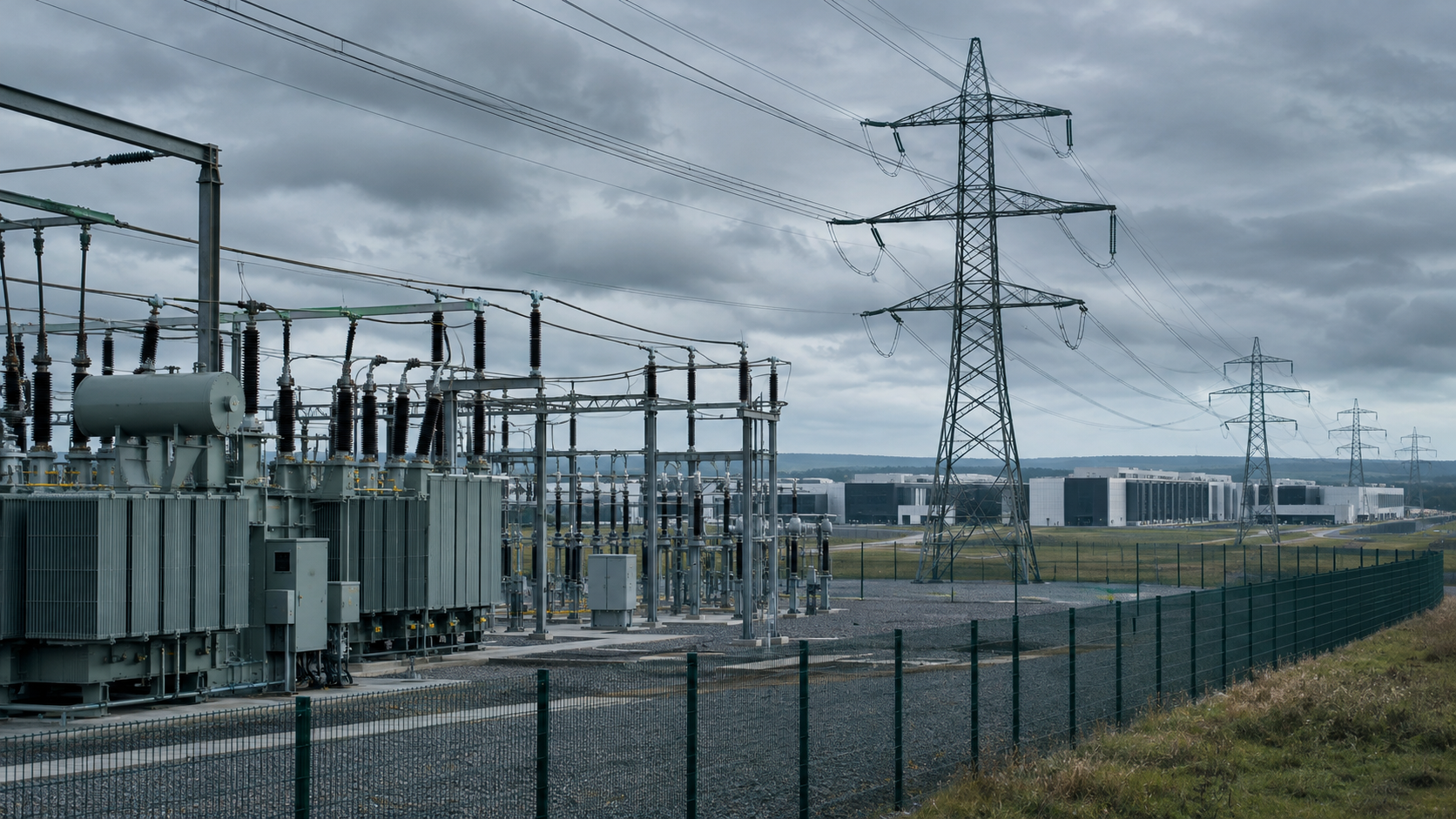
Large data centres introduce concentrated demand that must be supported through suitable transmission and distribution infrastructure. Where available network capacity is insufficient, additional substations, transformers, and power lines may be required before computing equipment can enter operation.
The costs associated with those investments depend on the proposed connection arrangements, the scale of the necessary reinforcement, and national regulations governing the recovery of infrastructure expenditure.
Consequently, political concerns about electricity costs cannot be resolved solely by comparing the anticipated demand from a data centre with regional renewable generation.
The alternative development strategy proposed by the ÖVP would distribute computing capacity across several locations. That could reduce the concentration of electricity demand at an individual site, provided the alternative locations possess suitable network capacity.
However, distributing computing infrastructure can introduce additional requirements for telecommunications connectivity, electrical installations, and operational staffing. Some high-performance computing workloads also depend on extremely fast communications between individual processors, limiting the extent to which they can be separated geographically.
The relative advantages of concentrated and distributed development will therefore depend on the computing services being supported and the infrastructure available at each prospective location.
Environmental conditions require detailed engineering
Regional proposals for a water-saving cooling circuit address one of the environmental concerns surrounding the Nickelsdorf development.
Closed cooling circuits recirculate heat transfer fluids through mechanical systems, reducing the need for continuous replacement of the circulating fluid. The overall water requirements of the facility will nevertheless depend on how heat is subsequently rejected into the surrounding environment.
Evaporative cooling equipment may consume water even where the internal cooling circuit is closed. Alternative systems relying predominantly on air-based heat rejection can reduce direct water use, although their electricity consumption and physical equipment requirements differ.
Establishing effective water consumption limits will therefore require information about the complete mechanical architecture, including its anticipated performance during periods of high ambient temperature.
Noise requirements present a related engineering challenge because data centre cooling systems can incorporate extensive external mechanical plant. Standby generators may also require periodic testing, with equipment placement, acoustic treatment, and operating schedules influencing their effect on surrounding properties.
Landscaping and ecological development measures would address separate environmental consequences associated with construction, changes to drainage, and the conversion of previously undeveloped land.
The parliamentary debate has not established that the Nickelsdorf project has received construction approval or secured its required electricity supply. Further progress will depend on the detailed development proposals, associated network arrangements, and how the regional criteria are applied through the relevant authorisation procedures.

