
Summary
- Prysmian’s second quarter revenue reached €6.02 billion, with adjusted EBITDA rising to €730 million.
- Digital Solutions delivered 18% organic growth, while data centre construction supported other cable divisions.
- Early cable procurement reduces schedule exposure but leaves projects vulnerable to redesigns and grid delays.
Prysmian has raised its full year earnings and cash flow guidance after recording its strongest quarter to date, with data centre construction contributing to growth across digital connectivity, power-grid, and industrial cable systems.
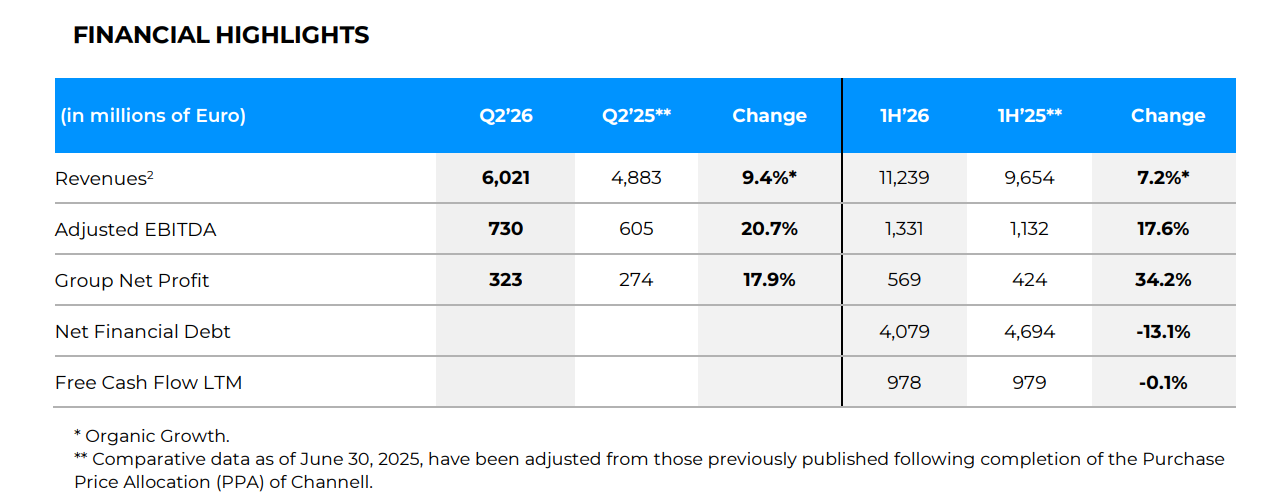
Second quarter revenue reached €6.02 billion, representing organic growth of 9.4%, while adjusted earnings before interest, tax, depreciation, and amortisation rose 20.7% to €730 million. The adjusted EBITDA margin increased to 15.4%.
Digital Solutions delivered organic growth of 18%, and adjusted EBITDA in the division almost doubled to €122 million. Industrial and Construction grew organically by 9.1%, supported partly by data centre work in North America, while Power Grid sales increased by 13%.
One campus reaches several cable markets
A large data centre requires utility connections, campus distribution, building wiring, fibre backbones, and dense interconnection within its halls. Those requirements can place the same project across several Prysmian divisions, even though the company does not disclose a separate data centre revenue line.
Transmission sales increased organically by 14.3%, reflecting wider investment in electricity networks as well as project activity in other markets. Data centre connections depend on that upstream reinforcement, particularly where new substations, underground routes, overhead lines, or transmission upgrades must be completed before the campus can take its full load.
Prysmian raised its expected adjusted EBITDA for 2026 to between €2.8 billion and €2.9 billion, compared with a previous range of €2.625 billion to €2.775 billion. Its free cash flow forecast increased to between €1.65 billion and €1.75 billion.
The company’s half year financial statement reported revenue of €11.24 billion and adjusted EBITDA of €1.33 billion for the first six months.
Cable is often treated as a straightforward construction input, yet route, voltage, conductor size, fire performance, redundancy, containment, and termination requirements are fixed by decisions taken throughout the electrical design. A late change in rack density can move all of them.
Higher loads increase conductor requirements and may alter the space needed for risers, trenches, containment, and plant rooms. Parallel resilient paths must remain physically separated, while maintenance access and fire compartmentation restrict the routes available through an already crowded building.
Fibre demand is also rising as AI clusters require high bandwidth connections between accelerators, storage, and network fabrics. The requirement extends beyond the data hall into metro and long haul routes linking campuses, cloud regions, and interconnection hubs.
Early orders carry design risk
With factory capacity under pressure, contractors may place cable orders before the full construction package has settled. Reserving material protects the programme from long lead times, although the quantities and specifications depend on a load schedule that may continue to change.
A decision to move from conventional air cooling towards direct liquid cooling can alter both electrical and mechanical requirements. Pumps, coolant distribution units, controls, and heat-rejection systems add loads, while denser racks may require more substantial busway and shorter distribution paths.
Planning and grid delays expose early procurement to a different risk. Cable manufactured for one voltage, route, or construction phase may not transfer cleanly to another project. Storage and preservation also require control, especially where drums, reels, and sensitive fibre products remain off site for extended periods.
Framework agreements can reduce availability risk across a portfolio, but they need reliable forecasting. Hyperscalers with several campuses may be able to redirect material, while a single-site developer has less room to absorb a programme change.
The cable market is simultaneously serving data centres and the networks that power them. Utilities require many of the same conductor families and specialist installation resources needed to connect large loads, so a campus cannot be separated from the reinforcement programme around it.
Prysmian’s geographic disclosure requires restraint. The company specifically identified North American data centre construction as one contributor to Industrial and Construction growth, rather than assigning the increase to European projects. Strong demand in one region can still influence European availability, capital investment, and production allocation.
Rising supplier earnings indicate that the construction cycle is moving beyond prospective campus announcements and into equipment orders. Those orders only become useful when the cable has been installed, terminated, tested, and integrated with protection systems, substations, controls, and customer equipment.
Prysmian’s raised guidance reflects the volume already entering its factories. Developers now face the harder task of preserving design certainty and construction access long enough for those products to reach the correct building, phase, and energisation date.

