
Summary
- Remains of Hallyards Castle sit within land proposed for the 600MW Cato data centre near Auchtertool.
- Historic Environment Scotland has declined to add a new designation while the active planning process is under way.
- Heritage impacts will now sit alongside the project's wider Environmental Impact Assessment and other planning evidence.
ILI Energy’s proposed 600MW Cato data centre in Fife faces a further planning constraint after the remains of Hallyards Castle became part of the heritage assessment for the development site near Auchtertool.
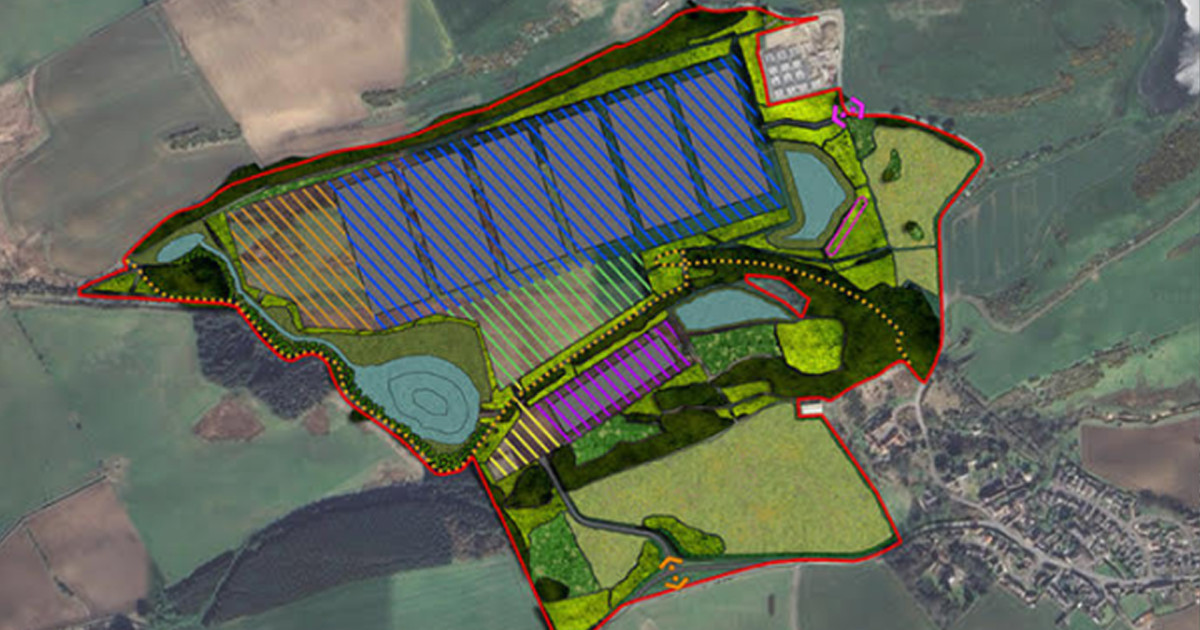
The surviving walls sit on land earmarked for the hyperscale campus and could be affected if the project proceeds in its current form. Historic Environment Scotland has declined to introduce a new protected designation while an active planning process is already examining the site.
That position neither authorises removal of the remains nor determines the data centre application. Historic Environment Scotland says it normally avoids intervening in an existing planning or regulatory process by adding a new designation, leaving heritage effects to be considered through the current application.
ILI has said surviving material could be recorded and incorporated into the completed development if removal proves necessary. The final treatment will depend on archaeological assessment, planning judgement and any mitigation required before work can begin.
The heritage issue joins an already widened environmental process. Scottish ministers directed in August that Cato must undergo a full Environmental Impact Assessment after reversing Fife Council’s earlier conclusion that an EIA was unnecessary.
DataCentral reported that the planning assessment would pause while additional environmental evidence was prepared, with another period of consultation expected after submission. Hallyards Castle now forms another part of the site evidence that must be resolved within that process.
Heritage sits within a much larger site assessment
The proposed campus lies on land north of Camilla Road near Auchtertool and has been presented as a 600MW AI-focused development. Its environmental assessment already has to consider the effects of buildings, electrical infrastructure, transport, drainage, landscape, ecology, noise and construction at a scale well beyond an ordinary industrial development.
Historic remains add a different form of constraint because planning authorities can consider archaeological value even where a structure does not carry a formal national designation. The absence of scheduling or listing therefore does not remove heritage from the decision.
Local campaigners asked Historic Environment Scotland to assess Hallyards Castle for designation because of concerns that the proposed campus would require its removal. The agency considered the request but ultimately relied on its policy of avoiding new designation where an active regulatory process is already capable of examining the impact.
That outcome places more weight on the archaeological information submitted with the planning application. The developer will need to establish the significance and condition of the remains, the effect of the proposed layout and the mitigation available if the structures cannot be retained where they stand.
Preservation in place is one possible response, but planning can also require archaeological recording, controlled excavation, redesign or reuse of recovered material depending on the evidence. Each option can affect the physical layout and construction programme differently.
More constraints now sit on the critical path
Cato was already subject to greater regulatory scrutiny before the castle issue emerged. Scotland now requires planning authorities to notify ministers of current and new data centre proposals above 50MW, placing the stated 600MW scheme far above that threshold.
The full EIA also delays a determination until a wider evidence base is available. For a project at Cato’s proposed scale, movement in the planning programme can affect the timing of grid work, financing, procurement and customer discussions because those workstreams cannot be advanced indefinitely without confidence in the permitted design.
Long-lead electrical infrastructure can require commitments well before a data centre opens, while major layout changes can alter cable routes, access roads, drainage, landscaping or the position of plant. A heritage requirement that changes the usable development area can therefore have consequences beyond the surviving masonry itself.
The project’s 600MW figure must continue to be treated as proposed capacity rather than connected or commissioned load. Cato has not yet reached the stage where the planning, environmental and heritage issues have been resolved into a buildable final scheme.
Historic Environment Scotland’s decision similarly leaves the castle question open inside the planning process rather than removing it. The absence of a new designation means the current application becomes the mechanism through which the heritage effect is assessed.
ILI’s environmental submission will ultimately show whether the remains can be avoided, retained, moved or incorporated into a revised design and whether that treatment satisfies planners and consultees.
Until that evidence is available, Hallyards Castle represents another site constraint to be resolved alongside the wider environmental assessment before the proposed 600MW campus can move closer to construction.

