
Summary
- DataVita has applied for planning permission in principle for DV4 at Chapelhall in North Lanarkshire.
- The design targets PUE below 1.25, sealed closed-loop cooling, heat recovery, and water consumption of no more than 0.05 litres per kilowatt hour.
- DataVita puts construction investment at £849.6m and says the project would support 120 permanent skilled roles.
DataVita has submitted plans for a new data centre at Chapelhall in North Lanarkshire, moving the DV4 phase of its Scottish campus into the formal planning process.
The application seeks planning permission in principle and is supported by assessments covering energy and decarbonisation, noise, air quality, transport, flood risk and drainage, ecology and landscape, heritage, ground conditions, economic impact, and construction environmental management.
DV4 forms part of the Lanarkshire AI Growth Zone and would extend a campus DataVita has operated for more than a decade. The company already runs DV1 at Chapelhall, is constructing DV3 next door, and operates another facility in Glasgow.
DataVita puts construction investment for DV4 at £849.6 million over two years. It estimates the project would support 2,650 construction job-years and 120 permanent skilled roles, with at least 40% of capital contracts expected to be delivered by local suppliers.
The proposal also includes specific targets for the facility’s operating infrastructure. DataVita is aiming for power usage effectiveness below 1.25, sealed closed-loop cooling without evaporative cooling, and water consumption of no more than 0.05 litres per kilowatt hour.
Cooling and heat reuse enter the planning case
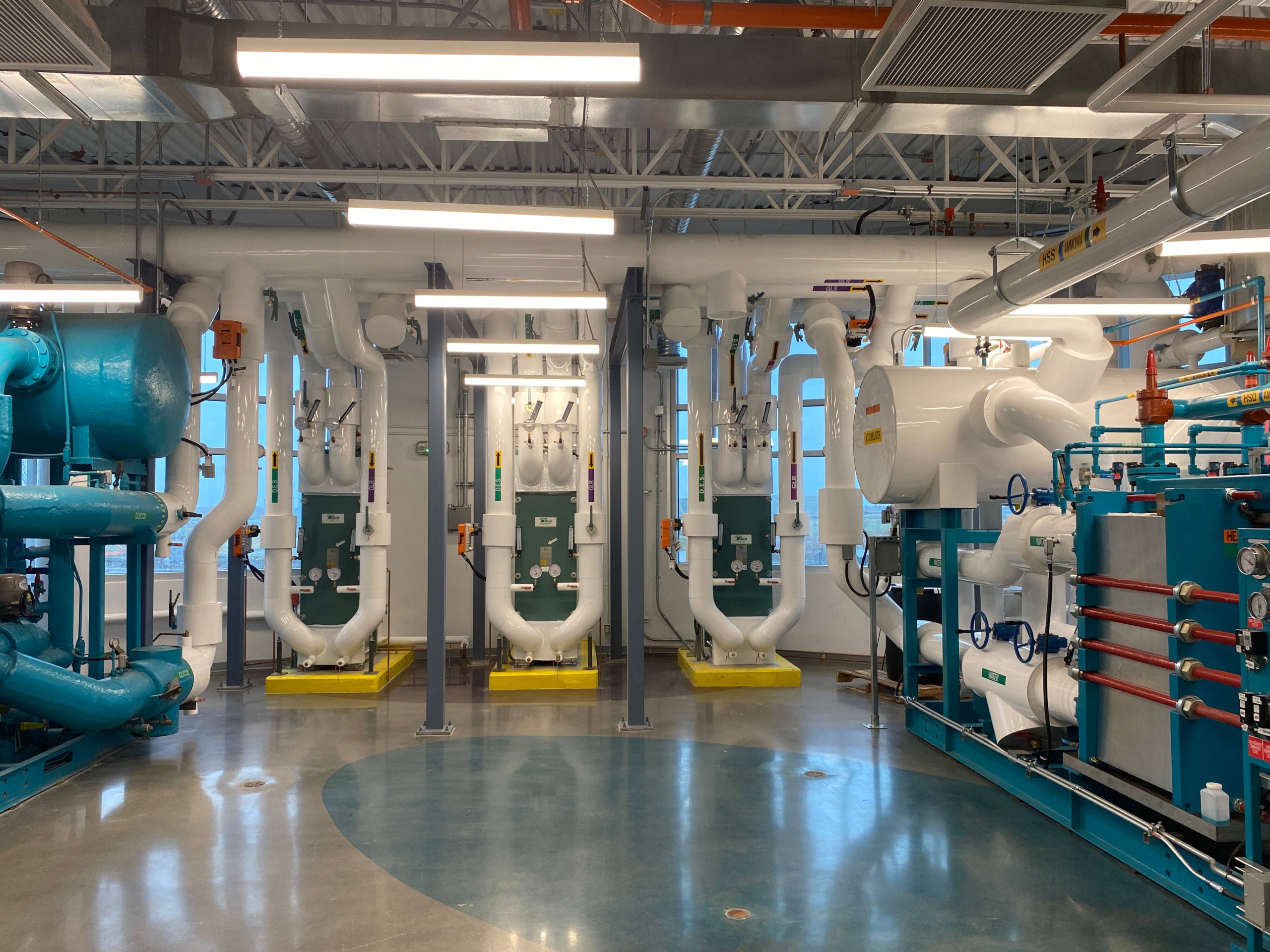
DataVita said heat recovery is being included from the outset. The company is discussing potential use of surplus heat with the new Monklands Replacement Hospital and neighbouring BioCity campus, while a feasibility study is examining a community garden and greenhouse suggested during public consultation.
The proposed cooling arrangement avoids routine evaporative cooling, reducing one source of operational water demand. That does not remove the need for heat rejection equipment, but it fixes an important part of the thermal strategy before detailed construction design.
The company also said DV4 would use renewable electricity backed by certificated Scottish generation.
Air-quality assessment has included an intentionally severe emergency scenario in which standby generators serving DV1, DV3, and DV4 are modelled as operating simultaneously for 72 hours. DataVita said those conditions have never arisen in practice.
The company reports that the Chapelhall campus has experienced no grid power cuts in more than ten years and that DV1’s standby generators have accumulated about one hour of unplanned operation over that period, excluding routine testing.
Those claims distinguish the proposal from a greenfield project without an operating history. DV4 would extend an established campus where existing facilities already provide evidence about power reliability, operating procedures, staffing, and local infrastructure.
Public consultation has also changed parts of the design. The maximum proposed building height was reduced from 30 metres to 26 metres, plant was moved to the southern side of the building away from nearby homes, and around 1,000 metres of native hedgerow is proposed.
Growth-zone policy reaches a planning application
The project sits inside Scotland’s first AI Growth Zone, making Chapelhall one of the places where national policy around AI infrastructure is beginning to translate into individual planning, power, cooling, and construction decisions.
That distinction matters because growth-zone designation does not itself produce data centre capacity. Projects still require planning consent, grid arrangements, procurement of long-lead electrical equipment, cooling plant, fibre connectivity, financing, contractors, and customer demand.
DataVita has a more developed commercial position than many speculative projects because DV4 extends an existing operating campus, while DV3 is already under construction.
The planning application also puts environmental performance into the design record at an early stage. Cooling architecture, generator emissions, heat reuse, drainage, landscaping, building height, and operational plant location are all being assessed before detailed permission is sought.
If planning permission in principle is granted, later submissions will still be required to settle more detailed elements of design and construction. Those stages will determine how the proposed efficiency and heat-recovery commitments translate into final plant selection and operating arrangements.
North Lanarkshire Council will now consider the application and its technical assessments. The process will provide a clearer test of how an established operator intends to expand high-density digital infrastructure inside one of the UK’s designated AI development zones without separating the compute requirement from its physical power, cooling, and environmental systems.

