
Summary
- DayOne is planning a 300MW AI data centre campus in Escatrón, Aragon, with Ignis developing the project.
- The proposal adds to a Spanish pipeline where power access, land, and grid capacity are driving site selection.
- Aragon’s data centre growth is increasingly tied to energy infrastructure rather than proximity to Madrid alone.
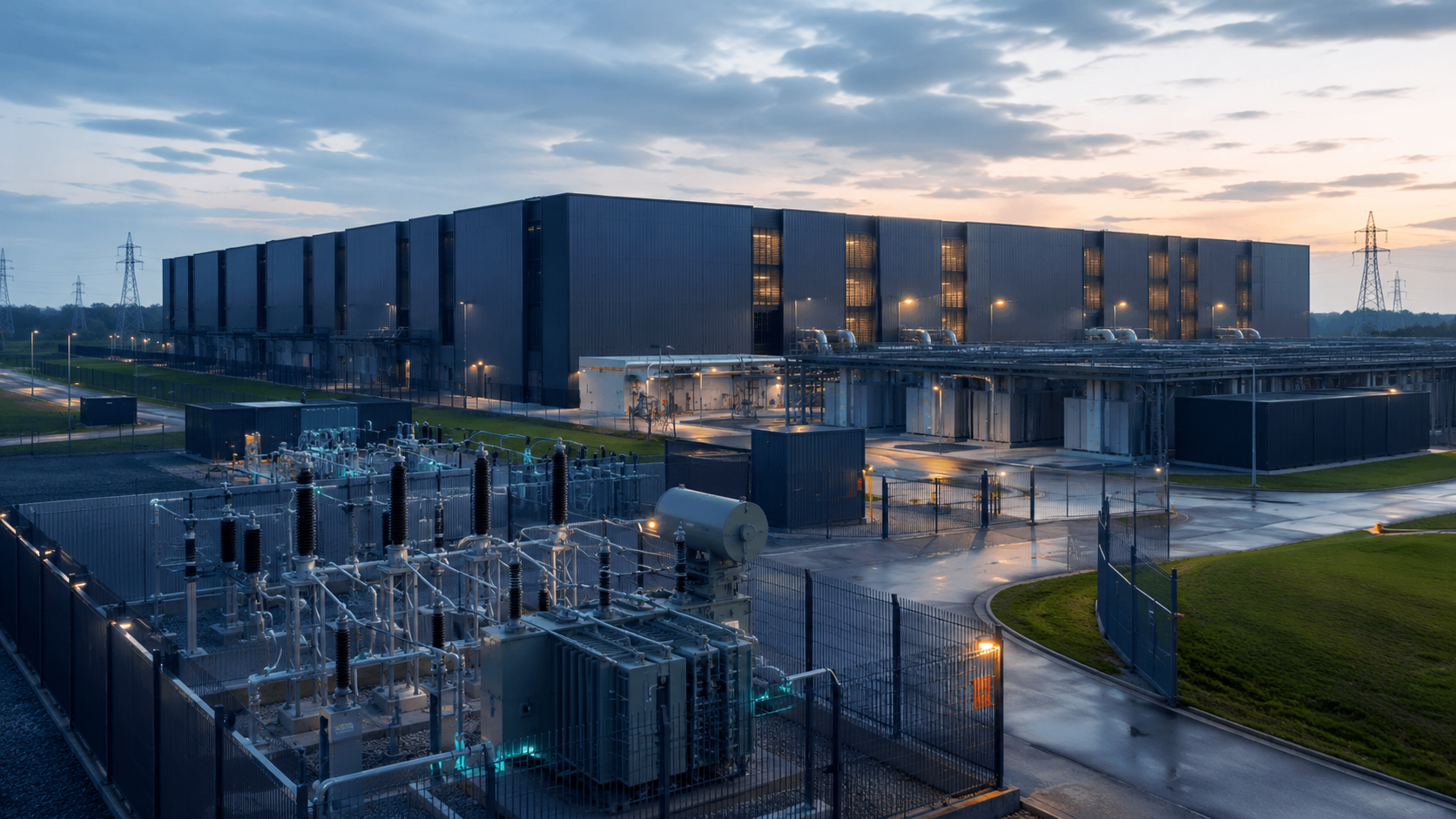
DayOne is planning a 300MW AI data centre campus in Escatrón, Aragon, adding another large-load project to one of Europe’s most active power-led digital infrastructure markets.
Spanish renewable energy company Ignis is developing the project, which would become DayOne’s first data centre in Spain. The campus is expected to require more than €3bn of investment and would be built south-east of Zaragoza, in a municipality with a long industrial and energy history.
Aragon has become a focal point for Spanish data centre development as hyperscale, cloud, and AI infrastructure developers look beyond the country’s primary Madrid market. Land availability, renewable generation, transmission infrastructure, and regional political support have combined to make Zaragoza and surrounding municipalities more competitive for large-scale compute projects.
DayOne, formerly known as GDS International, has been expanding as a hyperscale data centre platform outside mainland China. The Spanish project would push that strategy into a European market where AI demand is widening the map of viable data centre locations, particularly where power can be secured at scale.
Aragon’s power-led data centre race
Escatrón is not a conventional data centre location if judged by proximity to financial districts, enterprise customers, or established carrier hotels. Its attraction lies in the infrastructure around it. The area’s industrial and energy base gives developers a different starting point from urban fringe sites, where land and grid capacity are often more constrained.
AI workloads are changing the weight given to site-selection criteria. Dense GPU deployments need credible power paths, expansion headroom, and cooling strategies that can support high rack densities over multiple hardware generations. Fibre remains important, but large training and batch compute loads can tolerate a different geography from latency-critical colocation or interconnection services.
That change is helping secondary markets compete for projects that would once have gravitated towards Europe’s dominant data centre hubs. Madrid remains Spain’s main interconnection and enterprise market, yet the next phase of AI-driven capacity is being pulled towards sites where energy, land, and permitting can be aligned before customer demand moves on.
Ignis’s role also reflects a broader shift in delivery models. Energy developers are moving closer to data centre projects because electricity strategy now sits near the centre of the business case. Renewable development experience does not remove grid risk, and it does not settle questions around connection timing, water use, heat rejection, or planning conditions, but it gives the project a power-market foundation that many conventional real estate-led schemes lack.
Spain’s capacity opportunity comes with constraints
Spain has clear structural advantages for digital infrastructure. Solar and wind resources, large development plots, improving fibre routes, and political interest in AI infrastructure give the market a stronger platform than it had a decade ago. Iberia also provides a southern European option outside the more constrained Frankfurt, London, Amsterdam, Paris, and Dublin cluster.
Those advantages are only useful if they can be converted into energised capacity. Large campuses require grid reinforcement, substations, transmission capacity, long-term power procurement, and construction sequencing that matches customer demand. Renewable abundance on a national map does not guarantee deliverable electrical capacity at a specific site.
Water and heat will also remain part of the planning discussion. Aragon’s data centre pipeline is developing in a region where summer heat, water availability, and environmental scrutiny cannot be treated as background issues. AI campuses may reduce water use through certain cooling architectures, but that depends on design choices, local climate, and operating conditions.
A 300MW campus in Escatrón would therefore add more than headline capacity. It would increase pressure on Aragon to show that its data centre pipeline can move from announcements to commissioned facilities without creating a queue of stranded land options and half-secured grid positions. As AI infrastructure pushes developers deeper into power-first markets, Spain’s ability to turn renewable advantage into buildable, reliable capacity will determine how far Aragon can move from prospect map to operating hub.

