
Summary
- DriverAI is proposing an 80MW data centre in Luna, Cluj County, across four 20MW phases.
- The project has political visibility, but public evidence on grid access, financing, permitting, and delivery structure remains limited.
- Romania’s AI infrastructure ambitions will be judged on buildability, not headline capacity alone.
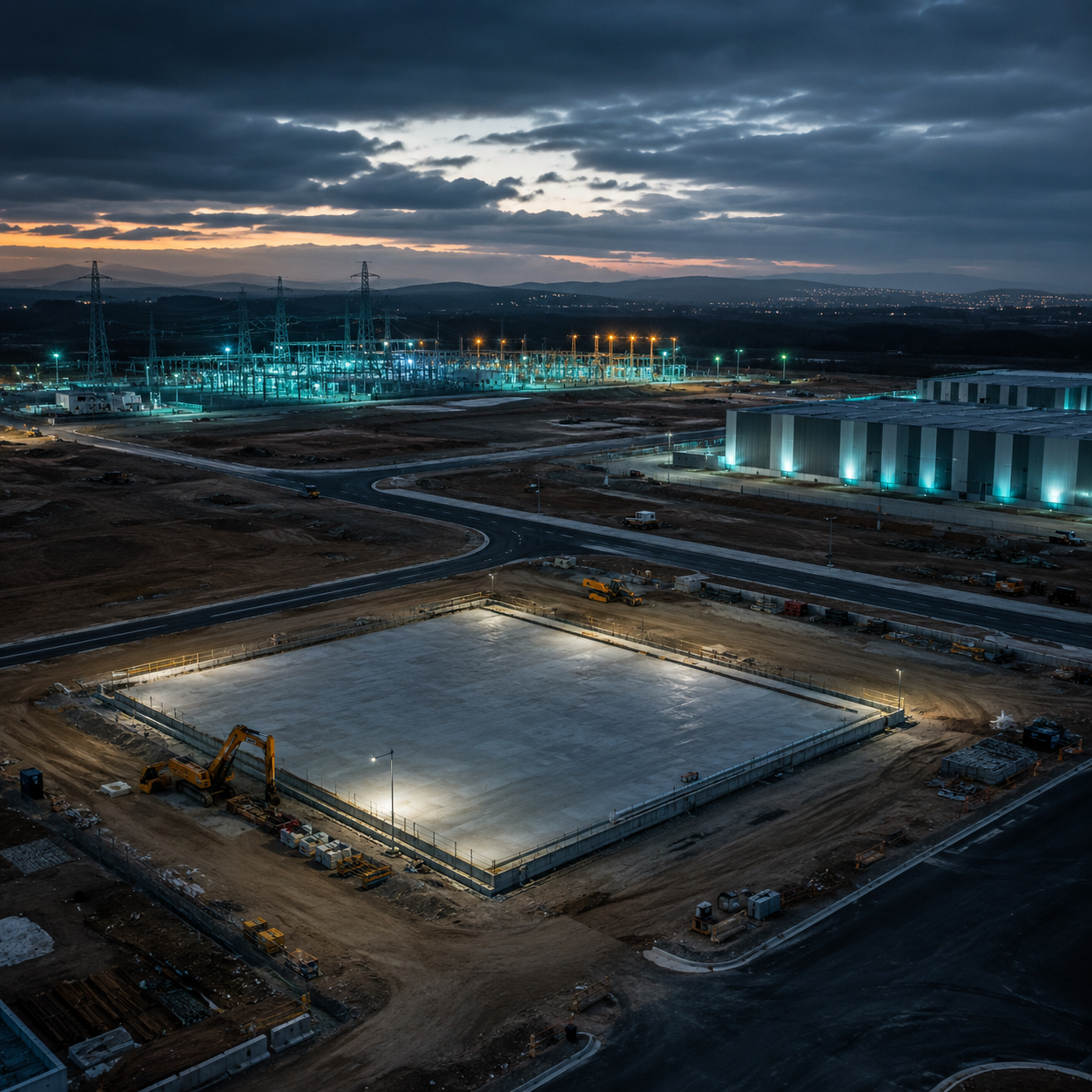
DriverAI says it is advancing plans for an 80MW AI and quantum data centre in Luna, Cluj County, adding Romania to the list of Central and Eastern European markets being pitched for high-density compute infrastructure.
The US-based company describes the project as an 80MW Quantum AI Data Center, planned across four 20MW phases on a 20-hectare site. Its own material says the facility would combine GPU infrastructure with quantum computing capabilities and act as a sovereign compute hub for Central and Eastern Europe.
Romanian Senate president Mircea Abrudean has also publicly backed the scheme, saying the project would be developed in Cluj County and could give Romanian students and researchers access to advanced compute resources. Recent sector coverage has linked the location to an industrial park near Luna, with E-INFRA and Cartens Consulting Global named around power and project management support.
At 80MW, the scheme would be substantial for the Romanian market. It would not place Cluj alongside Europe’s largest hyperscale clusters, but it would be a sizeable regional asset if the campus is financed, permitted, connected, built, and operated as described.
Power and delivery detail will decide the project
Several key elements remain unclear. Public material has not yet set out a full planning pathway, a grid connection agreement, a detailed power procurement structure, customer commitments, equipment procurement, or a financing package. The use of “quantum AI” language also leaves open questions over the actual hardware mix, the role of quantum computing in the facility, and the timing of any quantum deployment.
Those gaps are not unusual at an early concept stage, but they matter more when the claimed capacity is large and the developer does not have a long public track record in data centre delivery. A campus of this scale needs more than land and political support. It needs secured electrical capacity, substation planning, cooling design, fibre diversity, environmental assessments, procurement routes, and contractors with experience in mission-critical construction.
Romania has credible ingredients for a stronger digital infrastructure role. Cluj brings a technical labour market, universities, and an established technology sector, while Central and Eastern Europe offers lower relative land and labour costs than many western markets. Those advantages are becoming more attractive as data centre development in Frankfurt, London, Amsterdam, Paris, Dublin, and other established hubs is squeezed by grid queues, land competition, and permitting pressure.
The region’s challenge is converting that potential into deliverable capacity. High-density AI infrastructure places heavy demands on local power networks, cooling plant, commissioning expertise, and long-term operations. If the Luna project advances, the first hard markers will be planning filings, grid documentation, named delivery partners, confirmed funding, and a phased construction programme.
DriverAI’s Cluj proposal gives Romania a visible place in the European AI capacity conversation. The next phase will show whether the scheme can move from a strategic infrastructure claim into a bankable, buildable, and energised data centre programme.

