
Summary
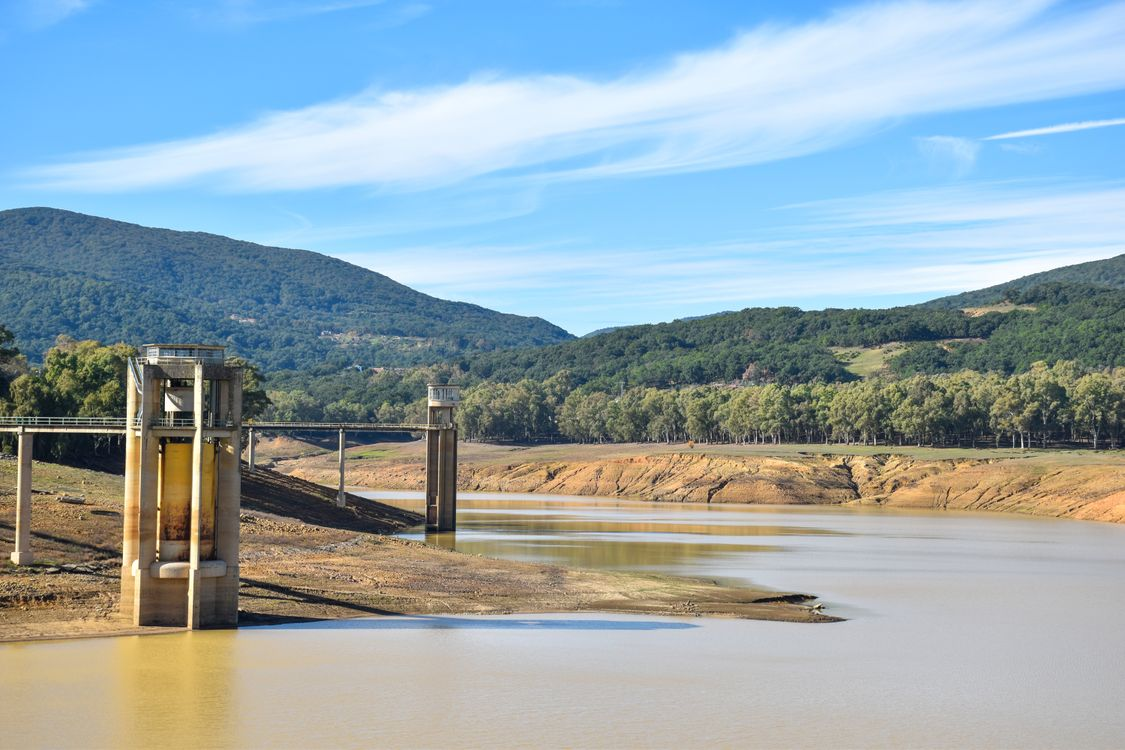
- Large data centre water requests are being scrutinised as drought affects much of England and restrictions spread across water company regions.
- Cooling architecture determines whether new facilities place substantial peak demand on potable water networks during hot weather.
- Long term water reinforcement is beginning to account for data centre growth, but new projects can reach the connection stage faster than reservoirs, mains, and treatment capacity can be built.
Water constraints are reaching proposed data centre developments in southern England as drought forces utilities to examine large new connection requests against a supply system already under pressure.
Affinity Water, which serves parts of London and the South East, is among the companies operating under severe dry weather conditions. Current reporting indicates that proposed data centre connections are being affected as the utility manages unusually high demand and depleted water resources.
The immediate pressure centres on new development rather than evidence of widespread water curtailment at operating data centres. That places cooling design and expected peak consumption into the connection process before facilities are built.
Cooling determines how much water a site needs
There is no standard water demand for a data centre. Dry cooled facilities can use relatively little potable water for heat rejection, while evaporative systems may consume much larger volumes to reduce the electricity required for cooling.
The difference is most pronounced during hot weather. Rising ambient temperatures increase the difficulty of rejecting heat, and evaporative cooling can become more valuable from an energy perspective at the same time drought makes water harder to supply.
A development seeking a large connection therefore has to be assessed against more than annual consumption. Maximum daily demand, seasonal behaviour, cooling mode, storage, water quality, redundancy, and the way the facility operates during restrictions all affect the load imposed on the local network.
Affinity Water’s water resources information sits against a wider national drought picture. The Environment Agency said on 10 August that more than two-thirds of England was in drought, with tens of millions of people living in affected areas and water restrictions already applying across several company regions.
Data centres concentrate another large requirement into individual sites, often on development programmes that move more quickly than regional water infrastructure. A facility can progress from land purchase to a connection request in a few years, while reservoirs, strategic mains, treatment works, and bulk transfers can require much longer planning and construction periods.
Long term reinforcement is only beginning to catch up
Ofwat backed investment is beginning to incorporate data centre demand into water network reinforcement, including schemes intended to accommodate new digital infrastructure and other growth.
Those programmes address structural demand over future asset management periods, whereas the current drought is testing available headroom now. The two problems can therefore exist simultaneously: a water company may have investment planned for future growth while still being unable to guarantee a large connection under current conditions.
Existing national water resource plans also carry uncertainty around the pace and location of emerging industrial loads. Data centres can create unusually concentrated demand, and the newest AI campuses may be proposed at scales that were not visible when older demand forecasts were produced.
That does not mean AI automatically consumes more water. Higher density computing increases heat concentration, but the resulting water demand depends on the cooling system. Direct liquid cooling can improve heat transfer from chips without requiring the facility to consume water if the secondary heat rejection system is dry.
Conversely, an operator may choose evaporative heat rejection to reduce electrical consumption. The design decision transfers part of the resource requirement from the power system to the water network, making local conditions central to the engineering choice.
Power and water cannot be optimised separately
Replacing evaporative cooling with dry heat rejection can lower direct water consumption while raising electricity use during hot conditions. Large campuses therefore have to assess both utilities together rather than treating water as an environmental metric added after the electrical design is complete.
On-site storage can provide short term resilience but does not create a new water resource. Alternative sources such as reclaimed water can reduce potable demand where the necessary network, treatment, and water quality controls are available, although those systems also require investment outside the data centre boundary.
Operational planning becomes equally important during drought. Facilities need defined responses if a utility restricts consumption, including whether cooling modes can change, how long stored water lasts, what redundancy remains, and whether reduced water use increases electrical load beyond normal conditions.
Those questions are especially relevant around London and the western corridor, where a dense existing data centre market is being joined by further large connection requests for power as well as water.
Drought conditions will change as rainfall returns, but new water infrastructure cannot be built on the same cycle. Developers seeking capacity in constrained regions increasingly need a credible water route alongside land, grid access, planning, and fibre before a site can be treated as fully buildable.

