
Summary
- MEPs questioned the distinction between a facility's heat export capability and measured heat reuse.
- The EU scheme proposes separate A-to-G classifications for electricity and water efficiency.
- The delegated regulation remains under scrutiny, while consultation on potential mandatory standards closes on 14 December.
European lawmakers have challenged the treatment of waste heat recovery within the data centre sustainability labelling scheme proposed by the European Commission, questioning whether technical readiness should be distinguished more clearly from heat actually delivered to customers.
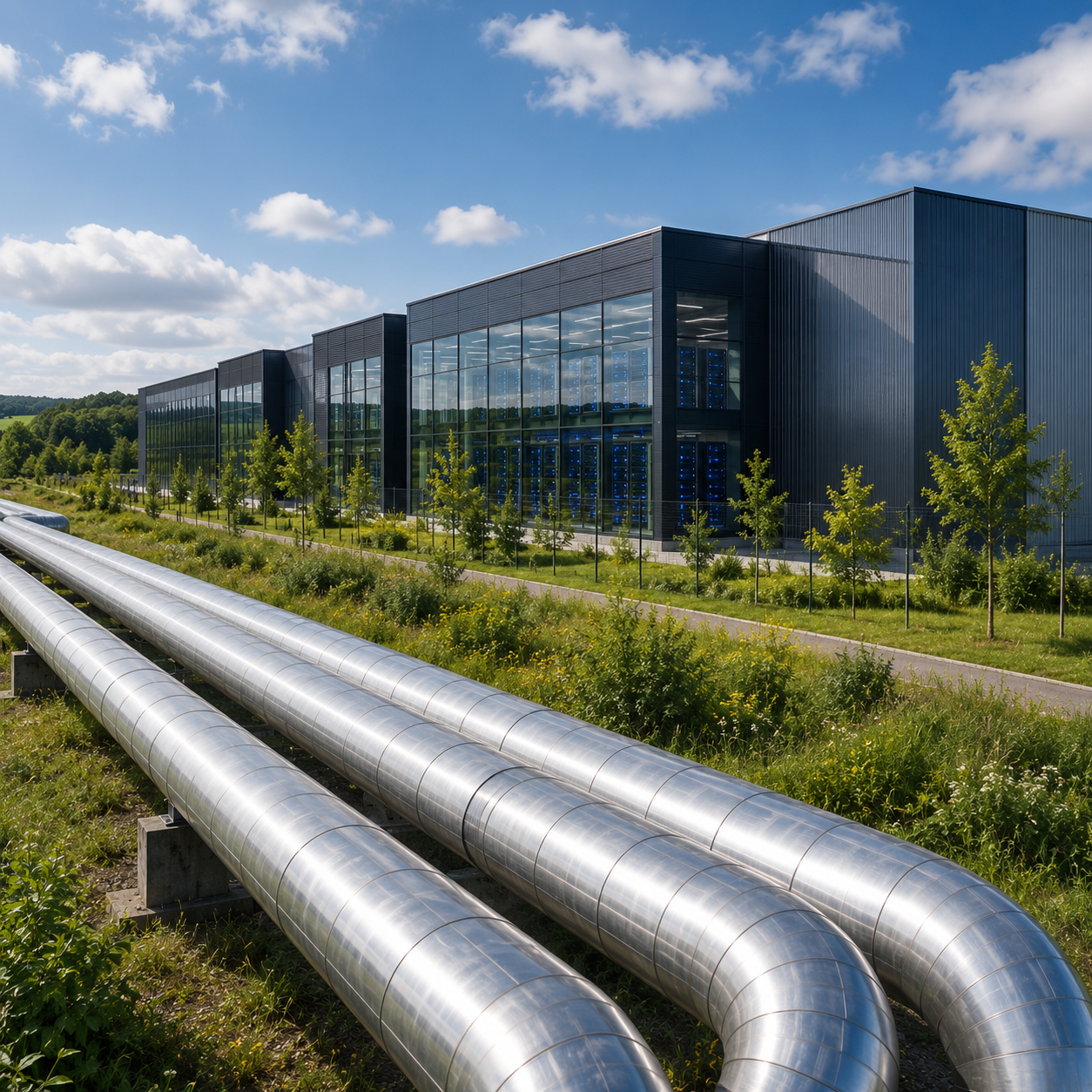
During a 10 November exchange with the European Parliament’s Industry, Research and Energy Committee, European Commission representatives defended an approach that records whether a facility can export surplus heat, even when no external network or customer is available to receive it.
Mechthild Wörsdörfer, Deputy Director-General for Energy at the European Commission, argued that operators should not be penalised for the absence of suitable local heat users.
The disagreement concerns the common EU data centre rating scheme established through Delegated Regulation C(2026)3472, adopted by the Commission in September. The regulation remains subject to scrutiny by the European Parliament and Council.
The proposed system establishes separate A-to-G ratings for Power Usage Effectiveness (PUE) and Water Usage Effectiveness (WUE), alongside other information about electricity sourcing and interaction with energy networks.
The scheme primarily addresses facilities with installed IT power demand of at least 500kW, which are already subject to relevant European energy performance reporting requirements. Smaller data centres may participate voluntarily.
Heat export capability is not the same as delivery
Computing equipment converts most of the electricity it consumes into heat, which must be removed to maintain acceptable equipment temperatures.
Data centre cooling systems can sometimes capture that thermal energy and supply it to external users. Potential applications include district heating networks, nearby commercial buildings, and industrial processes.
However, installing equipment capable of transferring heat does not establish that an external customer can use it. Successful delivery depends on suitable pipework, heat exchangers, pumping systems, compatible operating temperatures, and agreements between the participating organisations.
Recovered heat may also require a heat pump to raise its temperature before it can enter a conventional district heating system. That introduces additional electricity demand and affects the economics of the arrangement.
The distance between a data centre and potential heat users can also determine feasibility. A technically capable facility may have limited practical opportunities where the cost of constructing a new network exceeds the expected value of the recovered energy.
Conversely, an existing district heating connection may allow another operator to deliver substantial amounts of useful heat with comparatively less new infrastructure.
The parliamentary debate concerns how these different circumstances should be reflected in the label. Heat export capability represents a technical attribute, while measured delivery provides evidence of the amount of energy actually reused.
Efficiency ratings introduce separate performance measures
The Commission’s proposed PUE classification compares total data centre energy consumption with the electricity used by IT equipment. It provides an indication of the energy required by supporting infrastructure, subject to consistent boundaries and measurement methods.
WUE measures water consumption relative to IT equipment energy use. It offers a separate perspective because cooling technologies can involve different combinations of water demand and electricity consumption.
Publishing separate classifications can help prevent strong performance under one indicator from obscuring weaker results under another. However, the classification cannot by itself establish the full environmental effect of a facility’s operations.
Electricity generation mix, location, operating conditions, heat recovery arrangements, and the availability of local infrastructure can materially affect performance and environmental outcomes.
The Commission is also developing a model for voluntary agreements intended to support integration between data centres and local energy systems. Its aim is to complete that model by the end of 2026, although individual agreements would require subsequent local implementation.
A separate consultation on potential mandatory minimum performance standards closes on 14 December 2026. The Commission expects further legislative proposals during 2027.
These processes remain distinct. The delegated regulation concerns common reporting and labelling, while potential minimum standards would introduce a further regulatory layer if adopted.
The current parliamentary scrutiny has not established that operators are misreporting environmental performance. It has instead identified a question about the information that common labels should convey: whether equipment is capable of recovery, whether external infrastructure exists, and how much surplus heat is ultimately put to use.

