
Summary
- SURF has awarded Eurofiber Cloud Infra the HPC data centre services contract for the Dutch AI Factory.
- The Groningen facility is designed without cooling-water consumption and will supply recovered heat to the local WarmteStad network.
- Completion is planned during 2027, with the AI supercomputer expected to be fully operational in early 2028.
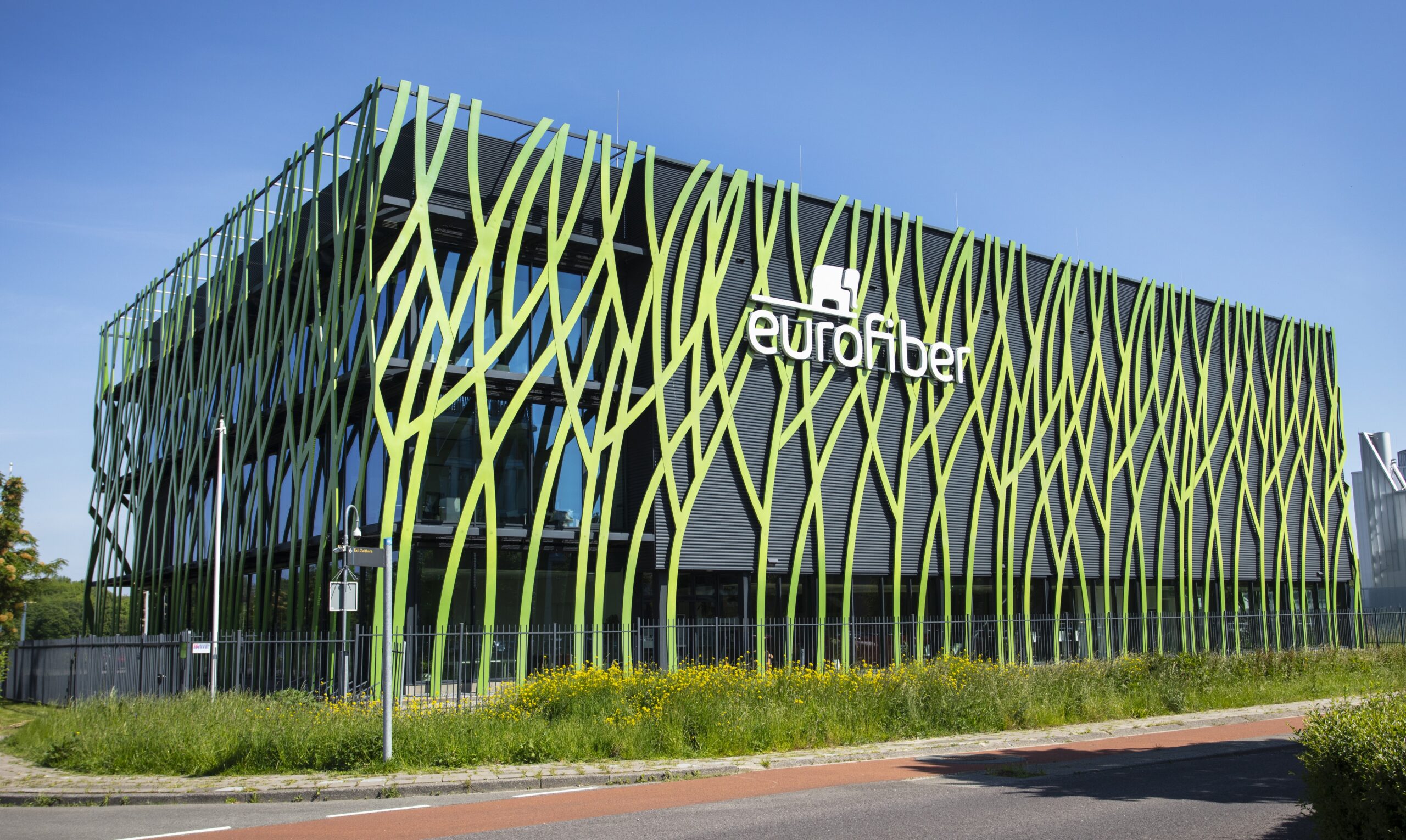
Eurofiber Cloud Infra has won the contract to provide HPC data centre services for the Dutch AI Factory, placing the Netherlands’ first large-scale national AI facility inside its existing Groningen data centre.
SURF, the Dutch research and education ICT cooperative, awarded the hosting contract as part of a project intended to provide researchers, universities, government bodies, and businesses with access to advanced AI computing on Dutch soil.
The facility is scheduled for completion during 2027, while the AI supercomputer is expected to become fully operational in early 2028.
The engineering design is notable because the hosting decision combines compute capacity with several of the infrastructure constraints now shaping European AI campuses. Eurofiber says the installation will use direct cooling of AI processors without potable or surface water for cooling, recover almost all available excess heat, and incorporate measures designed to reduce pressure on the regional electricity network.
Recovered heat is due to feed Groningen’s WarmteStad district-heating network. Eurofiber estimates the supply could serve approximately 2,000 homes and reduce associated carbon emissions by around 85% compared with the relevant heating baseline.
AI capacity inside an existing facility
Housing the AI Factory within an existing Eurofiber data centre changes part of the development problem. A greenfield campus normally has to solve land, planning, connectivity, grid access, and facility construction before computing hardware can be installed. Reusing an established site can shorten parts of that chain, although dense AI infrastructure can still require substantial upgrades to electrical and thermal systems.
Direct cooling is increasingly relevant because accelerator-heavy systems concentrate far more heat into each rack than conventional enterprise IT. Moving coolant closer to the processors reduces reliance on moving large volumes of conditioned air through the data hall and can support higher rack densities.
Eurofiber’s design also includes battery energy storage and other measures developed with the regional grid operator to mitigate congestion. That is particularly important in the Netherlands, where network congestion has become a significant constraint on new industrial and commercial connections.
A data centre that can alter how it draws power, use storage to reduce peaks, or coordinate operation with a grid operator is not the same electrical customer as a facility designed around a fixed maximum load. The practical value depends on the flexibility of the IT workload and on the operating limits agreed with the network.
Heat reuse has a customer
The Groningen project also has something many heat-reuse proposals lack: an identified external heating network. Data centre heat is frequently cited as a sustainability opportunity, but a workable project requires a nearby demand source, pipe infrastructure, suitable temperatures, and contractual arrangements between the facility and heat-network operator.
WarmteStad provides a route for the thermal output to leave the building and become useful energy rather than being rejected to the atmosphere.
The Dutch AI Factory forms part of a broader European effort to expand sovereign high-performance computing and AI capacity through the EuroHPC framework. That gives the facility a policy role as well as an engineering one: the Netherlands is creating national compute infrastructure while trying to prevent that capacity from worsening existing water and electricity constraints.
The difficult part will be translating the design objectives into measured operating performance once the supercomputer is installed. AI workloads can vary sharply, and water, PUE, heat recovery, and grid behaviour are ultimately operational metrics rather than design claims.
With commissioning expected through 2027 and full supercomputer operation targeted for early 2028, Groningen will provide an early test of whether sovereign AI infrastructure can be integrated into an already constrained European energy system without treating power, cooling, and recovered heat as afterthoughts.

