
Summary
- Glesys and Trevian Asset Management plan a modular AI-ready campus in Oulu, Finland.
- The first phase is expected to support around 8MW of IT load from autumn 2026.
- The campus is designed for liquid-cooled environments, green electricity, and possible surplus heat use.
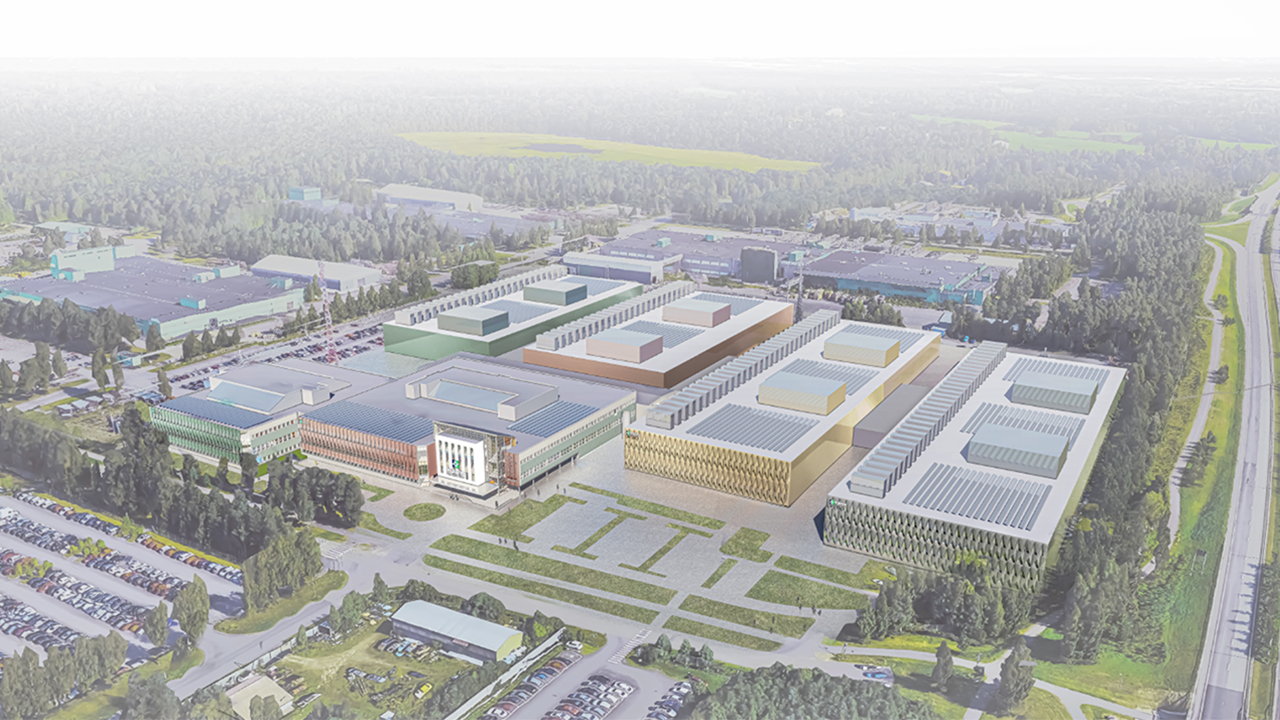
Glesys has agreed with Trevian Asset Management to establish Campus Oulu, a new AI-ready data centre campus in northern Finland with long-term expansion potential of up to 300MW.
The first deployment phase is expected to be ready for service in autumn 2026 and is planned to support an initial IT load of approximately 8MW. The site is being developed as a modular campus, allowing capacity to scale in phases if power, demand, and delivery conditions support further growth.
Campus Oulu is being designed for high-performance computing and AI infrastructure, including liquid-cooled environments. Glesys says the facility will operate on green electricity from day one, while discussions are under way on using surplus heat within local energy systems.
Oulu was selected because of its technology and research base, existing ICT ecosystem, and Glesys’s operational presence in the region. The company already operates data centre facilities and cloud infrastructure across several Nordic locations, including Falkenberg, Stockholm, Helsinki, Pori, Tampere, and Oulu.
Cooling choices are moving upstream
The project’s first phase is modest against the largest hyperscale campuses now being proposed in Europe, but its design assumptions are more revealing than its starting size. AI and high-performance computing workloads are forcing cooling decisions earlier in the development process, especially where operators expect GPU-heavy deployments or dense customer environments.
Liquid cooling is no longer a niche feature reserved for specialist supercomputing sites. Higher rack densities, accelerator-heavy systems, and tighter energy-efficiency targets are pushing developers to prepare mechanical systems, pipework, coolant distribution, controls, leak detection, and maintenance processes from the start.
Retrofitting those capabilities after the fact can be expensive and operationally awkward. A data hall built around conventional air-cooled assumptions may not easily support the densities demanded by AI customers without major changes to plant, containment, floor layouts, and maintenance practice. The Oulu campus is being framed around those requirements before its first phase enters service.
Finland gives the model a stronger base than many markets. Cooler ambient conditions can reduce mechanical cooling loads, while district heating networks and industrial heat demand can make waste heat recovery more plausible. Surplus heat use still depends on temperature levels, seasonal demand, nearby infrastructure, and commercial agreements, so the outcome will need to be judged on delivery rather than aspiration.
Nordic growth becomes more specialised
The Nordic data centre proposition has long rested on renewable power, cool climate conditions, land availability, and political stability. AI infrastructure is adding another layer. Customers now need sites that can combine power headroom, liquid-cooling readiness, resilient connectivity, and faster commissioning.
That demand is widening Europe’s capacity map. Not every AI workload needs to sit in London, Frankfurt, Amsterdam, Paris, or Dublin, especially where latency is less restrictive and power availability becomes the stronger factor. Secondary Nordic locations can compete if they offer credible energy access, fibre routes, engineering capability, and operational maturity.
The gap between an 8MW first phase and a 300MW long-term potential should still be read carefully. The initial deployment is the near-term capacity commitment. The larger figure depends on staged investment, customer demand, grid capacity, permitting, heat offtake, and the ability to keep mechanical and electrical design aligned with fast-changing compute hardware.
Campus Oulu also shows how real estate owners and cloud providers are combining roles. Trevian brings property and asset-management capability, while Glesys brings operational and customer infrastructure experience. That pairing is increasingly common as data centre projects require land, power, technical operation, and customer routes to market to move in parallel.
If the first phase opens as planned, the project will strengthen the case for smaller, power-aware Nordic campuses built around high-density compute rather than retrofitted for it. AI infrastructure growth is not only about the largest sites. It also depends on facilities that can convert available power, cooling design, and operational capability into usable capacity quickly.

