
Summary
- Gnomon Capital has acquired DC North, a carrier-neutral data centre operator in Varaždin, Croatia.
- The facility markets itself around Tier III certification, 4MW of power, 2,000 sq m of IT space, and resilient regional connectivity.
- The deal highlights growing investor interest in CEE data centre assets where resilience, connectivity, and power availability are becoming strategic.
Gnomon Capital has acquired Croatian data centre operator DC North, taking control of one of the country’s most prominent carrier-neutral facilities.
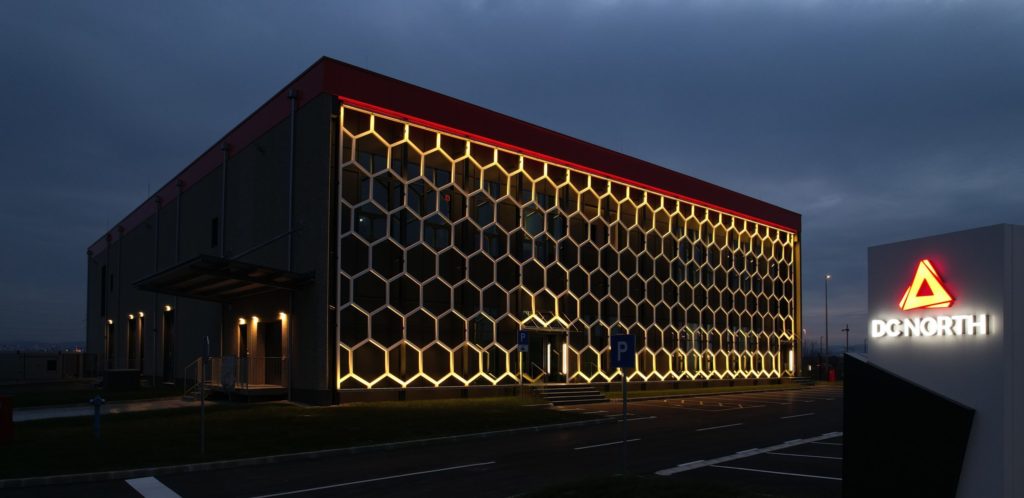
DC North is based in Varaždin, northern Croatia, and operates a facility that markets itself as the country’s largest carrier-neutral data centre. The operator’s official facility page lists 4MW of power, 2,000 sq m of IT space, six data centre rooms, and 24/7 operational support.
The facility is positioned as a secure digital infrastructure site outside Zagreb, with DC North describing it as a “digital fortress” and “Croatian Fort-Knox”. The operator states that the building is connected through three independent fibre pathways and is positioned on Croatia’s northern gateway, linking Zagreb with major exchange points in Austria, Hungary, and Slovenia.
Gnomon has acquired 100 percent of DC North from local telecoms operator Cratis and packaging producer Muraplast. Financial terms have not been disclosed, but the deal gives the investor a platform asset in a market still forming its role within Central and Eastern European digital infrastructure.
Resilience is the commercial angle
The transaction is small compared with the multi-hundred-megawatt hyperscale schemes being announced across Europe, but it sits in a different part of the market. DC North’s value is tied to regional resilience, tertiary-site use, carrier neutrality, and secure colocation rather than headline campus scale.
That position is becoming more useful in Central and Eastern Europe as regulated organisations look beyond capital-city facilities. Banks, government bodies, healthcare organisations, cloud platforms, enterprise IT teams, and service providers all need resilient infrastructure options that are not limited to Zagreb, Vienna, Budapest, or other larger hubs.
DC North’s location outside the capital, but still within reach of regional fibre and transport routes, gives it a practical disaster-recovery and business-continuity role. Its positioning around Tier III certification, physical protection, and redundant connectivity also aligns with a European regulatory environment in which operational resilience is gaining weight.
The operator refers to DORA and NIS2-related requirements on its website, linking its location and security posture to the compliance environment around critical and important entities. The Digital Operational Resilience Act is forcing financial entities and their ICT suppliers to examine third-party infrastructure risk more closely. NIS2 is widening the resilience and cybersecurity perimeter across essential and important services.
Scale remains the next constraint
Croatia is not yet a core European data centre market, but its geography gives it options. The country sits near Austria, Hungary, Slovenia, the Balkans, and Adriatic connectivity routes. As demand spreads beyond the largest Western European metros, secondary markets with resilient fibre paths and available power may become more attractive to investors looking for early positions.
DC North’s current scale is modest, although the operator indicates that the site has land and powerline potential for further expansion. Those figures should be treated as expansion context rather than delivered capacity, but they help explain why the asset may be more than a stabilised colocation facility.
Turning expansion potential into operational data hall capacity will require grid agreements, equipment procurement, customer commitments, planning, backup power, and cooling design. In smaller markets, the challenge is not only building capacity, but creating a customer base deep enough to support phased investment.
For Gnomon, DC North offers exposure to digital infrastructure, secure colocation, and regional connectivity without the immediate capital burden of a greenfield AI campus. For Croatia, the acquisition shows that resilient facilities outside the largest Western European hubs are beginning to attract private capital attention.

