
Summary
- Grupo Fotones is promoting Casiopea, a proposed hyperscale data centre campus in Murcia.
- The project is planned with 78MW of initial capacity and expansion potential to 140MW.
- Grid access, fibre connectivity, and an associated substation are central to the scheme.
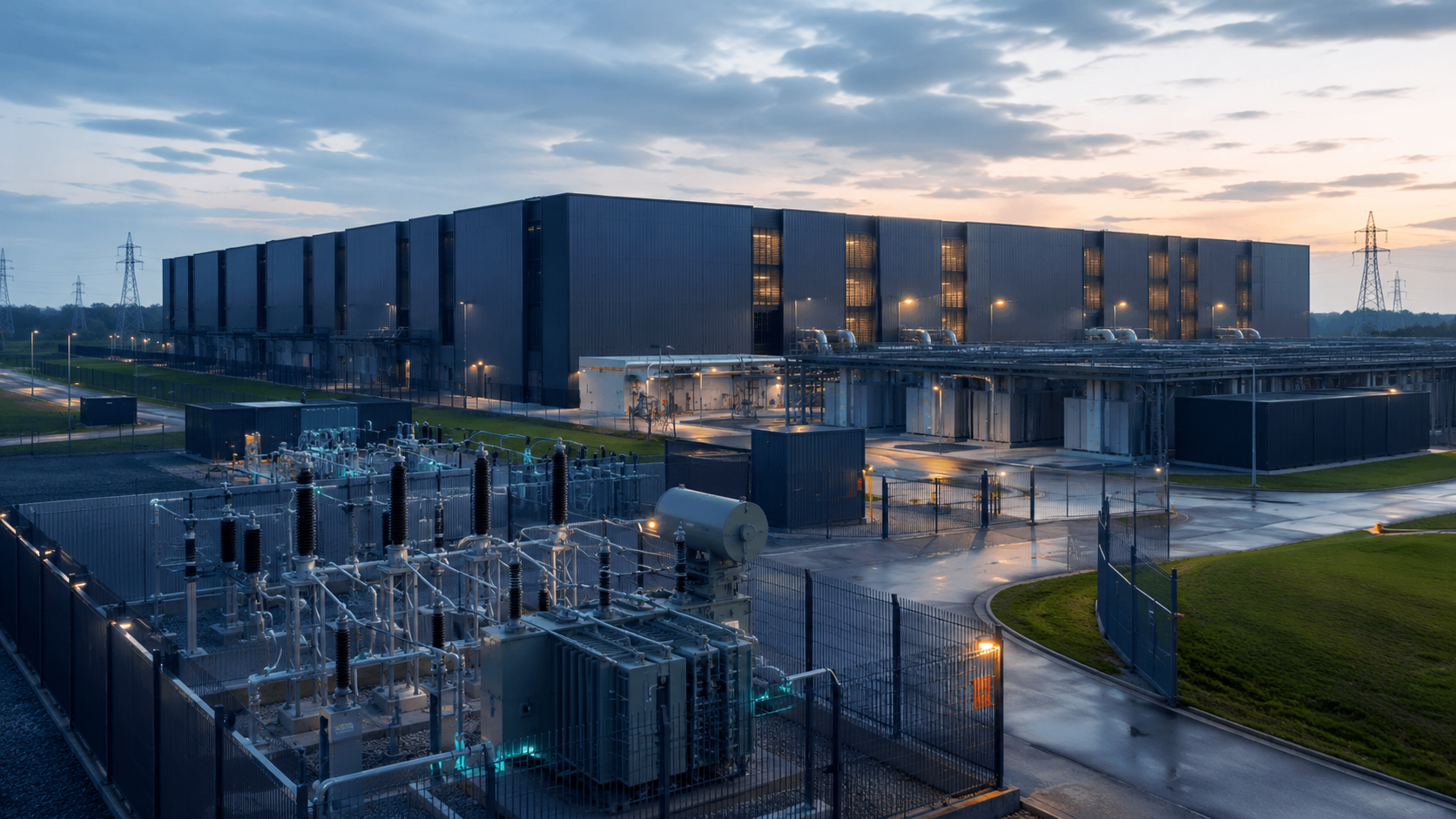
Grupo Fotones is promoting Casiopea, a proposed hyperscale data centre campus in Murcia with 78MW of initial capacity and expansion potential to 140MW.
The renewable energy developer describes Casiopea as its flagship data centre project and says the development reflects the need to resolve energy availability, territorial planning, and technical viability together from the start.
Trade reporting indicates that the project could require up to €1.15bn of investment and would be developed in two phases, with a first 78MW phase followed by a further 62MW. An associated substation is planned, and grid access for the first phase has been linked to Iberdrola.
The project is being considered near Espinardo in Murcia, with possible locations including the Myrtea commercial complex and a plot close to the university campus. Grupo Fotones’ public material identifies Murcia as the location but does not yet provide a detailed planning or construction timetable.
Energy developers enter the capacity market
Casiopea reflects a wider Spanish trend: energy developers are moving closer to data centres because grid access has become one of the sector’s most valuable assets. In high-demand markets, land with credible power is no longer just a development input. It is often the basis of the commercial proposition.
Spain has attracted major interest from cloud providers, hyperscale developers, fibre operators, and infrastructure investors. Madrid and Barcelona remain the most established hubs, but regions with land, renewable generation, grid potential, and political appetite are becoming more visible as AI demand changes site selection.
Murcia’s data centre base is much smaller than Spain’s main hubs, which makes a 140MW campus a large step for the region. The first 78MW phase would already represent a substantial infrastructure commitment, especially if it is tied to a new substation, fibre routes, and a specialist operating model.
Grupo Fotones’ background in renewable development gives it a power-led route into the market, but data centres require a different set of capabilities. A campus needs planning consent, resilient grid design, cooling systems, backup power, connectivity, security, customer contracts, commissioning, and 24-hour operations. Energy expertise is a strong start, not a complete operating platform.
Spain’s capacity map is widening
Spain’s next data centre cycle is unlikely to be confined to Madrid and Barcelona. Aragon, Extremadura, Murcia, and other regions are being assessed through the combined lens of power availability, land, fibre, permitting, and renewable energy. AI demand gives those regions a stronger opening because some workloads can tolerate greater distance from traditional hubs if power and cooling economics improve.
The commercial test for Casiopea will be whether a power-led development can become a bankable data centre campus. That requires more than a grid allocation. Customers will need certainty on energisation, resilience, cooling design, connectivity, service-level performance, and the operating partner behind the site.
Financing will also shape the project. If investment reaches the scale reported, Grupo Fotones is likely to need specialist capital, an operator, or a development partner to move from project origination into delivery. The company’s public material describes a methodology that covers site identification, viability analysis, engineering, and development, but the operational structure has not yet been set out in detail.
Spain’s renewable base gives it a strong narrative in digital infrastructure, but firm power remains the harder question. AI and hyperscale customers need reliable capacity, not only annual renewable matching. Substation delivery, grid reinforcement, backup strategy, and market exposure will all influence whether regional projects can compete for serious demand.
Casiopea is still at an early stage, but it shows how energy access is pulling new developers into the data centre market. Murcia may not be a traditional cloud hub, yet the combination of land, power strategy, and large-scale digital demand is changing which Spanish regions are in play.

