
Summary
- Hyperco has filed for a second data centre in Koria, Kouvola, with local reporting pointing to a possible 100MW facility.
- The filing follows an existing Kouvola project where YIT is main contractor and completion is scheduled for May 2027.
- Finland’s data centre growth is being shaped by power access, cool climate, industrial land, and the ability to turn site announcements into buildable capacity.
Hyperco is seeking permission for another large data centre in Kouvola, as the Finnish city continues to draw hyperscale interest around land, power, and Nordic delivery conditions.
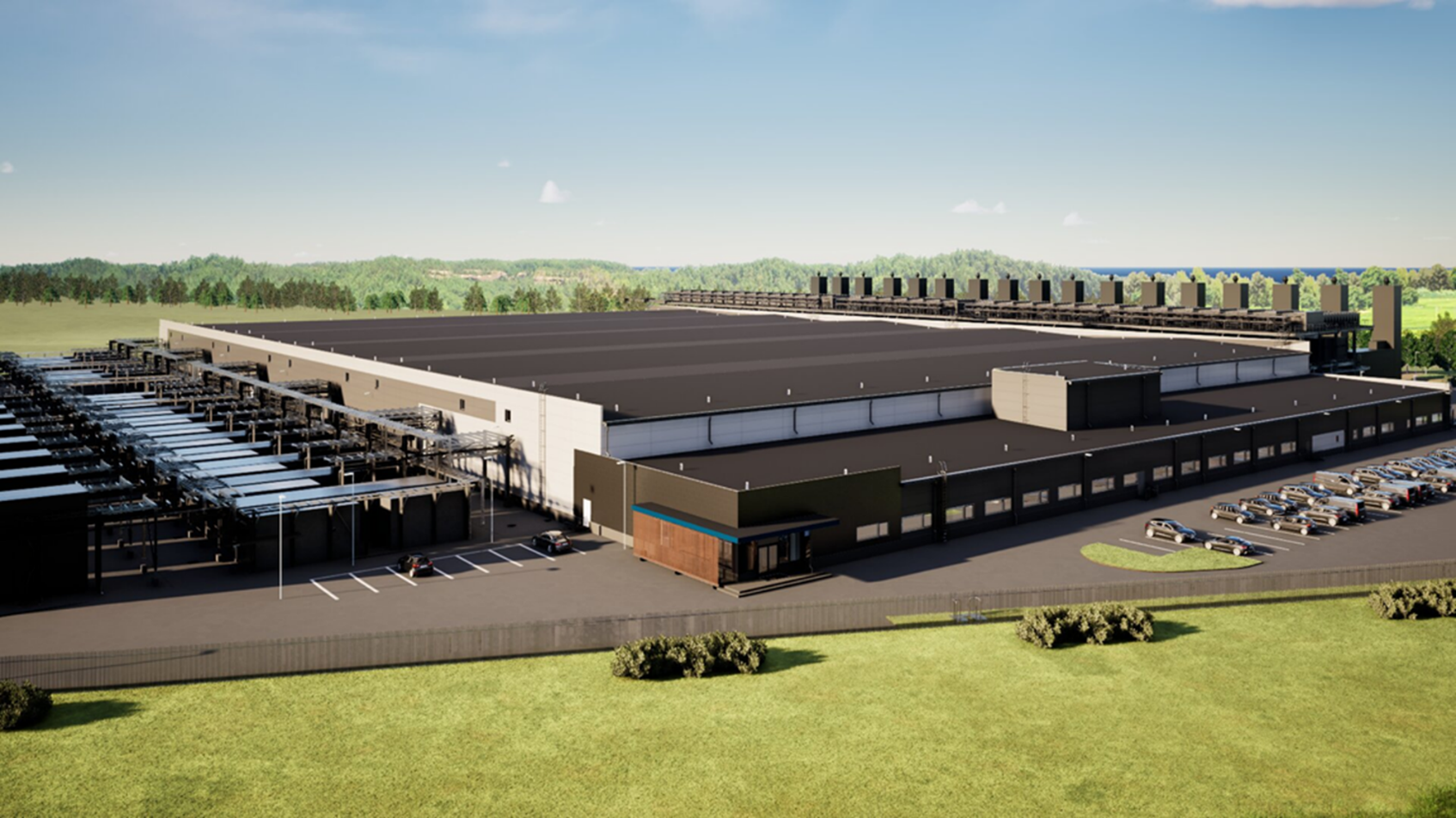
The company has filed to develop a facility in Koria, Kouvola, with local reporting cited by sector press indicating a two storey data centre of about 56,670 sq m and potential capacity of up to 100MW.
Before any new capacity can move forward, the Kouvola Technical Committee is expected to consider the permit application on 16 June, with the filing adding to an existing Hyperco project already under construction in the city.
Under the earlier Kouvola scheme, Hyperco is developing a large data centre through Hyperco Fin HoldCo 1 Oy, with YIT acting as main contractor for a project covering roughly 28,000 sq m.
That project includes the data centre building, office areas, exterior technical yards, and wider site works, while technical installation and building services have been assigned to Assemblin Caverion.
Construction on the existing development began at the end of October 2025, and YIT’s project material gives a scheduled completion date of May 2027.
Kouvola’s profile has also been strengthened by its association with large scale hyperscale deployment, after TikTok previously said a €1bn Finnish data centre in the city would be built by Hyperco as part of Project Clover.
Although the latest application should not be assumed to have the same customer, it adds to the sense that Kouvola is becoming a more deliberate campus location rather than a single project outpost.
Delivery conditions will decide the pipeline
Finland offers several conditions that suit data centre development, including cooler weather, industrial land, stable governance, and a construction sector familiar with technically demanding buildings.
Those advantages are useful, but larger AI and cloud facilities still depend on high voltage infrastructure, transformers, switchgear, backup systems, cooling plant, fibre routes, and enough skilled labour to deliver to programme.
A 100MW class facility also changes the local infrastructure conversation, because the scale of electrical demand, civil works, security, road access, and heat rejection moves beyond a conventional regional colocation build.
Nordic data centre markets have often been treated as comparatively straightforward because renewable power and lower ambient temperatures can support efficient operation, yet that view underplays the pressure created by larger schemes.
As developers move from single buildings to campus positions, municipalities must deal with heavier planning volumes, more complex utility interfaces, and a greater need to align grid works with construction schedules.
Kouvola may have an advantage over more congested European hubs because industrial sites can reduce some land conflict, while local heat infrastructure could offer routes for heat recovery if the commercial structure is viable.
Even so, every additional megawatt has to be backed by a credible connection, upstream capacity, onsite electrical distribution, resilience design, and customer demand that can support the investment.
The second Kouvola filing places Hyperco deeper into Finland’s emerging hyperscale map, although the commercial test will come through permits, power, equipment procurement, and delivery rather than headline capacity alone.

