
Summary
- The XDP8HD40S-1 is designed for 800V and ±400V DC equipment power paths.
- Features include digital operating-area control, PMBus diagnostics and event recording.
- Samples are planned for Q2 2027, so the controller is not yet a confirmed production component.
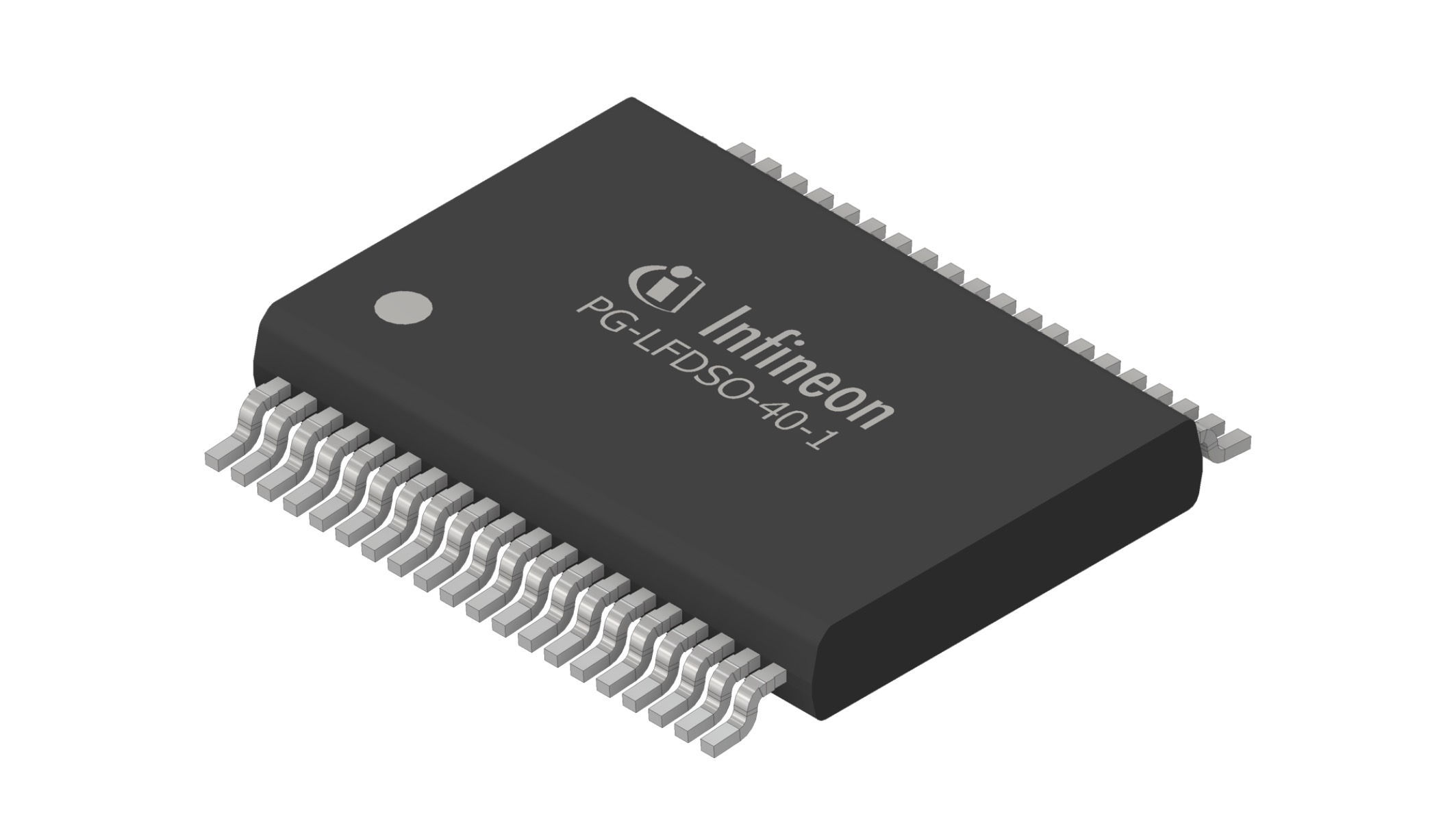
Infineon Technologies has announced the XDP8HD40S-1 high-voltage hot-swap controller, a component intended to monitor and protect DC power paths in dense server infrastructure. The Munich-based company says the device can support ±400V and 800V configurations and includes programmable protective functions, digital monitoring and event recording. Samples are targeted for the second quarter of 2027, meaning this is a future component availability milestone rather than a production data centre deployment.
High-voltage DC architectures can reduce the amount of current needed to deliver power to a rack, helping address conductor losses and cable density as load increases. They also introduce different risks when equipment is connected or disconnected. A high-energy DC bus can sustain arcing and damaging inrush currents if switching is not controlled correctly. Hot-swap circuitry is intended to manage connection sequences and isolate faulted equipment without bringing down healthy parts of the supply system.
Infineon describes digital Safe Operating Area control, which manages the conditions under which a power switch can safely conduct current and dissipate energy. Its variable pulse function is designed to support startup behaviour while maintaining limits for the device being controlled. These functions are particularly relevant when a large capacitor bank or power converter is brought online, because the brief surge of current can exceed normal operating demand.
The new controller supports external power switching devices, including combinations using silicon carbide technology. A system designer still needs to choose appropriate switches, thermal management, connectors and protection coordination. No individual integrated circuit can ensure that a complete 800V distribution architecture is safe under every failure mode. Cable isolation, earth-fault monitoring and the design of upstream protection remain central to electrical safety.
For diagnostics, the device includes a PMBus 1.5 interface and a built-in black-box function that records fault information. Such logs can help determine whether a module tripped because of overvoltage, undervoltage, temperature or an abnormal current event. Their usefulness depends on how detailed the record is, whether timestamps are reliable and whether data centre management software can correlate it with events elsewhere in the rack and facility.
The device also provides configurable fast shutdown and temperature monitoring. These features can potentially limit damage from abnormal conditions, but must be validated with the selected power switch and loads. A too-sensitive trip configuration can itself create service interruptions; insufficient protection can permit damage to propagate. The operational goal is selective protection that preserves unaffected modules wherever the design allows it.
The announced device is designed to cope with the transition towards higher rack bus voltages, but the path from a component sample to deployed infrastructure includes extensive qualification. Original equipment manufacturers will evaluate electrical stress, thermal performance, electromagnetic compatibility and operation with the chosen power switches. A controller that meets a laboratory requirement may need a different protective threshold in another rack configuration. Details of the complete assembly will determine safe operating limits.
Remote fault records can improve maintainability if they are treated as part of a joined-up event history. A data centre may simultaneously log utility disturbances, UPS switching, rack bus conditions and server errors. Correlating these events helps distinguish an upstream cause from a local load fault. Without time synchronisation and consistent alarm definitions, however, a large collection of logs can make diagnosis harder. The new controller supplies potential diagnostic data but does not replace an operational monitoring strategy.
The device also has a commercial readiness boundary. Samples targeted for Q2 2027 are neither large-volume production parts nor evidence that finished racks are ready for service. Operators procuring new capacity for earlier dates will need established alternatives or a separate qualification plan. Longer-term adopters should look for test reports, packaging and sourcing information, and supported firmware management before treating the component as a proven part of an 800V installation.
Infineon's October development is distinct from its previously reported semiconductor acquisition and earlier reference designs for 800V racks. Engineers can assess the published specification now, but there is no basis to describe the device as shipping or installed. Sample availability, certification and complete system testing will be the next meaningful milestones.
The rollout timetable is also an important distinction. Engineering samples allow equipment makers to test the controller against their intended voltage, load and protection requirements, while qualification and integration must precede deployment in an operational rack. Engineers will need to verify interruption behaviour, isolation requirements, telemetry interpretation and the interaction with upstream distribution protection rather than assuming that compatibility on paper proves system resilience.

