
Summary
- Iomart is in exclusive bilateral discussions over the potential sale of its data centre business, with no agreed purchaser or transaction value disclosed.
- Expected first-half revenue fell to £68.9m, adjusted EBITDA to £8.9m, and net debt rose to £117.2m.
- A sale would require shareholder approval under AIM rules and could provide funds to reduce debt and invest in the remaining services businesses.
Iomart has entered exclusive discussions over the potential sale of its UK data centre business, as the cloud and managed services group seeks to reduce borrowing and release capital for investment in its remaining operations.
The AIM-listed company disclosed the negotiations in a trading update on 19 November. Its board has concluded that disposing of the business could substantially reduce bank debt while providing funding for the development of its managed services activities.
The discussions are bilateral and exclusive, but no binding transaction has been announced. Iomart has not identified the prospective purchaser, disclosed a proposed sale price or provided a completion timetable.
If the negotiations do not produce an agreement, the board intends to conduct a broader marketing exercise in early 2027. A disposal would represent a fundamental change to the company’s business under Rule 15 of the AIM Rules for Companies and would therefore require shareholder approval.
The announcement follows a weaker trading period. Iomart expects revenue of approximately £68.9m for the six months ended 30 September 2026, compared with £77.7m a year earlier. Adjusted earnings before interest, tax, depreciation and amortisation are expected to fall from £12.5m to approximately £8.9m.
Those figures are preliminary expectations rather than final half-year results. Iomart is scheduled to publish its interim financial results on 26 November.
Net debt stood at approximately £117.2m at the end of September, up from £108.6m at the end of March. The company had drawn £105m of its £115m revolving credit facility, which has been extended to June 2028.
Data centre ownership ties capital to physical assets
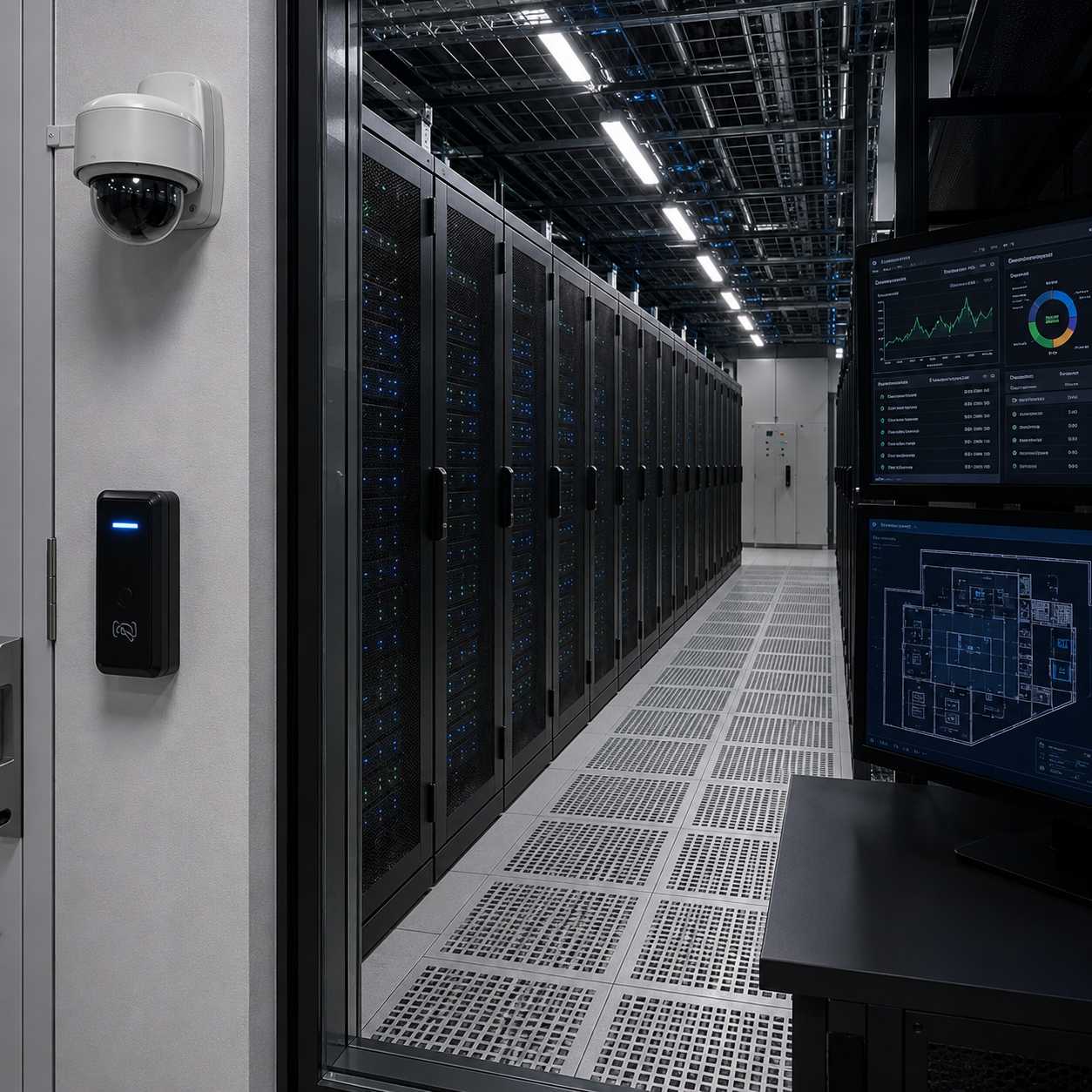
Iomart operates a UK data centre portfolio supporting colocation, cloud infrastructure and associated services. Its estate includes facilities in Glasgow, Manchester, London, Maidenhead, Nottingham, Leicester, Gosport, York and St Asaph.
Ownership of these facilities brings requirements beyond the computing equipment installed by the operator or its customers. Buildings must be maintained, electrical and cooling infrastructure periodically upgraded, and resilience arrangements kept suitable for the workloads being hosted.
Large electrical systems require ongoing maintenance of switchgear, transformers, distribution equipment, UPS installations and standby generation. Cooling systems may need changes as customer equipment evolves, particularly where higher rack densities alter thermal demands.
These investments can extend the useful life and commercial capacity of a data centre. They also tie capital to physical infrastructure, even when the parent company is seeking to expand services that are less dependent on property ownership.
The suitability of an existing facility for new computing requirements is not determined solely by floor space. Available electrical capacity, network connectivity, cooling configuration and the condition of supporting equipment influence which customers can use the site.
Prospective buyers would therefore need to assess the portfolio’s operating characteristics alongside its property assets and commercial contracts. The value of an established data centre can differ substantially according to the services it supports, remaining infrastructure capacity and investment needed to maintain or expand operations.
Iomart previously separated its data centre infrastructure and services activities within the group to improve operational focus and make capital allocation clearer. That restructuring created a more distinct basis for assessing the physical estate.
The potential disposal could allow Iomart to continue concentrating on services such as managed cloud, backup and cybersecurity. However, the company has not disclosed whether it would retain hosting capacity through leases, service agreements or other contractual arrangements following a sale.
Those details will influence the effect on existing customers. Selling a data centre does not necessarily mean closing it, moving hosted applications or ending current services. Continuity will depend on the transaction structure and the responsibilities retained by each party.
Weaker trading narrows financing flexibility
Iomart attributed its first-half shortfall partly to lower hardware product resale revenue and slower private cloud bookings. Growth in Microsoft-related services and managed backup provided some offset, but did not prevent an overall decline in expected revenue and profitability.
The group also reported that customer churn had outweighed bookings earlier in the period, although more recent trading showed improving order activity and lower churn.
Management expects full-year revenue to be approximately 4% below the company’s compiled analyst consensus of £148.5m. Adjusted EBITDA is expected to be around 16% below a consensus figure of £25.6m.
These expectations indicate that reduced trading performance is likely to continue affecting the group’s finances beyond the first half. The board is implementing cost reductions and other operational changes while seeking a more sustainable allocation of capital.
The higher debt balance also limits room for additional borrowing. Although the revolving credit facility remains available through June 2028, interest costs and financial covenants can influence how much investment the group can undertake without changing its funding arrangements.
Proceeds from a data centre disposal could reduce debt and lower future financing requirements. The amount available for reinvestment would depend on the eventual consideration, transaction costs, any retained liabilities and the terms of the agreements with the purchaser.
Remaining services businesses would still need reliable hosting infrastructure. If Iomart ceased owning its facilities, it could become more dependent on external providers for power, cooling, building maintenance and physical access, even while retaining responsibility for services delivered to customers.
That arrangement would change the allocation of operating risk rather than remove it. Customer contracts can continue to impose availability, recovery and security requirements regardless of who owns the buildings supporting the systems.
The company has not announced a completed transaction or specified how the current negotiations would address those obligations. Its immediate position remains one of exclusive discussions, with a wider sale process planned if an agreement cannot be reached.

