
Summary
- The Chiba project will have up to 400MW of power capacity beside JERA's thermal power station.
- Total capital deployment is expected to exceed $15bn across land, power, facilities, and compute.
- Operations are targeted to start around 2028, with Reuters reporting full 400MW capacity planned for 2029.
JERA, Dell Technologies, and London headquartered RHAELM have agreed to develop a standardised model for large scale AI infrastructure in Japan, starting with a project of up to 400MW beside JERA’s Chiba thermal power station.
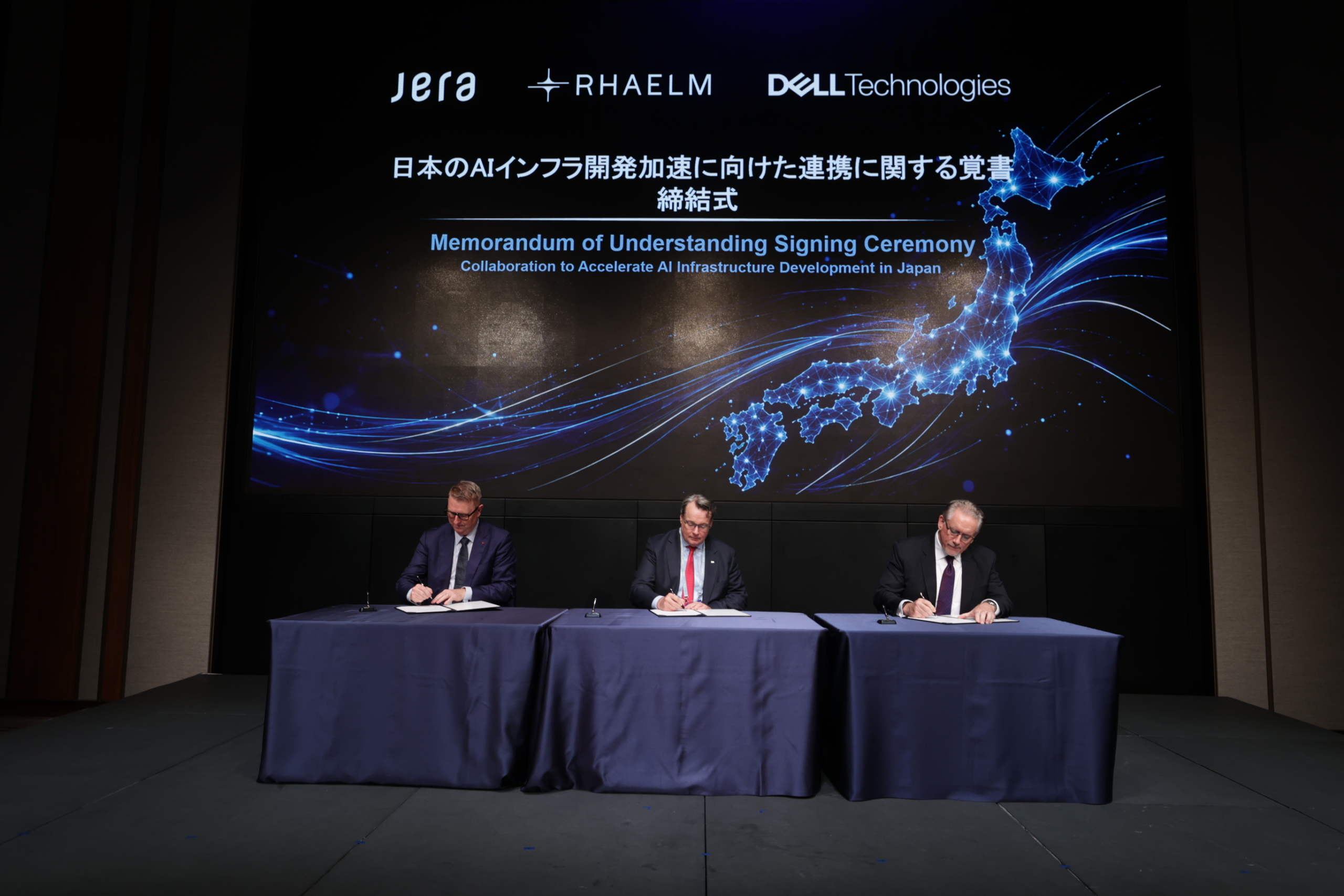
The companies signed a memorandum of understanding on 1 October covering the integration of generation, electrical infrastructure, cooling, and rack scale AI compute.
JERA and RHAELM are already jointly developing the Chiba project, while Apollo Global Management intends to participate as a strategic investment and financing partner to RHAELM.
Total capital deployment is expected to exceed $15bn across land, power infrastructure, facility construction, and AI compute.
JERA is providing the site and up to 400MW of power capacity. Dell will provide a standardised AI infrastructure architecture, while RHAELM is responsible for data centre development and delivery.
The project is intended to operate behind the meter from JERA’s existing generation asset rather than depending entirely on a conventional new grid connection.
Operations are targeted to begin around 2028. Reuters reports that the partners aim to reach the full 400MW capacity in 2029.
Locating compute beside existing generation changes the sequence of a conventional data centre power programme.
A large development normally requests capacity from a transmission or distribution network and then waits for the substations, lines, or upstream reinforcement required to serve the load.
At several hundred megawatts, those works can take years and can become the longest part of the development programme.
Chiba starts with substantial generation already on the site and designs the electrical system around that asset.
JERA says the arrangement can bring capacity online sooner than a conventional grid connected project. Construction and commissioning will determine whether that schedule advantage is achieved in practice.
JERA identifies reliable gas fired generation and its LNG supply chain as part of Japan’s strategy for supporting AI infrastructure.
That provides dispatchable power but ties part of the compute load to the emissions and fuel economics of thermal generation.
Power adjacency therefore addresses connection delay without resolving the carbon intensity of the electricity supply.
A 400MW AI facility requires large internal substations, high capacity distribution, resilient protection systems, cooling infrastructure, network connectivity, and equipment capable of supporting dense accelerator racks.
JERA, Dell, and RHAELM intend to standardise those interfaces so later projects can reuse more engineering rather than starting from a blank design.
The approach reflects a wider change in large data centre development: power supply is moving into the campus design instead of remaining an external utility dependency addressed after land has been selected.
Private wire systems, onsite generation, and sites beside existing power assets can shorten part of the connection programme, but they also transfer more responsibility for generation, fuel, resilience, electrical integration, and emissions to the developer and operator.
Chiba will test whether that trade can support a repeatable 400MW AI platform on the timetable the partners have set.

