
Summary
- Apatura is proposing a 300MW data centre campus beside Glenbervie Business Park in Larbert.
- The scheme has attracted local objections over noise, proximity, generators, pollution, and 24-hour operation.
- The project would use a high-capacity grid connection, a new substation, backup generation, and a link to battery storage.
Apatura is facing local opposition to its proposed 300MW AI data centre campus beside Glenbervie Business Park on Bellsdyke Road in Larbert, near Falkirk.
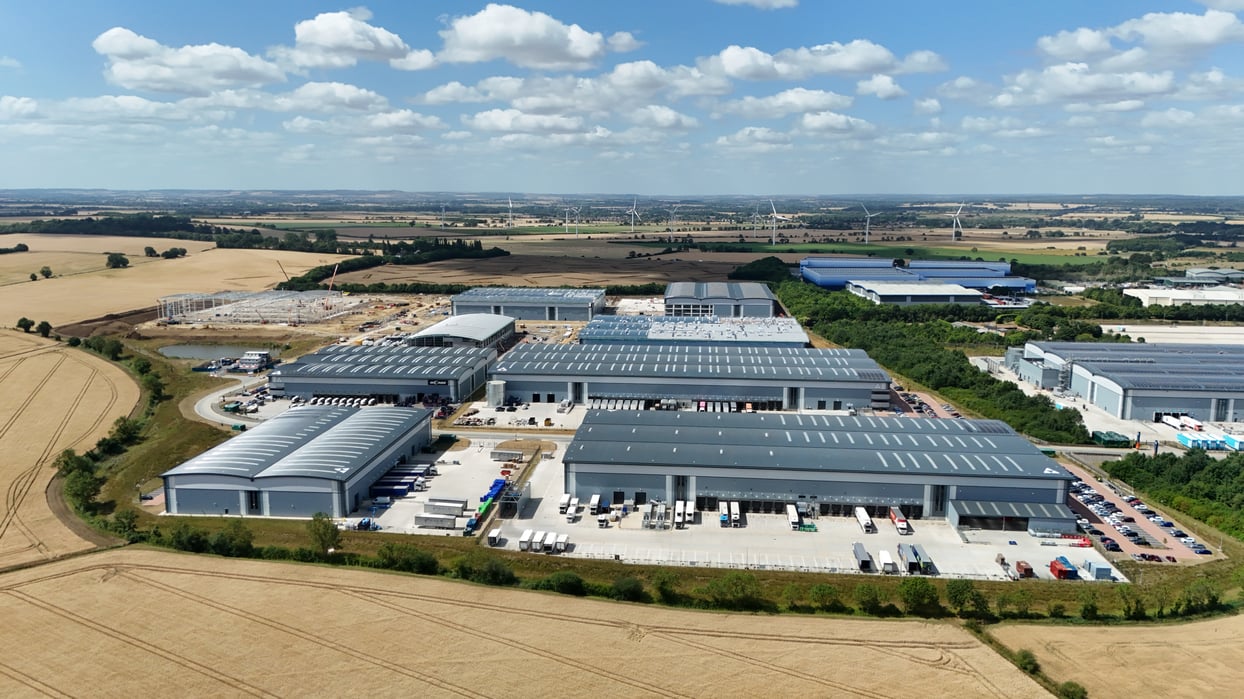
The renewable energy developer is seeking to build a large digital infrastructure development on around 50 acres of mainly vacant grassland close to the M876, the A88, Forth Valley Royal Hospital, commercial premises, and housing. The project site describes a 300MW campus designed to support secure, high-capacity digital services.
Apatura says the site has been selected for its strategic location, access to a skilled workforce, and strong grid connectivity. The company says the site can access a high-capacity grid connection from the nearby Denny substation, providing the power required for data centre operations.
The project consultation page sets out a timetable that includes grid offer acceptance in 2025, public consultation in late 2025, planning submission in Q2 2026, remediation from Q3 2026, construction from 2027, and operation from 2029, subject to approval and delivery.
Megawatts bring planning risk
A 300MW campus is not a normal business park development. It brings an electrical load comparable to heavy industry, with associated power infrastructure, mechanical plant, security, backup systems, and continuous operation. That scale changes the relationship between developer and host community.
Local objections have focused on noise, proximity to homes and sensitive uses, backup generation, air quality, and the effect of a 24-hour industrial facility near existing communities. Campaign material has also drawn attention to the project’s diesel generators, emissions, greenhouse gas assessment, flood risk, and the proposed relationship with battery energy storage and a private wire connection.
Apatura’s case rests on grid access, policy alignment, and the need for digital infrastructure that can support Scotland’s economy. The company says the proposal aligns with National Planning Framework 4 and Scotland’s net zero ambitions, while delivering nationally significant digital capacity.
Those claims now have to meet detailed planning evidence. Noise models, generator testing regimes, air-quality assessment, construction traffic, ecological mitigation, drainage, heat rejection, visual screening, and operational controls will decide whether the project is accepted locally. A large data centre cannot rely on the language of digital growth if the plant-level impacts remain contentious.
Battery storage complicates the case
The project’s energy strategy has attracted particular scrutiny because of the connection to battery energy storage. Campaign groups argue that the battery and private wire infrastructure should be considered alongside the data centre for environmental assessment purposes, rather than treated as separate supporting development.
That question goes to the heart of modern data centre planning. Large campuses are rarely standalone buildings. They depend on grid connections, substations, batteries, backup generation, fibre routes, water infrastructure, and sometimes renewable generation or heat networks. Planning systems built around individual red-line boundaries can struggle when the functional infrastructure extends beyond the site.
Diesel backup generation is another pressure point. Even when generators operate only for testing and emergency resilience, their scale can be substantial at hyperscale facilities. Communities living close to a site are likely to ask how often generators will run, what pollutants they emit, how noise will be controlled, and what happens in a prolonged outage.
Scotland has strong ingredients for data centre growth: renewable generation, land, cooling conditions, and a policy interest in digital infrastructure. The Larbert proposal shows the other side of that opportunity. Grid-rich locations may also sit near homes, hospitals, roads, and landscapes where large industrial loads will be contested.
The decision will test whether Apatura can turn a strong power-led development case into an acceptable local project. If the company can demonstrate credible controls on noise, emissions, resilience, construction, and community impact, Larbert could become a marker for Scottish AI infrastructure. If objections expose gaps in the evidence, the project will show how quickly megawatts can turn into planning risk.

