
Summary
- Magnora Data Center has acquired an operating 1,400 sq m Oslo facility with up to 2MW of IT load, in partnership with Blix Group.
- Magnora will own 75% and Blix 25%, with the facility becoming the third location in their metropolitan Oslo strategy.
- Fibre integration is planned, while upgrades towards higher availability standards and potential district heating remain under evaluation.
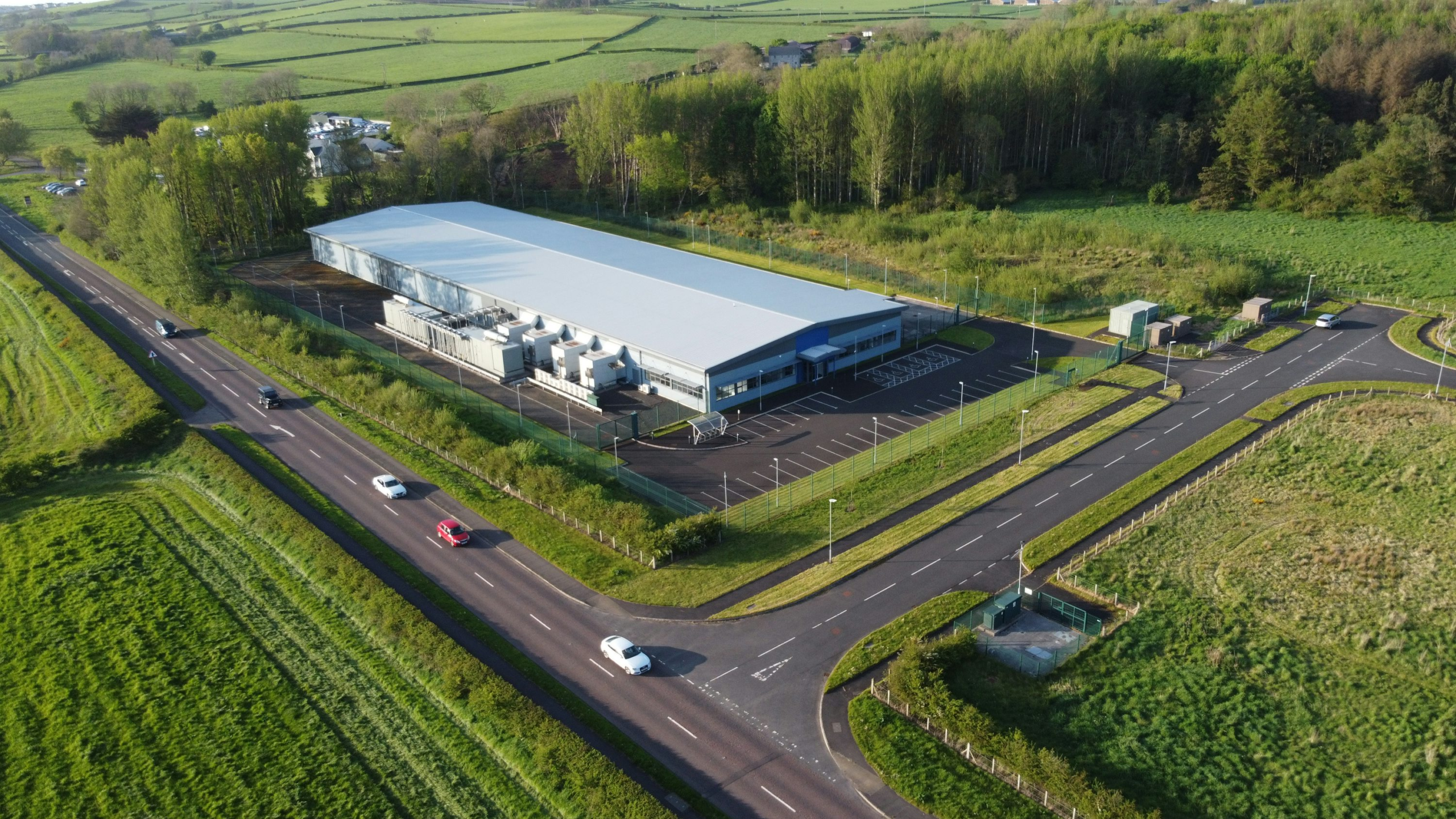
Magnora Data Center has acquired an operating data centre in Oslo with up to 2MW of IT load, adding existing computing infrastructure to its network of metropolitan facilities in the Norwegian capital.
The acquisition was completed in partnership with connectivity provider Blix Group, which will own 25% of the facility. Magnora Data Center will hold the remaining 75%, giving the companies a jointly owned operating asset rather than another site requiring construction before it can accommodate computing equipment.
The facility was purchased from an unnamed international telecommunications operator. It occupies approximately 1,400 square metres and already has access to fibre infrastructure serving the Oslo region. Neither the acquisition price nor its existing customer commitments have been disclosed.
Magnora ASA holds 52% of Magnora Data Center, which is separately listed on Euronext Growth Oslo. The subsidiary is developing a portfolio of data centre projects while adding operating sites through its partnership with Blix.
The latest acquisition becomes the third location in its metropolitan Oslo strategy. Magnora describes the approach as a network of connected urban facilities positioned close to customers requiring low network latency and computing services hosted within Norway.
Existing capacity changes the development timetable
An operating data centre can provide a different route to commercial capacity from a new development site. The building, technical infrastructure and existing connections are already present, although their condition and suitability for additional workloads must still be assessed against the requirements of prospective customers.
Magnora chairman Erik Sneve has linked the acquisition to a faster route to revenue. That expectation reflects the site’s existing operational status, but the company has not disclosed occupancy, available rack space, contracted revenue or the expenditure needed for proposed improvements.
The facility is described as supporting up to 2MW of IT load. This refers to the computing equipment’s power requirement and should not be equated automatically with total electricity imported by the building, which must also accommodate cooling, electrical losses and other supporting infrastructure.
Nor does the upper capacity figure establish that 2MW of customer equipment is operating today. Installed IT capacity, actual utilisation and the electrical capability available for further equipment are separate measures that have not been individually quantified.
Magnora considers the facility suitable for upgrading towards EN 50600 Availability Class 3 or Tier III standards. These are distinct availability assessment frameworks, and the company’s statement describes upgrade potential rather than an existing certification or independently verified operational classification.
Any improvement programme would depend on the present arrangement of electrical distribution, cooling equipment and supporting infrastructure. Meeting higher availability requirements may involve ensuring that maintenance can take place without interrupting essential systems, together with appropriate provisions for equipment redundancy and isolation.
The company has not published a technical upgrade design, cost estimate or completion date. Consequently, the acquisition establishes an operating asset, but not a finished programme of resilience improvements.
Fibre connectivity links the Oslo portfolio
Blix intends to connect the acquired data centre to its own fibre network, linking it with other Magnora and Blix sites in the Oslo area. The property already has access to existing fibre infrastructure, so the planned work concerns additional integration rather than the first telecommunications connection to the building.
This arrangement could allow customers to access computing resources across several urban locations. The quality of that connectivity will depend on the available routes, network equipment, interconnection arrangements and capacity provisioned between individual sites.
Magnora and Blix have previously agreed a separate Oslo venture involving approximately 581 square metres of commercial space, with an initial 1MW data centre proposal that could expand to 9MW subject to electricity connection. That development is distinct from the newly acquired operating facility.
Connecting the sites can support a wider metropolitan services offering, although fibre links alone do not guarantee continuity during infrastructure failure. Workloads intended to operate across multiple facilities require suitable replication, network routing and application recovery arrangements.
The companies have not disclosed the capacity or physical route diversity of the proposed links. They have also not announced a date when the new facility will be fully integrated with the other sites.
Heat recovery remains under consideration
Magnora is evaluating a district heating customer capable of receiving the facility’s available waste heat. The assessment concerns a potential use for heat removed from computing equipment, rather than an announced agreement to supply a heating network.
Almost all electricity consumed by computing equipment ultimately becomes heat that must be transferred out of the operating environment. Reusing some of that energy requires a suitable receiving system, compatible temperature conditions and the infrastructure needed to move heat from the data centre to the customer.
The company’s disclosure does not identify the cooling configuration, recoverable heat temperature, available heat output or distance to a potential heating connection. Without those details, neither the useful heating capacity nor the expected carbon reduction can be calculated reliably.
Additional equipment may be needed if the recovered heat is below the temperature required by a district heating network. The electricity consumed by such equipment would form part of any assessment of the project’s operating costs and environmental performance.
The acquired facility therefore offers Magnora an immediate operating presence within its metropolitan network, while several elements of the future configuration remain unsettled. Fibre integration, availability improvements and district heating could change its commercial and operational characteristics, but none has yet been reported as complete.

