
Summary
- Merlin has moved Bilbao-Arasur 04 and 05, together with an existing-building power upgrade, into its future development pipeline.
- Administrative electricity infrastructure delays have disrupted the affected programme, with renewable generation permitting also reported as a constraint.
- The company continues preparing a separate fully let 48MW Bilbao building for delivery in December 2026.
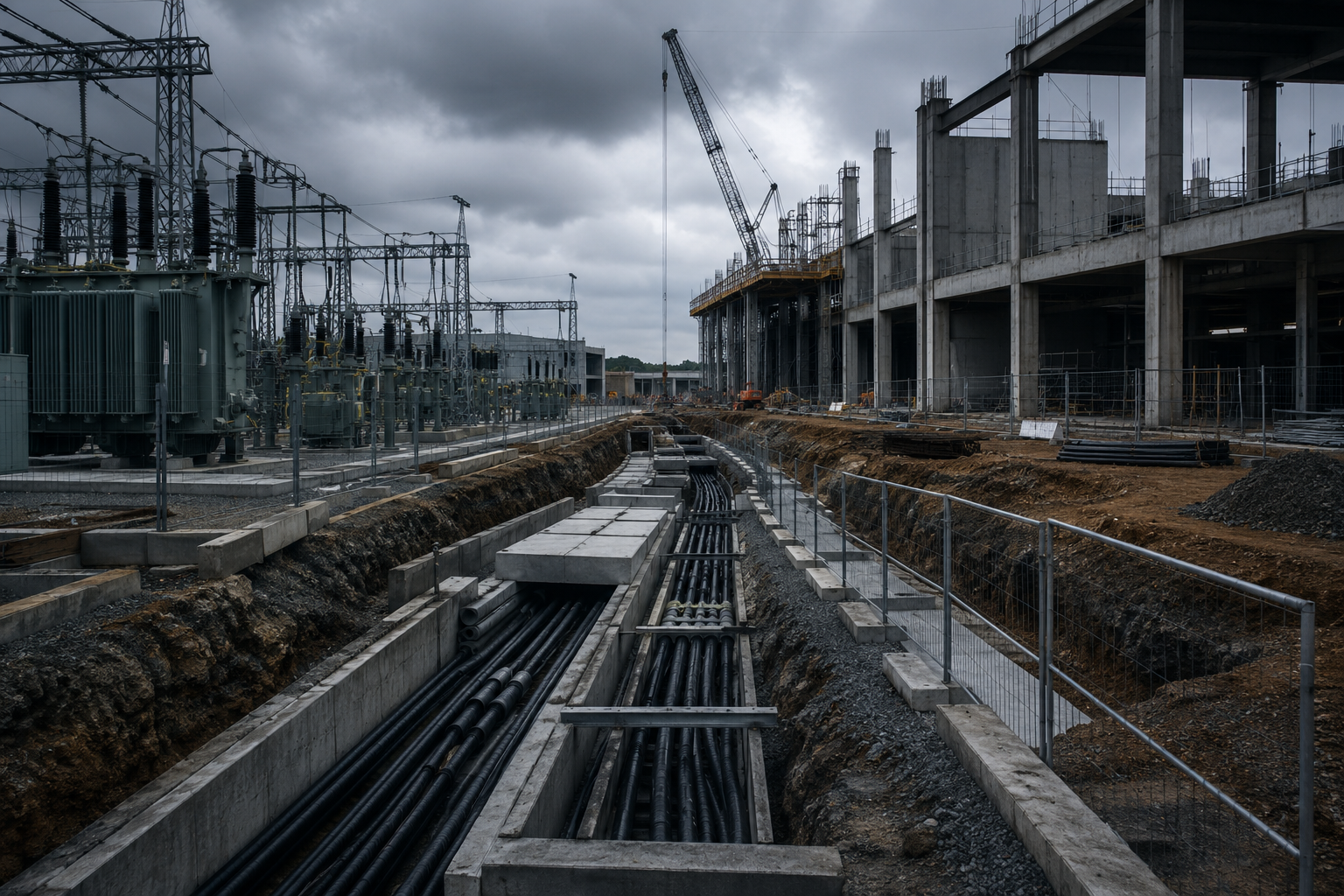
Merlin Properties has moved 162MW of planned data centre capacity at its Bilbao-Arasur campus into its longer-term development pipeline because of delays affecting electricity infrastructure.
The decision covers the proposed Bilbao-Arasur 04 and 05 buildings and additional power capacity associated with an existing building. Merlin disclosed the revised development position in its results for the first nine months of 2026, published on 12 November.
The company attributes the deferral to administrative delays affecting electrical infrastructure. Subsequent industry reporting on 19 November identified difficulties involving renewable generation projects associated with the campus as an additional obstacle.
Solaria, one of Merlin’s energy partners, had been expected to support the proposed expansion through renewable electricity generation. However, several solar developments in the Basque Country have encountered authorisation problems, complicating the timetable for supplying the new facilities.
Merlin chief executive Ismael Clemente has indicated that the affected buildings will not proceed without sufficient certainty over their electricity arrangements. The company is examining alternatives with Solaria, including the possibility of meeting future demand through generation located elsewhere.
The 162MW figure is particularly important because it encompasses more than two proposed buildings. Merlin’s financial disclosures identify both Bilbao-Arasur 04 and 05 and the repowering of Bilbao-Arasur 01 within the capacity transferred into its future pipeline.
Consequently, the figure should not be treated as two completed facilities being removed from operation, nor as capacity that had already become available to customers.
Other development at Bilbao-Arasur continues. Merlin reports that its initial campus infrastructure is operational and that Bilbao-Arasur 02, a separate 48MW building, is fully let and scheduled for delivery in December 2026.
The company expects cash flow from the first 20MW of that building to begin in January 2027, with the remaining 28MW contributing from June, subject to delivery and operational milestones.
Across its wider data centre programme, Merlin reported 160MW of IT capacity let or pre-let, a further 206MW in advanced commercial negotiations, and 68MW reserved.
Those figures describe different levels of commercial commitment. They do not mean that all the identified capacity has been constructed, connected, or commissioned.
Merlin’s staged programme relies on converting development sites and electrical allocations into facilities capable of supporting customer equipment. Changes to the timing of electricity supply can therefore affect the sequence of capital expenditure, building completion, and revenue generation.
The Bilbao deferral illustrates the consequences of pursuing data centre expansion where land, commercial demand, and proposed computing capacity advance faster than the infrastructure needed to supply electricity.
A project can have suitable industrial land and prospective customers without possessing a deliverable electricity connection. Grid reinforcement, network agreements, substations, and associated renewable generation may all influence whether the proposed IT load can enter operation.
The distinction between electrical infrastructure capacity and computing capacity adds another layer of engineering requirements. Data centres require electricity for cooling, power conversion, pumps, fans, and other services in addition to their servers and network equipment.
As a result, an expansion described in terms of IT megawatts may require a larger overall electrical supply. The actual connection requirement depends on the facility design, operating conditions, and efficiency of the supporting equipment.
Renewable electricity arrangements can introduce further dependencies where a developer intends to link new computing demand with generation projects that have not yet obtained all their approvals.
Even where a power purchase agreement provides a contractual route to electricity, it does not itself establish that the external network can deliver the full operating demand to the data centre.
The generation project, network arrangements, and facility infrastructure must therefore progress through their respective development and approval stages.
Spain’s new data centre sustainability legislation adds another consideration for unfinished projects. Royal Decree 1032/2026, published on 21 November, introduces renewable electricity additionality, hourly matching, and environmental performance requirements linked to electricity access.
The legislation includes transitional arrangements for developments with existing but unused grid permissions and for operators capable of responding to automatic electricity demand reduction instructions.
Developers must now examine how those requirements interact with their electricity procurement and engineering arrangements. A project that depends on future renewable generation may need to demonstrate more than its intention to purchase electricity from qualifying sources.
Battery storage offers one method of shifting renewable electricity between periods, but the required investment depends on load, storage duration, generation output, and the extent of hourly matching required.
For continuously operating computing facilities, substantial storage may be needed to cover extended gaps in renewable output. Even then, batteries cannot replace the need for an adequate electricity supply and suitable protection infrastructure.
Industry reporting has identified potential additional investment in storage and other measures across Merlin’s Spanish portfolio. Those estimates should not be treated as approved expenditure on the deferred Bilbao buildings.
Merlin is continuing development elsewhere. Its November results describe progress in Madrid, Lisbon, Zaragoza, and Extremadura, with different construction, permitting, and commercial milestones across the portfolio.
The company has also added a proposed 96MW project in Aragón to its development programme, while other facilities are moving through construction and planning processes.
These developments demonstrate that the Bilbao delays represent a change to part of Merlin’s investment pipeline rather than a suspension of its entire data centre strategy.
Nevertheless, the deferred capacity remains commercially dependent on obtaining workable electricity arrangements. The company will need to resolve the infrastructure delays before establishing a credible construction and delivery timetable for the affected expansion.
Merlin’s next reported milestones include delivery of Bilbao-Arasur 02 and progress on projects elsewhere in Spain and Portugal. The return of the deferred 162MW to its active programme will depend on whether the necessary electrical infrastructure can be delivered.

