
Summary
- Microsoft has terminated its agreement for Nscale's planned Loughton facility in Essex.
- Electricity connection delays reportedly extend into the 2030s, beyond the project's intended 2027 equipment deployment.
- Nscale is exploring alternative electricity supplies while maintaining its wider commercial relationship with Microsoft.
Microsoft has withdrawn from its agreement for Nscale‘s proposed data centre in Loughton, Essex, after electricity connection delays reportedly pushed the availability of sufficient grid power into the 2030s.
The decision removes the intended anchor customer from a 50MW AI computing facility that was announced in September 2025 as part of a wider programme of British infrastructure investment.
Nscale had planned to install approximately 23,040 Nvidia GB300 GPUs at the site, initially targeting delivery during the first quarter of 2027. The facility was designed to support Microsoft Azure services and potentially expand from 50MW to 90MW.
Those figures describe the previously announced project, not computing capacity already installed or operating. The withdrawal leaves its customer arrangements and eventual delivery schedule uncertain.
Microsoft has confirmed that the termination concerns the Loughton development rather than its broader relationship with Nscale. The companies continue to have commercial arrangements covering infrastructure in other markets.
Nscale says it remains committed to Loughton and is considering alternative sources of electricity alongside other UK development opportunities. It has not announced a replacement customer or a completed power solution for the Essex site.
The development follows earlier reporting that the project was experiencing delays associated with electricity availability. Microsoft’s withdrawal is a separate commercial event, rather than merely another account of the existing grid connection problem.
Grid access changes the commercial position
Large AI facilities require substantial electricity capacity before their computing equipment can operate. In addition to the processors, the site must supply networking, electrical distribution, cooling, and other supporting systems.
The ability to secure land and establish customer demand therefore does not guarantee that a project can meet its intended delivery date. New electrical connections may depend on substations, cable routes, upstream network reinforcement, and the completion of work outside the developer’s direct control.
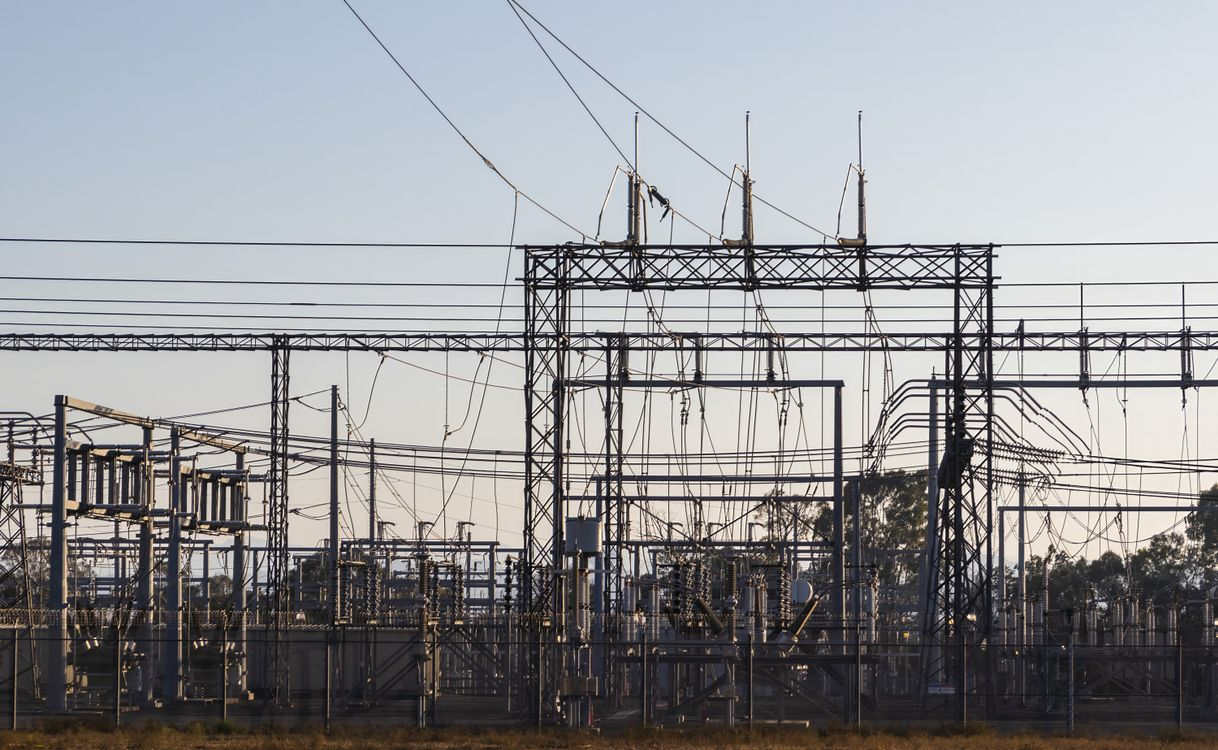
Reporting on Loughton indicates that electricity network officials could not offer sufficient supply until the 2030s. The precise works and connection milestones governing that estimate have not been publicly detailed.
A connection offer also needs to be distinguished from energisation. Even after the necessary network investment has been approved, equipment must be installed, tested, and commissioned before the data centre can draw its planned load.
Temporary generation or independent power supplies can sometimes enable phased operation. However, a large computing deployment needs an arrangement capable of providing continuous electricity, with suitable redundancy, maintenance provisions, and an acceptable operating cost.
Such an alternative could involve additional planning permissions, fuel infrastructure, emissions controls, or construction requirements. Nscale has not demonstrated publicly that another arrangement would accommodate the original Loughton deployment.
Battery storage and uninterruptible power systems can protect equipment during short disturbances or changes between supply sources. They are not substitutes for an adequate long-term primary electricity supply.
Customer withdrawal adds financing uncertainty
Microsoft’s planned tenancy was central to the commercial proposition presented when the Loughton facility was announced. An anchor customer can support financing decisions by establishing contracted demand for computing infrastructure that has yet to be built.
Removing that customer creates a different risk from a construction delay alone. The developer must assess whether the facility can proceed at the same scale, whether another customer would require a different technical specification, and how the revised timetable affects its financing.
Those questions are especially important for facilities designed around high-density accelerator systems, where power distribution, networking, cooling, and equipment procurement must be coordinated.
Nscale is preparing for a US initial public offering. Its September registration statement reported approximately $103.4 billion in active and contracted total contract value as of 31 August, including around $2.6 billion associated with active contracts.
Total contract value is not revenue already earned. Future payments depend on the relevant contractual terms and the delivery of the computing services involved.
The prospectus identifies major customer commitments across multiple facilities and markets. The termination of the Loughton agreement does not establish that those separate arrangements have been cancelled.
Nevertheless, it illustrates a delivery risk facing companies that contract future computing capacity ahead of the electricity and physical infrastructure required to provide it.
The wider UK market has a substantial pipeline of proposed data centres competing for grid connections. Queue reform may improve the allocation of available capacity, but it cannot immediately replace the transmission and distribution equipment required to support new electricity demand.
Nscale’s next substantive milestones at Loughton will be confirmation of a workable power arrangement, a revised construction timetable, and a commercial plan following Microsoft’s departure.
Until those are established, the site’s proposed computing capacity remains a development ambition rather than an imminent addition to Britain’s operating AI infrastructure.

