
Summary
- DAMAC and AiOnX are pursuing separate data centre projects in Pregnana Milanese, west of Milan.
- AiOnX is targeting a 150MW campus after securing an additional 60MW of power.
- The projects show how Milan’s growth is spreading into industrial edge towns where land, substations, and planning capacity decide delivery.
Two major data centre projects are moving forward in Pregnana Milanese, a small municipality west of Milan, as developers look beyond the city core for land and power that can support larger digital infrastructure schemes.
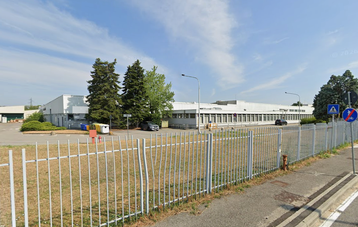
DAMAC is planning its MIL01 facility on the former Gefco-Citroën factory site. The project is expected to span about 55,000 square metres and enter operation from the end of 2028. AiOnX, the London-based digital infrastructure company owned by SWI Group, is developing the Pregnana Innovation Campus, a much larger site targeting 150MW of capacity.
The AiOnX campus is planned across 220,000 square metres and follows the company’s acquisition of a land site valued at €125 million in 2024. SWI Group has said the project secured an additional 60MW of power from Italy’s transmission operator, supporting the route towards the 150MW target.
Brownfield land carries the load
Pregnana Milanese shows how data centre growth in mature European regions often follows older industrial footprints. Former logistics, manufacturing, and automotive sites can offer road access, industrial planning context, larger plots, and possible proximity to grid infrastructure. They also bring complexity through demolition, remediation, noise controls, traffic management, and community scrutiny.
For data centre developers, brownfield land is attractive because the site needs extend well beyond the data hall. Large schemes require space for substations, generators, switchrooms, mechanical plant, security perimeters, fuel systems, construction staging, and future expansion. A dense urban location can support network-dense colocation, but it rarely gives campus developers the electrical and physical room they need.
DAMAC’s MIL01 proposal and AiOnX’s campus therefore sit inside a broader European pattern. Capacity is being pulled towards the edges of established metros, where sites can still serve regional demand while giving developers a more workable engineering envelope. The edge town becomes part of the data centre market not because it is glamorous, but because it has industrial land and a plausible power path.
Power remains the decisive factor. A 150MW target in Pregnana Milanese is an industrial-scale electrical demand, and the extra 60MW secured by SWI Group gives the AiOnX project more substance than a land-led proposal alone. Even so, capacity targets only become buildable through substation delivery, connection agreements, equipment procurement, and local grid readiness.
Milan stretches its footprint
Milan has been moving from a secondary European data centre location into a more contested market. The region has cloud demand, enterprise customers, financial services activity, fibre routes, and hyperscale presence. Google, Microsoft, and AWS already operate cloud regions in Lombardy, helping to anchor wider demand for colocation and wholesale capacity.
That success creates pressure on the surrounding geography. As land near the metropolitan core becomes more constrained, municipalities such as Pregnana Milanese are drawn into decisions over the next phase of digital infrastructure. Those decisions involve jobs and tax revenue, but also construction traffic, visual impact, cooling equipment, electrical compounds, backup power, and long-term industrial use.
The Milan region is also being shaped by AI workloads, which are pushing capacity requirements higher and increasing interest in sites that can handle heavier rack densities. A future-facing data centre campus needs enough power to support denser IT loads and enough mechanical flexibility to accommodate liquid cooling, hybrid cooling, or other high-density thermal strategies as customer requirements change.
Italy’s position in the European data centre market is improving, yet its growth will not be automatic. Developers must turn available land into permitted and powered facilities while managing regional grid limits, local planning concerns, and competition for equipment and contractors. Pregnana Milanese now looks like one of the places where those pressures will become visible.
The next test is not whether Milan can attract demand. It can. The harder question is how far surrounding towns are prepared to carry the physical infrastructure that demand requires, and whether developers can show enough power certainty, environmental control, and local value to keep projects moving.

