
Summary
- nexspace has secured a site in the Erding Süd commercial district.
- The proposed facility targets 4MW of IT capacity and an initial 6MVA connection.
- Redundant electrical and cooling systems, carrier-neutral networking, and PUE of 1.2 are planned.
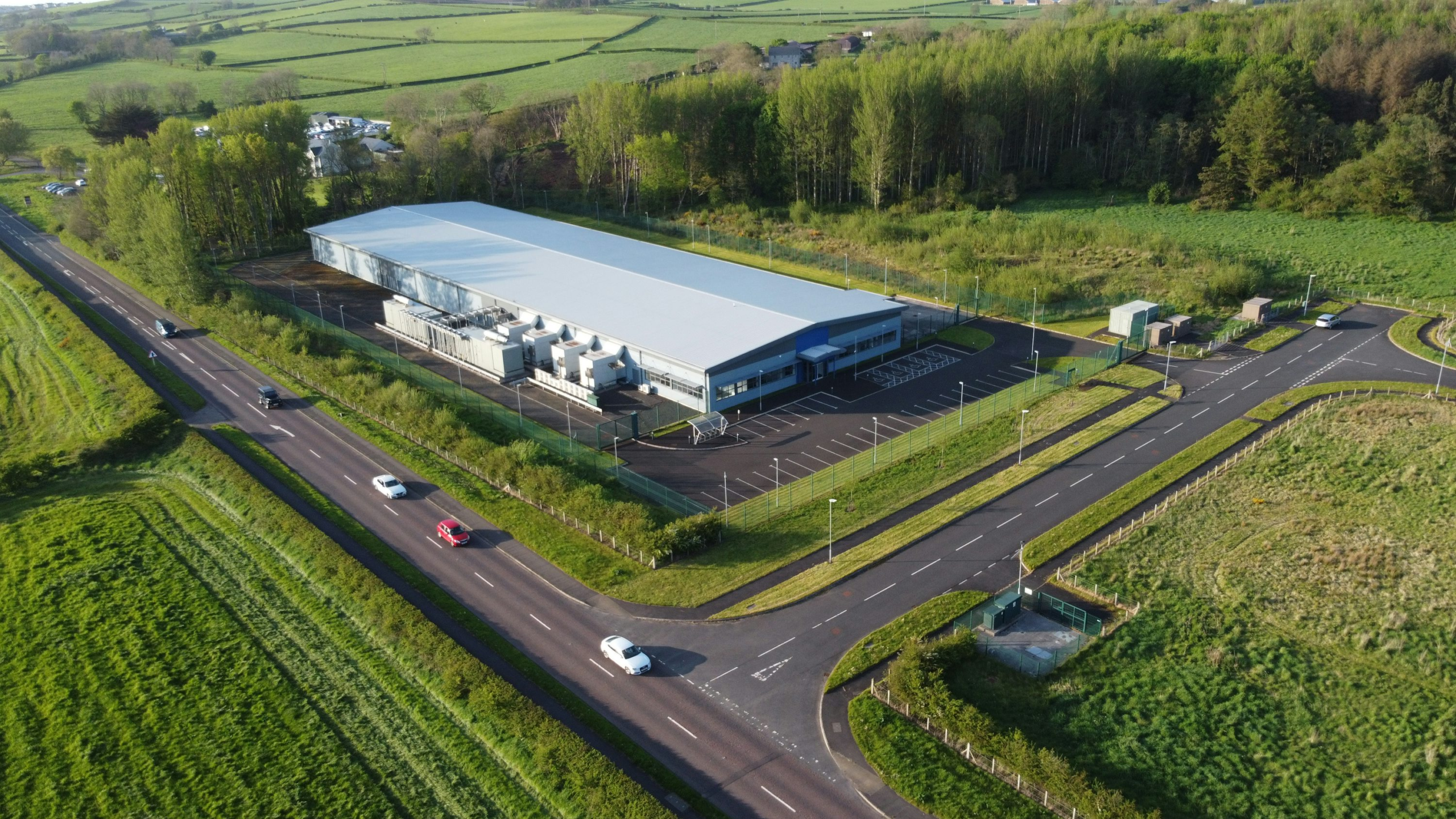
nexspace data centers has secured approximately 10,000 square metres of land in Erding, near Munich, for a proposed data centre with 4MW of IT capacity and an initial electrical connection rated at 6MVA.
The development is planned for the Erding Süd commercial area around Aufhausen and Bergham, with commissioning targeted for 2028. It will become the company’s fourth location, following Heidelberg, Graz, and Stuttgart.
nexspace intends to serve regional businesses, start-ups, and public-sector organisations requiring colocation, secure infrastructure, and computing services. The design includes redundant electricity and cooling systems, flexible equipment accommodation, and carrier-neutral connections to telecommunications providers and cloud platforms.
The company is targeting a power usage effectiveness figure of 1.2. This remains a design objective rather than a measured efficiency result from an operating facility.
The planned 4MW IT rating describes the electrical capacity available to computing equipment, whereas the proposed 6MVA connection refers to apparent electrical power. These values are not directly interchangeable because their relationship depends on power factor and the electricity used by supporting systems.
The connection rating will need to accommodate IT demand and the infrastructure needed for safe and resilient operation. The available project information does not establish the final electrical topology or the amount of expansion capacity that may be added later.
Further development options are included in the concept, but their capacity and delivery timetable have not been specified.
Carrier-neutral colocation is an important part of the proposal. A facility connected to several telecommunications providers can give customers a choice of network services and routes rather than requiring them to rely on a single operator.
This architecture can support private connectivity, cloud access, and geographically distributed applications. The resilience benefits depend on the underlying fibre routes, equipment arrangements, and service agreements, because multiple logical connections do not necessarily provide independent physical paths.
Redundant electricity and cooling systems are intended to support continuity when individual components require maintenance or fail. Their effectiveness will depend on the completed design, which must account for electrical distribution, equipment isolation, protection, thermal performance, and operating procedures.
The proposed facility is also intended to accommodate demanding computing applications, including AI workloads. Higher server densities can require more substantial power delivery and cooling infrastructure than conventional enterprise colocation installations.
The ability to accept such equipment will depend on the density supported by individual rooms and racks, rather than simply the total megawatts available across the building.
nexspace identifies potential demand from the expanding technology environment around Erding. The former military airbase is being developed as an innovation location, including the Defense Lab Erding, which the company sees as a possible source of requirements for regional computing infrastructure.
Some prospective customers may require local data processing, contractual control over their infrastructure, or connectivity to specialised systems. Physical location can support these requirements, although legal sovereignty and security also depend on ownership, access arrangements, software administration, and regulatory obligations.
The development combines regional colocation with a relatively modest IT capacity compared with hyperscale campuses. That scale may suit organisations whose equipment requirements are substantial but do not justify building or operating a dedicated facility.
nexspace has identified regional access and personal customer support as elements of its proposition. It says organisations will be able to keep their infrastructure closer to the area in which they operate, an arrangement that may reduce some network journeys and simplify on-site access for technical teams.
At its Graz facility, nexspace is also carrying out an expansion involving approximately 600 square metres of new IT space and 2.2MVA of connected load, with commissioning planned for September 2027. The Erding proposal therefore forms part of an operating and development portfolio rather than the company’s first entry into physical data centre infrastructure.
The company’s plans for Graz also include heat recovery, while the Erding announcement identifies redundant cooling and an efficiency target but does not confirm a district-heating agreement. The two projects should not be assumed to have identical thermal designs.
Erding municipal officials have welcomed the investment as an addition to the local technology economy. The proposal remains at the development stage, with its capacity and performance figures describing the intended completed facility rather than services already available to customers.
Progress towards the targeted 2028 opening will depend on the site’s approvals, electrical connection, network integration, construction, and commissioning. Its actual PUE and service availability can only be assessed once the completed infrastructure enters operation.

