
Summary
- Investigative reporting puts Glomfjord approximately six months behind schedule, with 6.4MW of a planned 30MW operating.
- Cooling leaks, a transformer fire and construction difficulties are reported, while Nscale's website describes 30MW as operational.
- The conflicting capacity descriptions and outstanding construction milestones warrant scrutiny ahead of Nscale's proposed IPO.
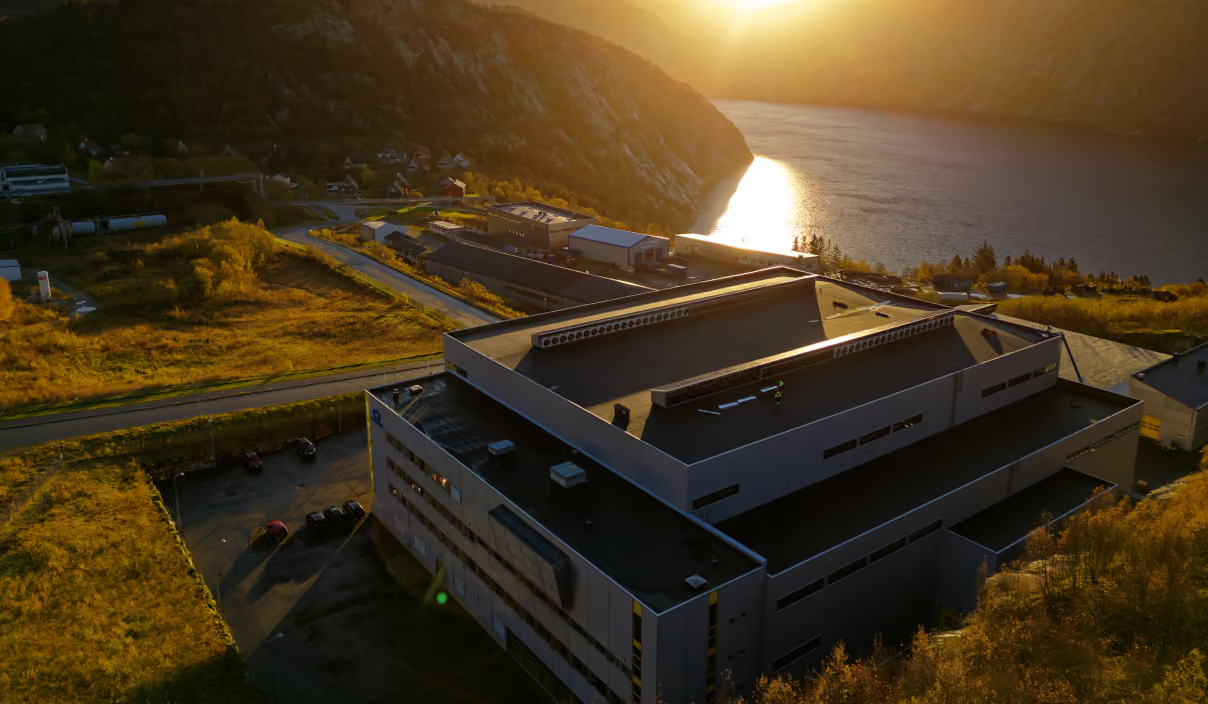
British AI infrastructure developer Nscale is reportedly six months behind schedule at its Glomfjord data centre in northern Norway, where cooling failures, an electrical fire and construction difficulties have complicated the expansion of computing capacity.
An investigation published by Bloomberg on 15 October, at 22:00 UK time, reports that only 6.4MW of the facility’s intended 30MW is operating. The account draws on people familiar with the project and public records, although Nscale has not publicly confirmed all the reported incidents or the revised construction timetable.
There is a material discrepancy between that account and Nscale’s published description of its own infrastructure. The company’s Glomfjord website identifies 30MW of operational power capacity, with potential expansion to 60MW. Its infrastructure overview similarly describes 30MW of operating compute capacity. Those statements have not been reconciled with the 6.4MW figure reported by Bloomberg.
The different descriptions may reflect differing definitions or reporting dates, but the available evidence does not establish that explanation. Installed electrical infrastructure, available power capacity and computing equipment actually operating are not interchangeable measures. The operational status of the facility therefore remains an important point requiring clarification.
Cooling faults and electrical disruption
The investigation describes repeated liquid cooling leaks involving problems with pipe sealing and filtration. Norwegian newspaper Finansavisen, reporting on the findings, says server rows had to be shut down periodically from December onwards so that cooling fluid could be replenished.
According to that account, the system was replaced in June, but another substantial leak occurred in September. The available reporting does not establish the current condition of every cooling circuit or identify the precise amount of computing capacity affected by each incident.
Nscale describes Glomfjord as a high-density AI installation using direct-to-chip liquid cooling. Such systems transfer heat from processors through liquid circuits, pumps and heat exchangers. Their operation depends on maintaining adequate flow, controlling fluid condition and preventing leaks from affecting electrical equipment.
Failures in these supporting systems can interrupt computing activity even where processors, servers and electricity supplies remain available. Repairing one component does not necessarily establish that the complete cooling installation is ready for sustained operation, particularly when a facility is still expanding.
The reported electrical problems are separate from the cooling failures. A transformer fire occurred in December, and Norwegian reporting says an investigation by the Directorate for Civil Protection and Emergency Planning identified a high-voltage cable failure. The cable had reportedly been stored outdoors for approximately six months before connection.
The reporting does not establish that the transformer fire and cooling leaks shared a cause. They affected different infrastructure systems, and their individual consequences for construction and operations should not be combined into a single explanation for the overall delay.
Finansavisen also reports that diesel generators were used until May, although the site was intended to operate using hydropower. Nscale’s own materials now describe Glomfjord as drawing electricity from a predominantly renewable regional system, with Guarantees of Origin used to match consumption to renewable generation.
That current electricity procurement description does not resolve the reporting about temporary diesel use earlier in the project. Nor does the use of renewable electricity establish whether the facility’s full intended computing capacity has been commissioned.
Construction progress and commercial commitments
To accommodate additional construction workers, a floating hotel called Kalmar has been brought to Glomfjord. The vessel has approximately 220 rooms, with workers expected to use the accommodation during efforts to accelerate construction.
According to the investigation, the rooms were largely empty in early October, before the expected arrival of additional personnel. Their provision represents construction mobilisation rather than proof that the remaining infrastructure work has been completed.
Glomfjord is a relatively small industrial community north of the Arctic Circle. Specialist construction, mechanical and electrical teams may need accommodation close to the development while installation and commissioning activities overlap. Access to sufficient workers and temporary facilities can therefore affect the practical delivery timetable.
Nscale’s wider development programme adds a financial dimension to the reported difficulties. The company has been preparing a potential US initial public offering, with reports suggesting that it could seek a valuation as high as $35 billion. That is a reported potential valuation, not an achieved market value.
Its IPO documentation identifies risks including construction delays, accidents and difficulties obtaining permits. Those are general disclosures about the business and its projects; they do not independently establish the causes or consequences of the Glomfjord incidents.
DataCentral has previously examined Nscale’s exposure to ByteDance-linked computing demand. The latest reporting concerns the physical delivery of the infrastructure supporting the company’s wider commercial ambitions.
Customer contracts and development pipelines can extend well beyond capacity that is currently operating. Bringing additional computing infrastructure into service still requires working cooling equipment, reliable electrical systems, completed building works and the necessary operational checks.
Nscale’s earlier announcements also described plans to expand Glomfjord to 60MW. That potential expansion should remain distinct from the initial 30MW development and from the smaller operational figure reported in the investigation.
Further confirmation is needed from Nscale about the facility’s current operating IT load, remaining construction milestones, cooling system condition and revised delivery timetable. Until those details are reconciled, the reported six-month delay remains credible investigative reporting rather than a complete company-confirmed account of the project’s status.

