
Summary
- OpenAI plans to lease up to 8GW of AI compute capacity at SB Energy's PORTS-Pike campus in Ohio.
- Nvidia will invest $1.5bn in SB Energy and has agreed financial support potentially worth up to $105bn around the long-term project structure.
- The arrangement illustrates how AI infrastructure suppliers are increasingly financing the facilities and customers that create demand for their own hardware.
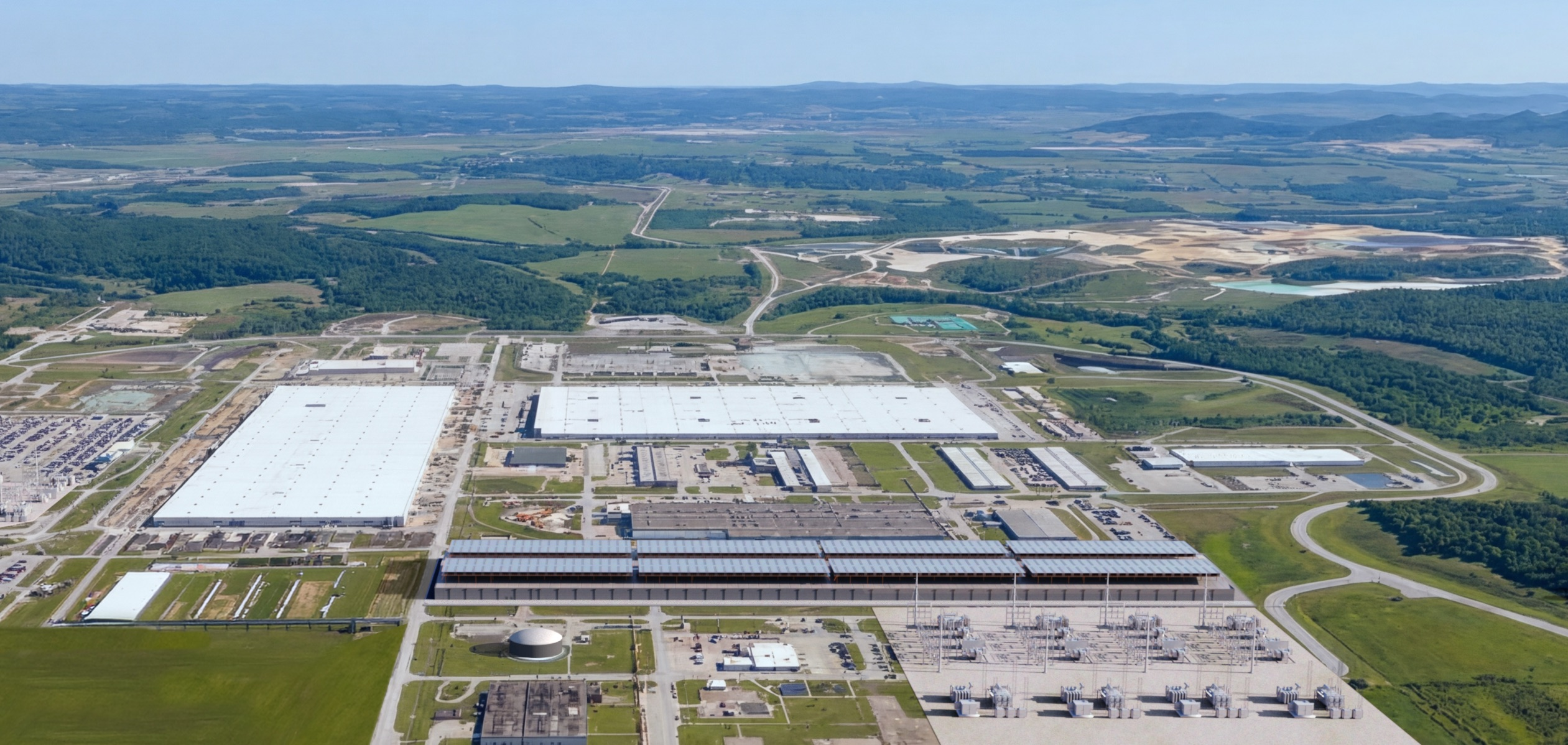
Nvidia has agreed to invest $1.5bn in SB Energy and provide financial backing for OpenAI’s long-term lease at the PORTS-Pike data centre campus in Ohio, creating one of the largest links yet between a chip supplier and the financing of the infrastructure that will consume its hardware.
OpenAI plans to lease as much as 8GW of AI computing capacity at the Pike County site under a 20-year arrangement. The first major phase is expected to comprise around 4.25GW of IT capacity, with approximately 800MW targeted to become available in 2028.
Nvidia is expected to be the exclusive provider of compute and networking technology for the initial deployment. Reuters reported that the company has agreed to provide financial support of up to $105bn covering defined portions of lease and power payments plus a residual-value commitment if OpenAI defaults, alongside the direct equity investment in SB Energy.
SoftBank and SB Energy are also planning substantial regional power infrastructure to support the campus. The scale turns the development into more than a conventional data centre project: the tenant, technology supplier, developer, power infrastructure, and financing arrangements are all being structured around a multi-gigawatt commitment extending over decades.
The arrangement also deepens scrutiny of circular financing in AI infrastructure. Nvidia supplies the accelerators at the centre of the compute build-out while investing in, or supporting, companies whose expansion creates demand for those same products.
Credit becomes part of the infrastructure stack
The financial support is particularly important because even a very large data centre developer would struggle to finance several gigawatts of construction solely on the credit of a young AI tenant. Long-term project debt depends on lenders believing that rental payments will continue and that the completed asset will retain value if the original tenant fails.
Nvidia’s involvement improves that risk profile by putting one of the world’s largest semiconductor companies behind parts of the structure. That can make the underlying data centre and power assets easier to finance, while securing Nvidia a major long-term technology customer.
The trade-off is concentration. OpenAI, Nvidia, SB Energy, and SoftBank become financially and operationally dependent on the same infrastructure programme. Problems with power delivery, construction cost, chip demand, tenant credit, or project schedules can therefore move through several parts of the structure at once.
The planned 8GW scale also makes power the dominant physical constraint. Supplying the entire campus would require generation and transmission infrastructure comparable with that of a substantial regional electricity system. Reuters reported that SoftBank and SB Energy intend to invest $4.2bn in regional power infrastructure and target at least 10GW of generation.
For Europe, where grid queues and planning constraints make even several hundred megawatts difficult to secure in many markets, the Ohio project is less a directly transferable development model than a financing benchmark. It demonstrates the amount of balance-sheet support required when AI capacity moves from hundreds of megawatts towards multiple gigawatts.
It also raises questions about residual-value assumptions. AI hardware can become obsolete faster than the buildings, electrical systems, cooling plant, and energy assets that support it. Financing a 20-year lease therefore requires confidence that the physical infrastructure remains useful across several generations of compute technology.
That places additional importance on adaptable electrical and cooling design. A campus financed around today’s accelerator architecture still has to support future rack densities, power-delivery methods, cooling technologies, and network requirements.
Nvidia’s commitment effectively extends its role from component supplier into infrastructure enabler. As AI facilities become larger, the companies selling the compute increasingly have an incentive to help solve the financing, power, and counterparty constraints that determine whether customers can actually install it.
PORTS-Pike takes that model to an unusually large scale. If the first 4.25GW is delivered as planned, the project will test whether financial engineering can keep pace with the much less flexible realities of power generation, transmission, construction, and cooling.

