
Summary
- Four QODN models provide 1.3kW to 2.6kW of 48/54V-to-12V conversion.
- The range reaches peak efficiency above 98.5% on the 1.6kW and 2kW models.
- All four retain a 58.4mm × 36.8mm × 14.5mm modified DOSA quarter-brick footprint.
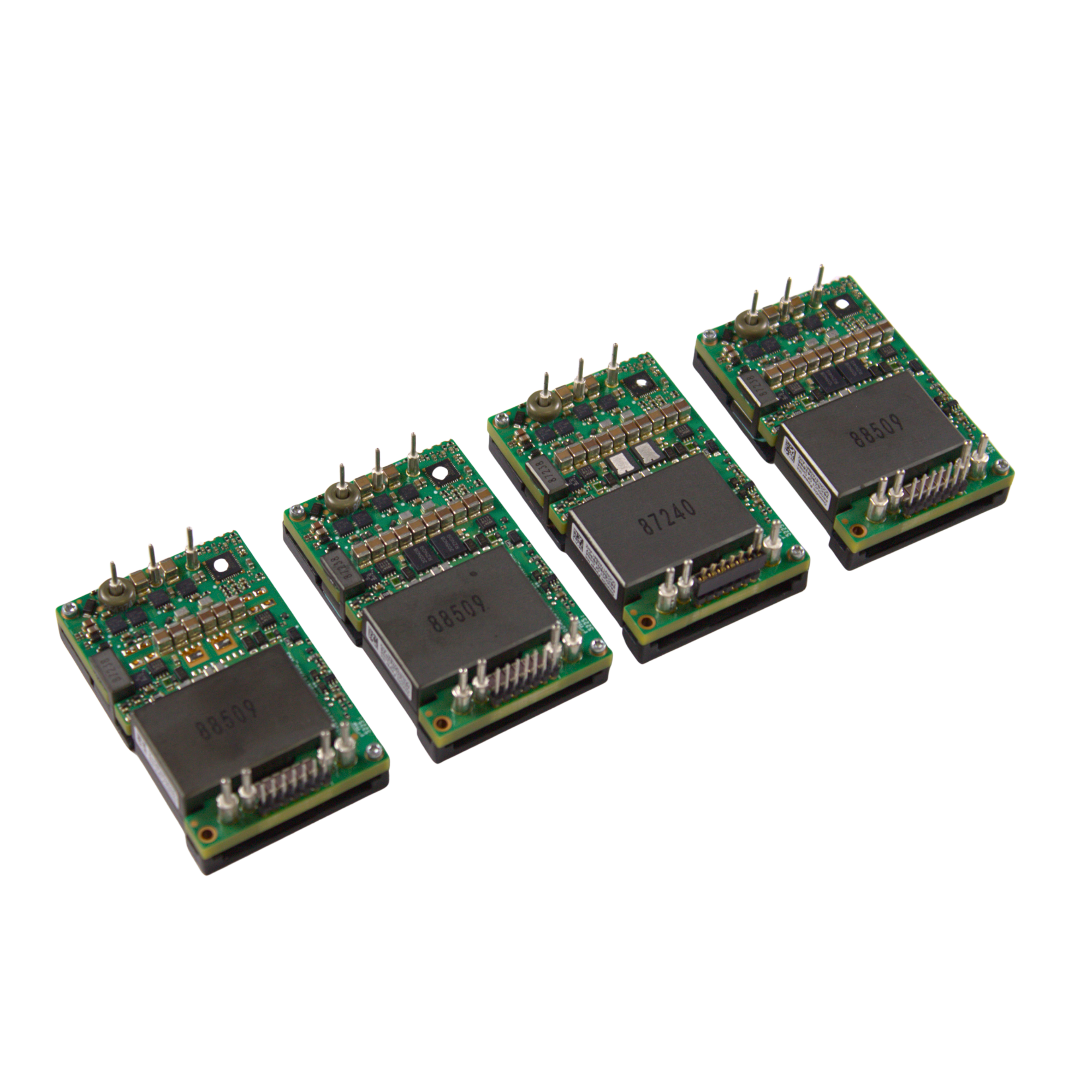
OmniOn Power has expanded its Osprey DC/DC bus converter range with four modules delivering up to 2.6kW while retaining the quarter brick board footprint used by the previous generation.
The QODN series accepts a 40V to 60V input and provides a regulated 12V output for distributed power systems used in AI servers, dense computing, and networking equipment.
The range begins with the 1,300W QODN108, followed by 1,600W, 2,000W, and 2,600W versions.
OmniOn specifies the 2,600W QODN217 at 97.9% full load efficiency with a 54V input and peak efficiency above 98.4%.
The 2,000W QODN167 reaches 98% efficiency at full load and more than 98.5% at peak, while the 1,600W QODN136 is rated at 98.1% full load efficiency and above 98.5% peak.
The 1,300W QODN108 is rated at 98.1% at full load with peak efficiency above 98.4%.
The official figures support an up to 98.5% peak efficiency claim for the product family rather than the 2.6kW model itself.
The devices sit much closer to the processors than the megawatt scale UPS systems and switchgear used in facility power systems.
Many dense servers distribute power at 48V or 54V through part of the chassis before converting it to lower voltages near accelerator boards and other electronics.
Rising GPU power increases the current handled by those conversion stages while board area and cooling capacity remain constrained.
OmniOn has increased output without changing the modified DOSA quarter brick envelope, which measures 58.4mm by 36.8mm by 14.5mm.
Server designers can therefore increase conversion density without assigning more board space to each module.
The company says the new generation improves efficiency by as much as one percentage point over its earlier QODE range.
Conversion losses become heat inside the server. Repeating those losses across many modules and racks increases both electricity use and the thermal load carried by fans, cold plates, coolant loops, and the wider facility cooling system.
The QODN modules include PMBus communications, remote sensing, power good signalling, firmware updates over I2C, and fault logging.
Protection functions cover output overcurrent and overvoltage, overtemperature, and input voltage conditions. The specified operating range is -40°C to +85°C.
The products do not change the incoming electrical architecture of a data centre. They operate inside the compute power chain.
Their development reflects the same density pressure affecting infrastructure upstream. Higher rack power drives changes from grid connections and UPS systems through busways and rack distribution to the power electronics mounted inside servers.
Facility operators may never specify a quarter brick converter directly, but its losses and heat become part of the total load their electrical and cooling systems have to carry.

