
Summary
- OVHcloud reports 250MW of connected power capacity, of which 140MW is in operation; the remaining 110MW is headroom, not confirmed ready-to-use IT load.
- FY2026 revenue reached €1,145.1 million and levered free cash flow turned positive at €24.7 million.
- Capital expenditure was €422.4 million in cash terms, or €372.9 million adjusted for €49.5 million brought forward for FY2027.
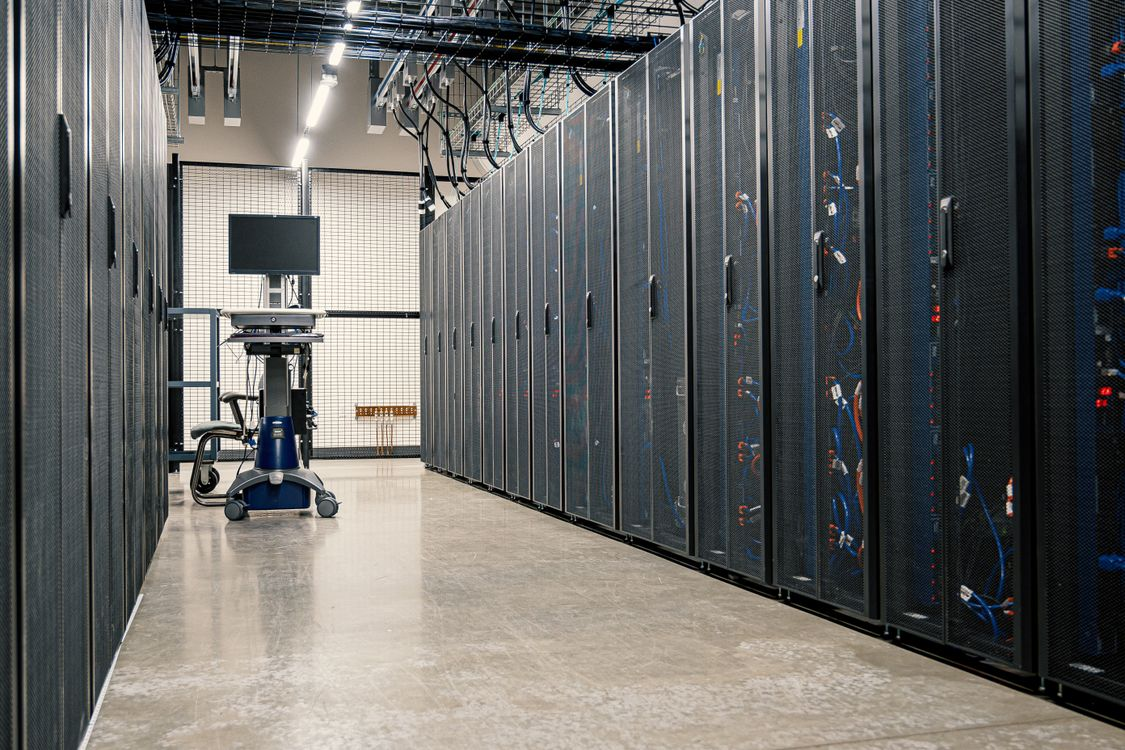
OVHcloud has reported 250MW of connected power capacity across its data centre estate, of which 140MW is in operation, leaving a stated 110MW of headroom for further infrastructure growth.
The French cloud provider disclosed the figures alongside its results for the financial year ended 31 August 2026. Chief executive Octave Klaba said the connected estate offers scope to expand without immediately developing new sites, while the company evaluates changes to its infrastructure and the possible growth of its GPU business.
The 110MW difference is a statement about connected capacity relative to capacity in operation. It does not establish that 110MW of empty server racks is ready for occupation, that the entire balance is available in one location or that cooling and electrical systems for every potential deployment have already been commissioned.
OVHcloud has not published a facility-by-facility breakdown of that headroom. The sites’ locations, customer commitments and future fit-out requirements would influence how much can be converted into operating capacity and when that conversion can occur.
Connected power creates expansion options
Grid connection capacity is valuable in markets where new electrical supply can require lengthy network reinforcement or connection works. An operator with available power arrangements may be able to extend computing operations at established sites rather than relying entirely on the development of a new campus.
That route still requires investment and commissioning. Servers, networking equipment and supporting infrastructure must be selected and installed, while cooling capacity and electrical distribution must meet the intended IT load and operating conditions.
The relationship between these components varies from site to site. A building may have an electricity connection exceeding its current IT requirement without having sufficient rack space, cooling plant or network capacity for every proposed workload.
OVHcloud has not specified whether its connected and operating figures use identical boundaries for supporting infrastructure or whether the unused balance is distributed among private cloud, public cloud and future AI services.
Its integrated operating model includes designing and assembling servers, enabling the company to align equipment purchases with customer demand. Management says it has been managing inventory closely as memory and storage components become more expensive, while assessing future GPU deployments.
Existing connections can reduce exposure to some site-development delays, but they cannot eliminate the need to test electrical and thermal infrastructure. Nor does 110MW of headroom amount to a commitment to bring 110MW of additional computing into operation during the next financial year.
Financial results show room for selective investment
OVHcloud reported FY2026 revenue of €1,145.1 million, up 5.6% on a reported basis and 7.2% like for like. Public Cloud generated €255.1 million, rising 18.9% like for like, while Private Cloud contributed €690.4 million and Web Cloud and Other €199.7 million.
The stronger public cloud performance provides one source of demand for future infrastructure deployment. However, revenue growth is not a direct measure of additional electrical load, since it also reflects service mix, pricing, equipment utilisation and customer activity.
Adjusted earnings before interest, tax, depreciation and amortisation reached €480.5 million, producing a 42% margin. Levered free cash flow was positive at €24.7 million, compared with a negative €27 million the preceding year.
The capital expenditure figures require a separate distinction. Actual FY2026 capital expenditure in the cash flow reconciliation was €422.4 million. OVHcloud also reported adjusted capital expenditure of €372.9 million after removing €49.5 million of hardware purchases made early for FY2027.
The lower adjusted figure is not the total cash spent on capital assets during FY2026. The difference reflects memory and storage components purchased in advance to reduce exposure to cost increases and support equipment deployment in the subsequent year.
The adjusted expenditure represented 32.6% of revenue. OVHcloud reported approximately €291 million of hardware capital expenditure, €53 million of infrastructure and network spending, and €72 million of product and software spending on the adjusted basis, with values rounded in its presentation.
The company ended the financial year with €255 million of available liquidity, including a €200 million undrawn credit line. Net debt excluding lease liabilities stood at approximately €1.16 billion, indicating that investment decisions must still balance growth and financing commitments.
Demand and location determine conversion to service
OVHcloud’s next challenge is allocating capital across its existing estate in response to customer requirements. A customer demanding computing in a particular country or availability zone cannot necessarily be served by spare connected capacity located elsewhere.
GPU systems may also require different electrical and cooling configurations from conventional server deployments. The company has acknowledged the need to assess infrastructure changes for AI growth, but has not identified how much of the 110MW is reserved for GPUs or when those systems would be installed.
The French provider expects faster revenue growth during FY2027, supported by improvements to commercial operations and expansion of cloud services. That guidance concerns the wider business, not a published schedule for energising every remaining megawatt.
Its capacity disclosure is therefore significant because electricity connections are already in place across the estate. The commercial value of that headroom will depend on subsequent equipment investment, customer demand, geographic suitability and commissioning, none of which can be inferred from the 110MW figure alone.

