
Summary
- The scheme proposes a 260,000 sq ft facility at a cleared former Unilever industrial site.
- The developer identifies on-site fuel cells and closed-loop cooling but has not disclosed complete operating specifications.
- The planning application is undecided, with local opposition and more than 4,000 petition signatures reported.
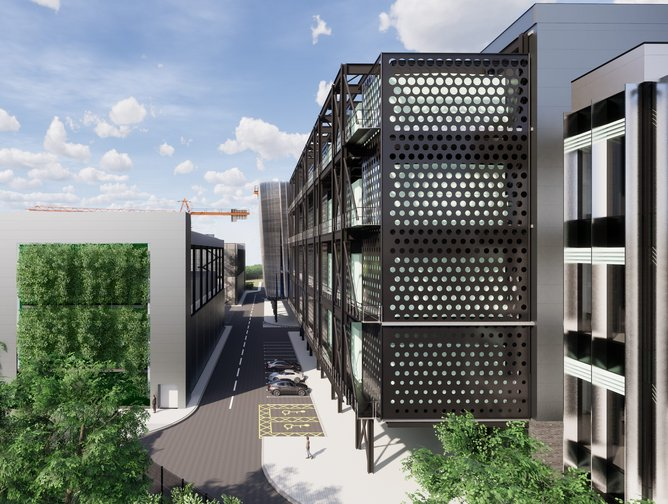
Platform DC has submitted a planning application to redevelop the former Unilever industrial site beside Warrington Bank Quay station as a 260,000 sq ft data centre, proposing on-site fuel cells and a closed-loop cooling system as part of the facility’s supporting infrastructure.
The site previously accommodated laundry soap manufacturing, which ceased in 2020. Clearance works have already taken place, according to local reporting, but the submission of a planning application does not establish permission for the proposed data centre to be built or operated.
Platform DC says the scheme would support artificial intelligence, high-performance computing, cloud services and business data processing. Those applications imply differing technical loads, while the developer has not established the number of computing racks, contracted customer demand or the facility’s final energised electrical capacity.
The application follows a development concept first announced last year. The current news event is the formal filing with Warrington Borough Council, not the initial disclosure of a potential redevelopment site.
A former industrial site can offer access roads, established land uses and physical space for equipment. That does not automatically mean existing utilities can support a modern high-density computing facility. Electrical connections, cooling plant, telecommunications and emergency power infrastructure all require project-specific design.
The 260,000 sq ft description concerns building scale. It cannot be converted directly into megawatts of IT load without assumptions about equipment density and the proportion of floor space occupied by plant, support areas and computing halls.
The reported proposal includes fuel cells intended to generate electricity on site and reduce some dependence on grid supplies. Fuel cells can convert chemical energy into electrical power, but their carbon impact depends on the fuel used, the source of that fuel and the equipment’s operating efficiency.
The public information does not establish the fuel chemistry, installed generating capacity, emissions profile or contractual arrangements for the proposed equipment. It would therefore be incorrect to describe the entire site as off-grid, zero-emission or powered principally by fuel cells.
Grid electricity may remain necessary, particularly during maintenance, changes in load or periods when on-site equipment is unavailable. Network capacity and the arrangements for switching between supplies are separate issues from the existence of a proposed generation system.
Platform DC also describes a closed-loop cooling approach. This generally involves recirculating a coolant through heat collection and transfer equipment, reducing the need to replace the fluid continuously. Its effect on overall water consumption depends on how the captured heat is eventually rejected.
A system using dry heat rejection and one using evaporative cooling can both contain closed liquid circuits while having markedly different requirements for water, pumps and fans. The available proposal information does not establish a fully specified operating water balance.
The site’s position near railway infrastructure and existing residential and commercial areas makes its local effects part of the planning assessment. Construction traffic, noise from cooling plant, air emissions from generation equipment, visual impact and the arrangements for maintaining the facility will need to be considered against the relevant evidence.
Local opposition has already developed. Place North West reported that a petition opposing the scheme had attracted more than 4,000 signatures since June. That figure indicates the scale of a reported campaign, not the outcome of the council’s statutory consultation or a determination of planning merit.
The developer estimates that the operational site could support approximately 20 to 30 skilled jobs. A proposed social value programme also refers to education, local businesses and community engagement. The final scope of those commitments and any enforceable delivery conditions remain to be established.
Some prefabricated equipment is proposed to be manufactured at Appleton Thorn, creating a possible connection with existing engineering and industrial activity in the Warrington area. The delivery plan will depend on the project’s approvals, procurement and confirmed infrastructure requirements.
The planning process should establish whether the submitted design adequately addresses the site and its surrounding environment. Even a favourable consent would be only one development milestone: electricity arrangements, equipment installation, testing and commissioning would still be necessary before computing services could begin.
The application also illustrates the difference between repurposing a cleared industrial plot and demonstrating that the intended electricity supply and cooling arrangements are deliverable at the proposed location.
The application therefore advances an identifiable project, but its operational capacity and environmental performance remain proposals pending detailed approval and engineering delivery.

