
Summary
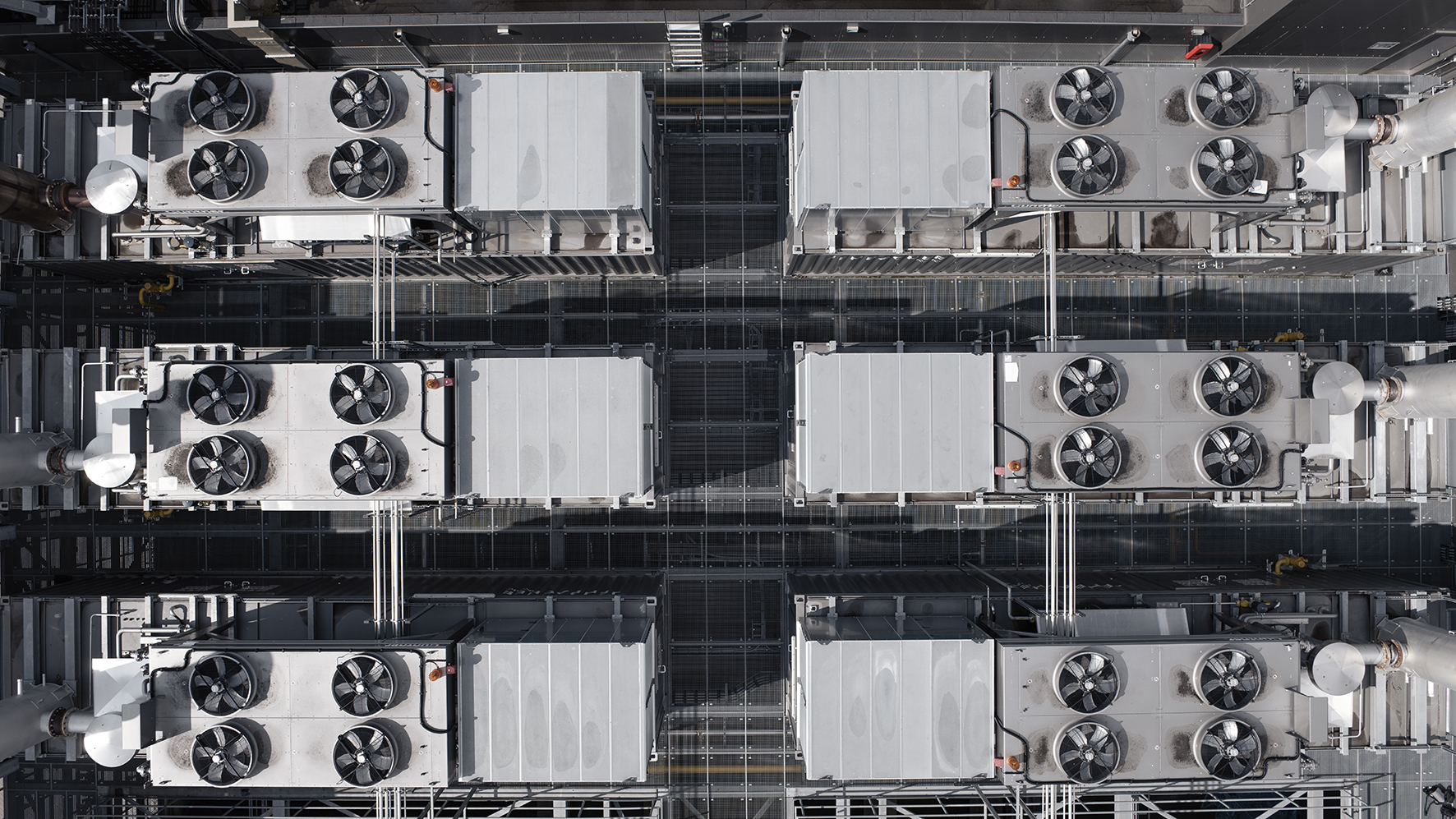
- More than 200 Jenbacher J624 engines will provide approximately 1.1GW of prime power.
- Deliveries will be phased across several US data centre facilities.
- The deployment shifts fuel, emissions, maintenance, and generation risk inside the campus boundary.
INNIO has secured an order for more than 200 gas engines with combined output of approximately 1.1GW, providing behind-the-meter prime power across a developer’s multi-site US data centre programme.
The order covers Jenbacher J624 engines and was booked during the second quarter of 2026. Deliveries will be phased over several years, creating one of the largest data centre equipment programmes in the Austria-based manufacturer’s history.
The customer, individual sites, contract value, fuel arrangements, emissions controls, and final redundancy design have not been disclosed. All of the ordered capacity is intended for prime generation rather than emergency standby use.
A private generating fleet at utility scale
An order of 1.1GW is comparable with the output of a large central power station. Spread across several campuses, the engines will allow capacity to be added in modules as data halls are completed rather than requiring the entire generation fleet to be commissioned at once.
The Jenbacher J624 is a large reciprocating gas engine suited to modular deployment. Multiple units can share load and provide reserve capacity, reducing the consequence of losing one machine compared with a site dependent on a small number of larger generators.
INNIO’s project announcement says the engines will serve behind-the-meter prime power requirements across the United States. It does not state whether the campuses will operate in parallel with local utilities, remain islanded, or use the grid as an alternative supply.
On-site generation is moving beyond backup duty as data centre programmes run ahead of transmission and distribution upgrades. A developer may secure land, planning permission, financing, and customers several years before a utility can deliver the required load.
Generating behind the meter can close part of that gap, although it turns the data centre into a power station operator. Fuel supply, air permits, noise, exhaust dispersion, synchronisation, black-start capability, protection, and maintenance all become part of the operating model.
The engines must also respond to the load behaviour of dense compute. AI clusters can produce rapid changes in demand, requiring generation controls, UPS systems, and battery equipment to manage transitions without exposing customer hardware to instability.
Faster power carries a longer operating obligation
Gas engines can be installed more quickly than major network reinforcement, but the emissions profile sits uneasily beside many operators’ decarbonisation commitments. The result depends on engine efficiency, running hours, methane leakage, heat recovery, fuel source, and the carbon intensity of the grid supply displaced.
Renewable gas or hydrogen may reduce future emissions, but neither fuel can be assumed at the required volume or price. Biomethane supply remains limited, while hydrogen introduces production, transport, storage, safety, and conversion requirements.
Local air quality can be as restrictive as carbon. A campus with dozens of continuously operating engines requires detailed modelling of nitrogen oxides, carbon monoxide, exhaust height, and cumulative emissions. Regulators may apply substantially different conditions from those used for diesel generators that run mainly during tests and outages.
Maintenance changes the resilience calculation. A modular fleet limits the effect of one failure, yet it creates hundreds of recurring service events across moving machinery. Operators need reserve capacity, stocked parts, trained technicians, and enough service access to remove units without disturbing live electrical systems.
Fuel security becomes part of business continuity. A pipeline connection may provide continuous supply, but it can also become a common-mode dependency if several campuses draw from the same constrained network. Stored fuels offer independence for a limited period while increasing space, safety, and logistics requirements.
The order is located in the US, although its manufacturing and supplier effects extend into Europe. INNIO is headquartered in Austria and produces Jenbacher engines in Tyrol, drawing on a European engineering and component base.
European developers are considering gas engines, fuel cells, batteries, and temporary generation where grid dates cannot support construction programmes. The viability of each approach depends on national electricity rules, environmental permitting, fuel availability, and the duration for which private generation must operate.
A short bridge until grid reinforcement arrives carries a different financial and environmental profile from a permanent off-grid energy system. Developers need a credible transition plan before committing to plant that may remain in service for decades.
INNIO’s order shows that the connection queue is creating a parallel market for privately controlled power at utility scale. The developer will now need to demonstrate that its generation fleet can be permitted, fuelled, maintained, and operated reliably across several sites without replacing one infrastructure bottleneck with another.

