
Summary
- Pulsant has completed a £2m investment programme across sites in Croydon, Edinburgh, Maidenhead, Manchester, Milton Keynes, Newcastle, Reading, and Rotherham.
- The work focused on customer, visitor, technician, and staff spaces rather than wholesale power or cooling expansion.
- The programme highlights the operational value of live-site usability, technician workflow, client rooms, and estate consistency in regional colocation.
Pulsant has completed a £2m investment programme across eight UK data centre sites, focusing on the spaces used by customers, visitors, technicians, and staff.
The two-year programme covered facilities in Croydon, Edinburgh, Maidenhead, Manchester, Milton Keynes, Newcastle, Reading, and Rotherham. Pulsant says the work modernised facilities, refreshed interiors, and improved the on-site experience for people working in and around its colocation estate.
The investment is not a hyperscale capacity play and does not add a headline block of new megawatts. It sits in a less dramatic part of data centre operations: the quality of the spaces that make live-site work practical, efficient, and secure.
Customer space around critical rooms
The programme began as a Croydon pilot in early 2024, when Pulsant worked with customers through user groups to understand how its data centres were used in practice. The feedback pointed to demand for more welcoming, efficient, and collaborative spaces where IT teams and technicians could work productively while on site.
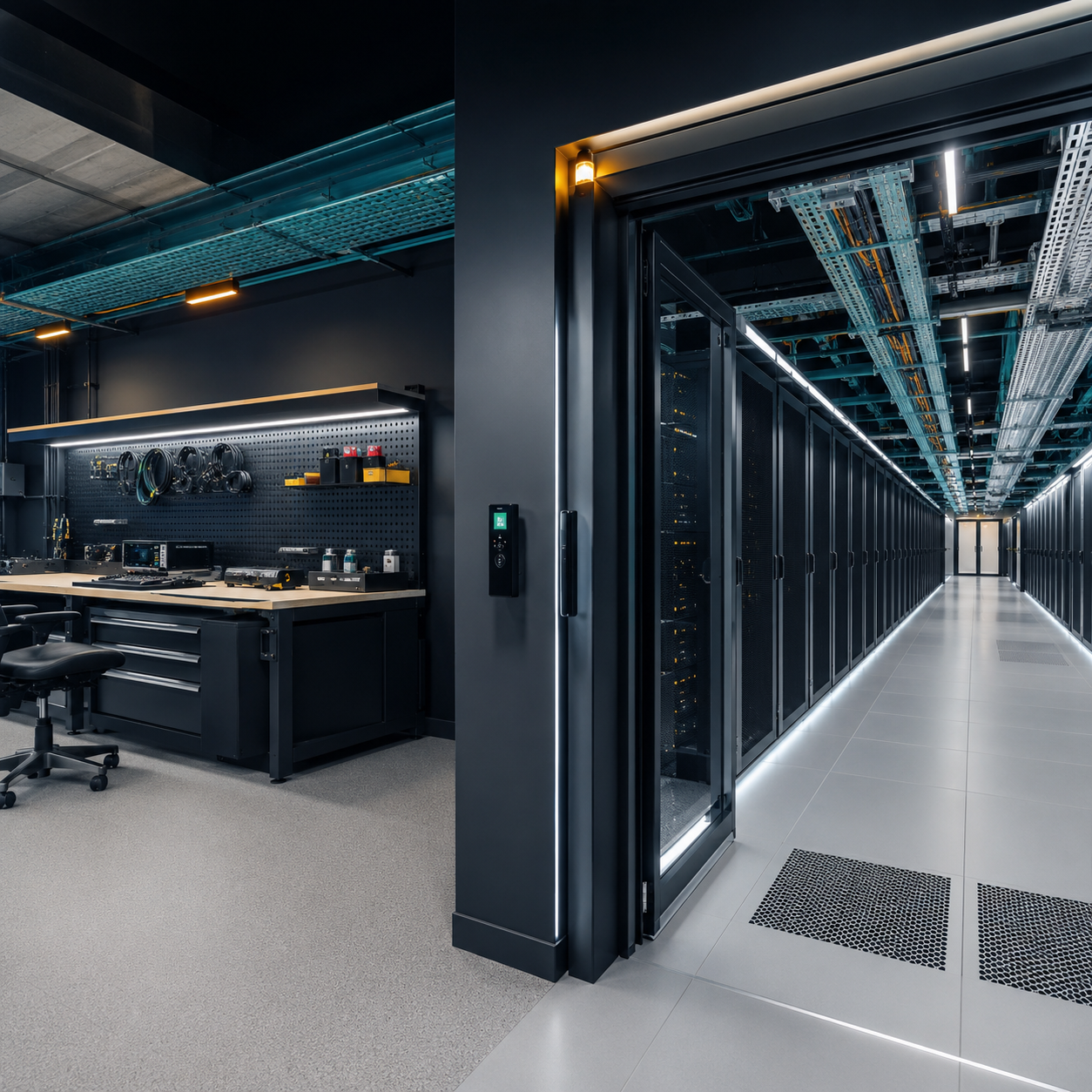
The main features include clearer navigation, new zonal layouts, improved signage, breakout areas, modern meeting rooms, guest Wi-Fi, EV charging points, upgraded build rooms, test PDUs, tools, and smoother site access processes. Several of those measures sit outside the technical white space, but they affect how easily customers can install, maintain, audit, and change equipment.
Build rooms are a good example. Allowing equipment to be configured away from the data hall can reduce time spent inside controlled technical spaces and make installation work more orderly. Improved access processes can reduce bottlenecks while preserving security. Meeting and breakout areas support contractors and customer teams during projects that may run across several hours or days.
Pulsant says more than 500 UK businesses use its colocation services. That kind of customer base creates a steady flow of on-site activity: maintenance windows, equipment staging, hardware swaps, audits, migrations, incident response, and project meetings. A regional colocation site that is technically sound but difficult to work in can still create friction and delay.
Operational quality as estate value
The UK colocation market is often viewed through London, Slough, and large AI-driven requirements, but regional sites remain part of the operating estate for many businesses. Customers may want proximity to existing teams, hybrid cloud connectivity, local resilience, data residency, or a cost and access profile that differs from the main hyperscale clusters.
That makes estate consistency important. A customer using several regional sites should not have to relearn access, support, build-room processes, or visitor arrangements each time engineers attend. Small variations in process can slow work, create confusion, or increase the risk of mistakes during time-critical maintenance.
Live-site refurbishment also has to be handled carefully. Even upgrades to non-critical spaces must be scheduled around security, access control, customer movement, contractor management, delivery routes, and the need to keep technical services untouched. Data centres cannot be treated like ordinary commercial interiors when the rooms next door contain operational customer equipment.
Pulsant says further upgrades are in progress at its recently acquired Birmingham and Fareham sites. That extension will test whether the programme becomes a standard estate model rather than a one-off refresh.
Regional colocation providers are under pressure to modernise without losing the cost and access advantages that make their sites attractive. Major electrical and mechanical upgrades remain expensive and may need customer commitments. Operational improvements around access, build rooms, client spaces, and site workflow can still improve retention, safety, and project efficiency.
The next stage for Pulsant will be whether these customer-facing improvements are matched by deeper technical investment in power density, cooling flexibility, monitoring, resilience, and sustainability. Regional colocation estates will not compete with hyperscale campuses on raw megawatts, but they can remain valuable if they combine usable facilities, credible connectivity, and a disciplined operating model.

