
Summary
- Scaleway’s Swedish project would be its first supercomputer deployment outside France.
- The planned system uses AMD Instinct MI355X GPUs with an ROCm software environment.
- The company has not published a confirmed power capacity, rack count or operational date.
Scaleway plans to deploy an AMD-powered commercial AI supercomputer in Sweden, extending its high-performance computing infrastructure beyond France for the first time. The planned system will use AMD Instinct MI355X processors for a commercial computing service. The announcement does not confirm installation, customer availability or a commissioning date.
French technology company Bull is named as the assembly and maintenance partner. The reported supplier chain also includes Giga Computing for servers, HPE for networking, VAST Data for storage and Motul for cooling fluid. These arrangements give an indication of the technical systems Scaleway intends to integrate, without disclosing the site layout or electrical requirements.
Scaleway describes the proposed deployment as a commercial AMD-based AI supercomputer and says it will support AI developers, research and business users. That positioning is narrower than a claim that Europe has no existing AMD-powered large computing systems: AMD hardware is already used in European research supercomputing, including Finland’s LUMI.
The infrastructure behind the processors
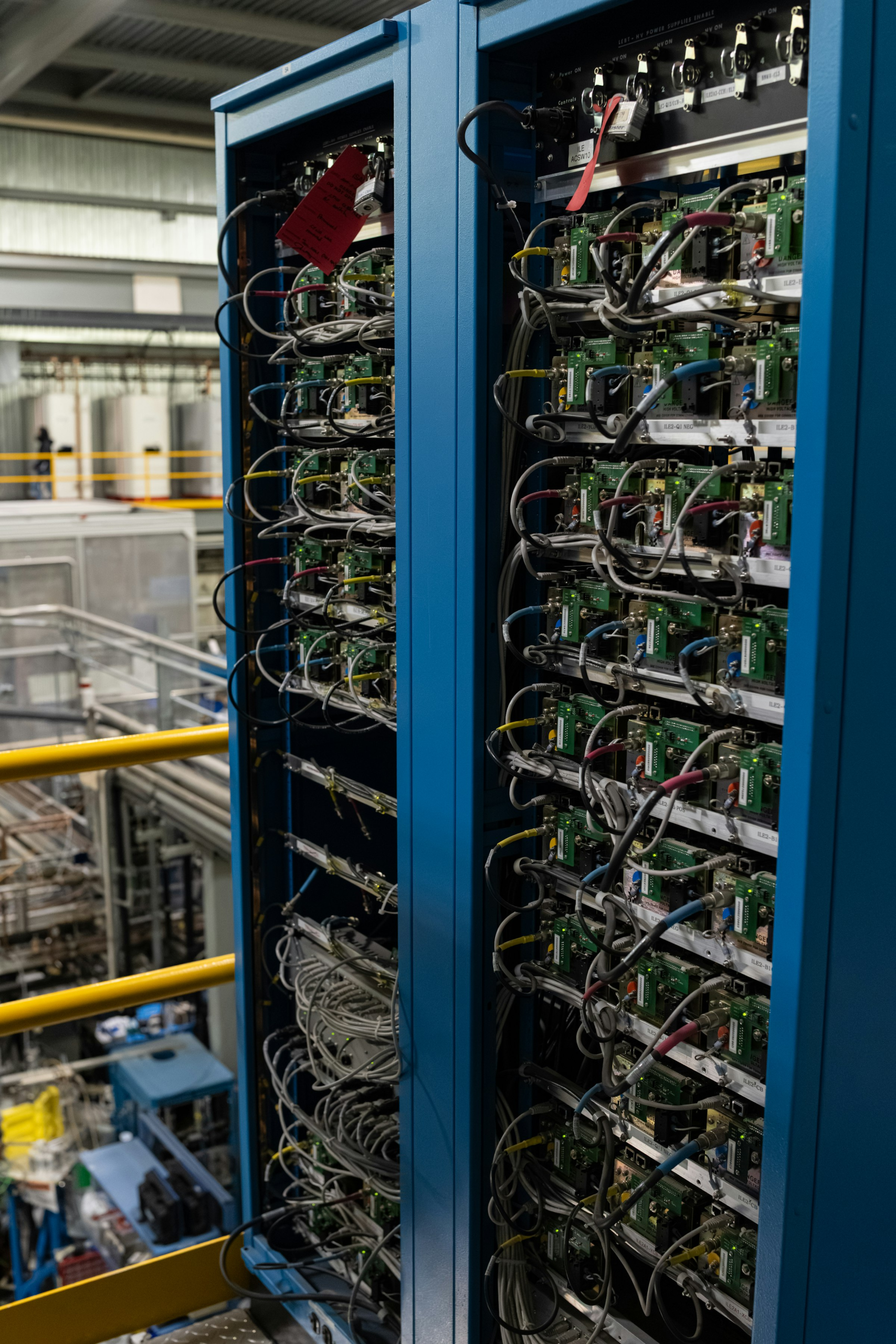
A dense GPU installation needs more than accelerator cards. Compute servers, network switches and storage must be matched to the intended workload, particularly when training jobs exchange large volumes of data among accelerators. Network capacity, topology and storage throughput can constrain how efficiently a cluster scales even when individual processors are fast.
Thermal engineering is another decisive input. High-density racks concentrate electricity use and heat rejection, requiring appropriate liquid or air cooling, pumps, manifolds, heat exchangers, monitoring and redundancy. The announcement identifies cooling fluid and server partners, but does not publish a detailed cooling design, heat-reuse arrangement or efficiency performance for the site.
Sweden’s electricity mix and industrial environment are cited by the company as reasons for choosing the location. Lower-carbon grid supply does not by itself establish the environmental impact of a particular computing service. Facility efficiency, electricity procurement, grid constraints, equipment utilisation and construction also determine the eventual operating footprint.
AMD’s ROCm software environment gives the proposed service an alternative to systems centred on NVIDIA’s CUDA ecosystem. Portability, however, depends on the application, libraries and optimisation work involved. A second accelerator architecture increases procurement choice without guaranteeing immediate interchangeability of every AI workload.
GPU cluster economics will also depend on utilisation. Training jobs may require many accelerators at once, while other workloads demand smaller allocations or high availability rather than peak speed. A provider must match the physical fleet to reservation patterns, job scheduling and network capacity. The supplier list provides clues about how Scaleway intends to integrate the system, but says little about the distribution of running costs between electricity, cooling, hardware maintenance and depreciation. Those figures would be needed for a meaningful commercial comparison with existing European GPU services.
Scaleway has not disclosed an exact MI355X GPU count, contracted IT load, grid capacity, commissioning date or total investment for the Swedish machine. Those omissions limit comparisons with already commissioned supercomputers. Until installation and customer availability are confirmed, it remains a significant proposed expansion rather than new operating European compute capacity.

