
Summary
- JUBIS is a multimillion-dollar sparse computing installation at the Jülich Supercomputing Centre.
- Its event-driven architecture is designed to avoid unnecessary computation and data movement in suitable workloads.
- The system will support research evaluating sparse processing alongside established high-performance computing infrastructure.
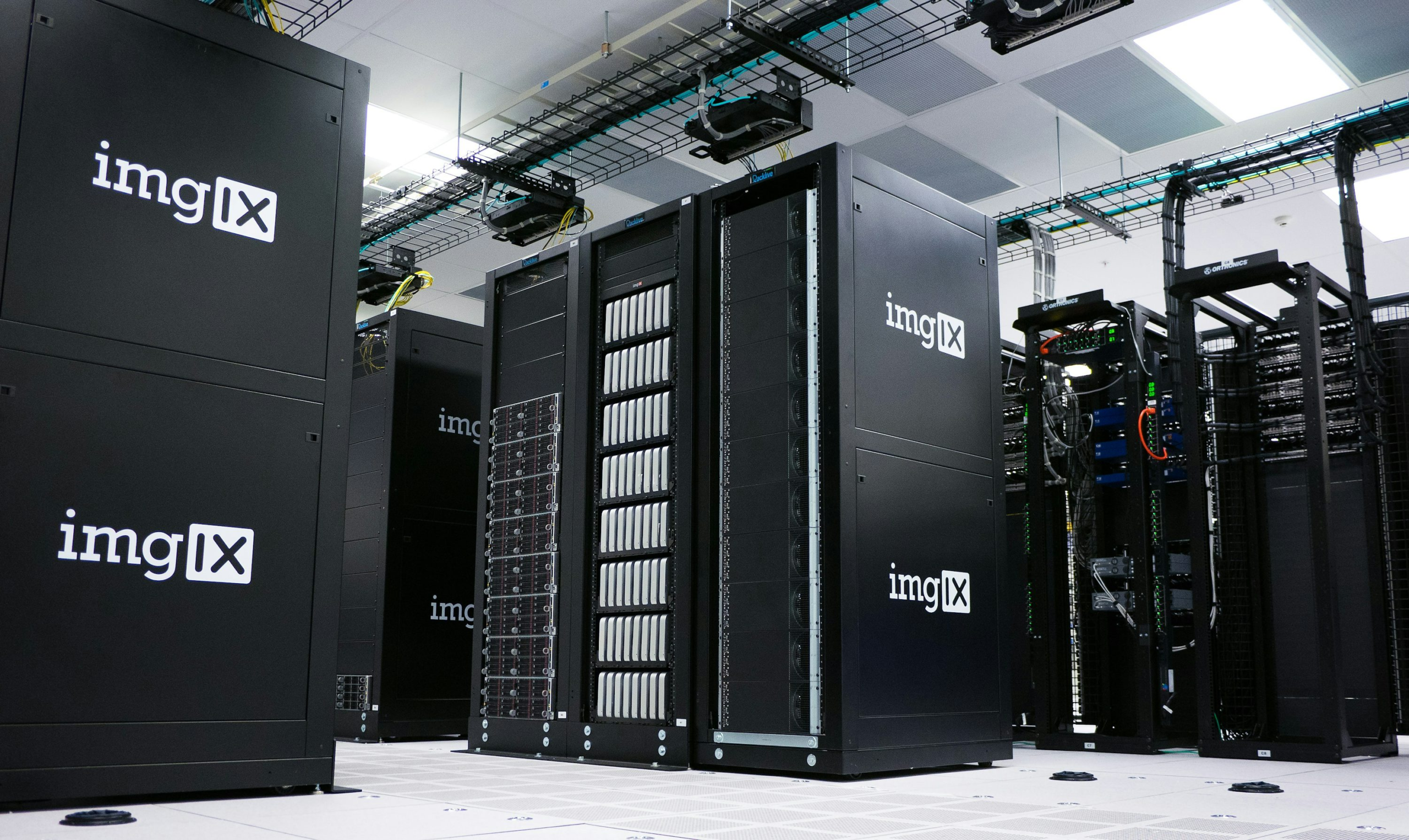
Sparxity has deployed a sparse computing rack system at Germany’s Jülich Supercomputing Centre, introducing specialised hardware for event-driven machine learning and scientific simulation alongside the centre’s established high-performance computing infrastructure.
The multimillion-dollar installation, named JUBIS, is intended to run sparse machine learning models and large-scale scientific workloads. Sparxity, previously known as SpiNNcloud, develops computing systems designed to concentrate processing on active elements of a calculation rather than executing unnecessary operations.
Jülich is home to the JUPITER exascale supercomputer and a major European research environment for advanced computing. The additional system provides researchers with a different processing architecture for workloads where sparse computation may offer advantages over conventional approaches.
Sparxity describes JUBIS as an event-driven system. This means computation can be triggered by relevant changes or activity in the data being processed, rather than requiring every part of a model to be evaluated in the same way at every step.
Sparsity arises when a large proportion of the values or operations within a computational problem are inactive, zero, or otherwise unnecessary for a particular calculation. It appears in neural models, scientific simulation, graph processing, and optimisation problems.
Conventional CPUs and GPUs can also exploit sparsity through specialised software and hardware functions. However, performance depends on the organisation of the data, the cost of identifying active elements, memory access, and the overhead associated with distributing work across processing units.
A system designed specifically for sparse computation seeks to reduce those overheads. Its effectiveness depends on the workload’s structure and on whether the computational work avoided is greater than the processing and communication needed to manage the sparse representation.
Sparxity’s existing hardware is based on the SpiNNaker2 architecture, which uses Arm processor cores and dedicated acceleration functions. The company’s development programme covers complete computing systems, including hardware and software, rather than an isolated semiconductor component.
That integration is essential when specialised equipment is installed within a research computing centre. Users need appropriate programming tools, scheduling arrangements, data movement capabilities, and support for the applications that will run on the system.
JUBIS has been designed around performance and energy efficiency objectives for particular sparse workloads. Sparxity has described substantial potential gains in solver execution, energy use, and optimisation performance, although comparisons depend on the benchmark, baseline system, and problem being tested.
Evaluating efficiency in operational infrastructure
The Jülich installation provides a physical environment for examining those characteristics. Researchers can compare the system’s behaviour against established computing approaches, including the energy consumed to complete useful work and the time required to obtain valid results.
Peak processor performance does not necessarily indicate the most efficient way to execute a particular calculation. Memory movement, communications, synchronisation, and software overhead can account for substantial operating costs, particularly where the problem does not make full use of dense computing resources.
Event-driven execution may reduce unnecessary activity when workloads contain suitable patterns of sparsity. However, other applications may remain better matched to conventional architectures, especially where calculations are dense or where the overhead of managing sparse data exceeds the savings.
The effect on a computing facility must also account for the rest of the system. Processor electricity consumption is only part of the total load, which includes memory, network equipment, storage, electrical conversion, and cooling.
Any improvement in processor-level efficiency will therefore need to be evaluated against complete system consumption and the amount of useful computing delivered over time.
Sparxity’s deployment is supported by the European Regional Development Fund and the German state of North Rhine-Westphalia. The funding connects the installation to a wider effort to expand specialised computing research and infrastructure capabilities.
Jülich’s existing environment allows researchers to examine where sparse-native processing can complement large GPU and CPU installations, rather than assuming one architecture should replace the others.
Heterogeneous computing systems can direct different workloads towards the hardware best suited to their requirements, although such arrangements introduce software and operational complexity.
The next stage for JUBIS will be sustained use within research applications, where measurements of execution time, energy use, reliability, and integration will establish how its architecture performs beyond selected demonstrations.

