
Summary
- SPIE is leading construction delivery for the Nation Data Center facility at Vélizy-Villacoublay.
- The design includes 7MW of IT capacity, cooling flexibility up to 140kW per rack, and redundant electrical infrastructure.
- Completion is targeted for late 2027, with a design PUE of 1.2 and planned heat recovery.
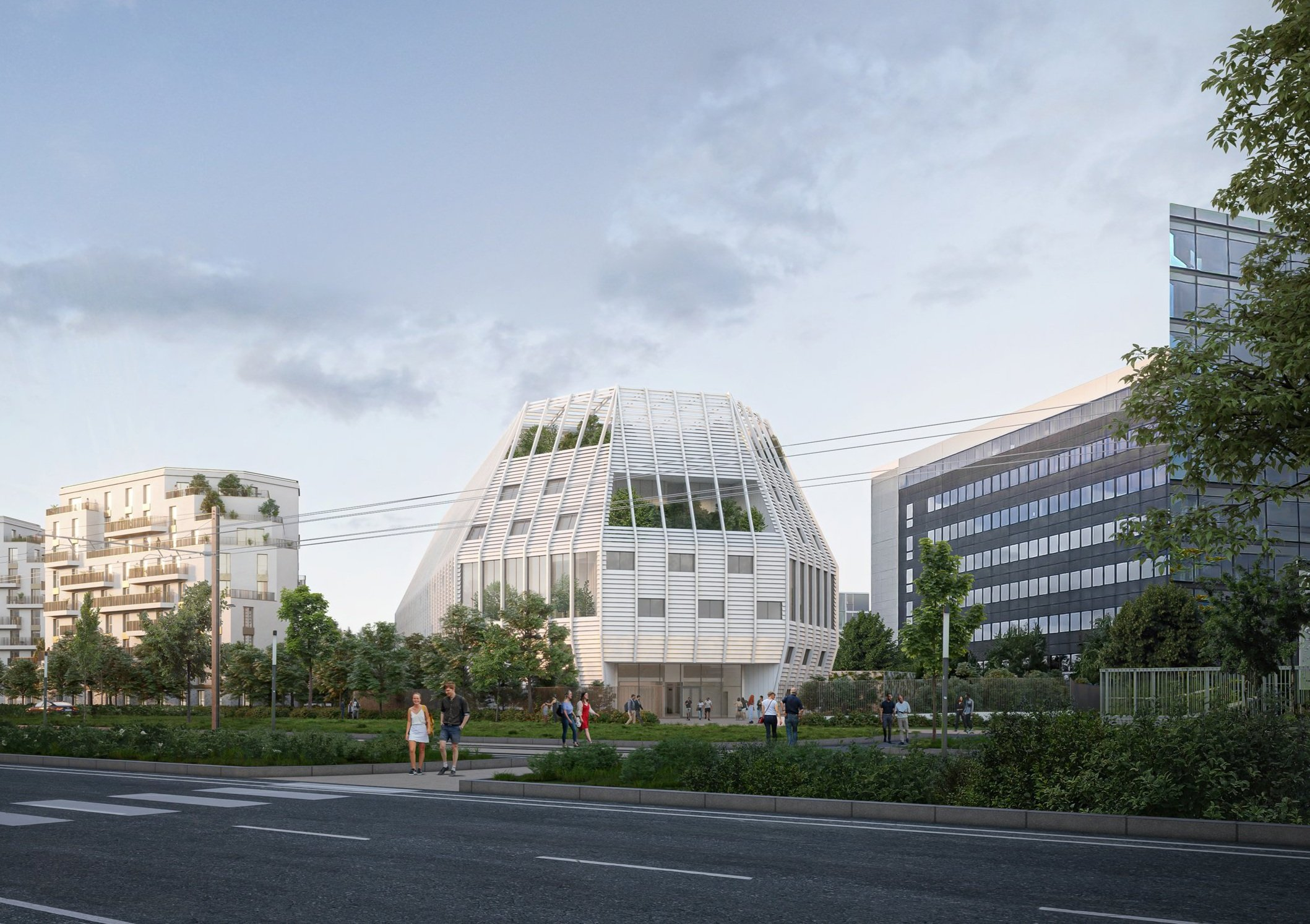
SPIE Building Solutions is leading the construction consortium delivering Nation Data Center’s new 7MW facility at Vélizy-Villacoublay, near Paris, with technical systems designed for high-density computing and recovery of surplus heat.
The project, developed by Altarea subsidiary Nation Data Center, is expected to be completed towards the end of 2027.
The facility will provide approximately 2,268 square metres of IT space and has been designed to accommodate up to 1,152 equipment racks, with a cooling architecture that can support both conventional air cooling and direct liquid cooling.
SPIE’s responsibilities include high- and low-voltage electrical systems, heating, ventilation, air conditioning, and plumbing installations.
Construction began in May 2026, and the programme involves coordinating multiple technical systems within an urban development that also incorporates a planned waste heat recovery connection.
The site’s design targets a power usage effectiveness (PUE) ratio of 1.2, although that figure is not a measured operating result.
Actual efficiency will depend on computing utilisation, mechanical plant performance, operating temperatures, and the electricity consumed by supporting infrastructure once the facility is commissioned.
Nation Data Center has designed the building to support a range of computing densities, with disclosed cooling capabilities extending to 140kW per rack for suitable configurations.
That figure represents a design capability rather than confirmation that every rack will be operated at the same power density.
The facility also incorporates redundant electrical distribution arrangements, with separate connection routes from an Enedis source substation.
Cooling flexibility supports different hardware requirements
High-density computing equipment places different demands on mechanical infrastructure from traditional server installations.
Air cooling uses controlled airflow to remove heat from equipment, while direct liquid cooling transfers thermal energy through fluid circuits positioned close to heat-generating components.
Liquid cooling can provide greater heat transfer capability at high rack densities, but requires pumps, fluid distribution systems, heat exchangers, controls, and maintenance procedures designed around the operating equipment.
Allowing both approaches within one facility gives the operator flexibility to accommodate customers using different hardware configurations.
However, the electrical and cooling systems must still be sized and commissioned for the actual loads that will be installed.
Nation Data Center’s design also incorporates opportunities to recover heat from the computing equipment and transfer it through local infrastructure.
The development plans to make recovered heat available to a neighbouring student residence associated with another Altarea business, Cogedim.
Locating the data centre near a potential heat customer may reduce distribution distances, but successful operation still requires suitable temperatures, compatible heat demand, and dependable transfer equipment.
A district heating connection must also be coordinated with the building’s cooling strategy so that heat recovery does not compromise the operating conditions required by computing equipment.
The proposed arrangement provides a practical example of integrating a data centre into surrounding urban infrastructure, rather than developing heat reuse as a separate retrofit after commissioning.
Electrical resilience remains a central design requirement
SPIE has described a fully redundant electrical architecture intended to maintain service continuity when individual components or distribution paths are unavailable.
Duplicated supplies and physically separated connection routes can reduce exposure to certain failures, although the overall resilience of the facility depends on protection systems, control logic, commissioning, and operational maintenance.
The design also includes backup generation and technical systems intended to support the planned equipment load.
Constructing those systems within the scheduled delivery period requires coordination between structural works, mechanical installation, electrical integration, and subsequent testing.
Construction completion will not, by itself, establish that the entire 7MW of planned IT capacity is operating. Commissioning, customer installation, and service activation may take place in stages.
The facility forms part of Nation Data Center’s broader development programme in France, following its earlier project near Rennes.
Its disclosed specifications show the increasing importance of designing electrical and cooling infrastructure around a range of potential computing densities, while retaining flexibility as customer requirements change.
Further milestones will include completion of the technical installations, validation of electrical redundancy, and commissioning of the cooling and heat recovery systems before the facility enters operation.

