
Summary
- The Supreme Court declined leave to appeal the High Court decision, without rehearing the planning merits.
- Art Data Centres proposes a €1.6bn, 200MW campus on a 145-acre site.
- Developers expect work to start in 2027 subject to outstanding practical arrangements.
Art Data Centres has retained the planning permission for its proposed €1.6 billion data centre campus outside Ennis, County Clare, after Ireland’s Supreme Court refused opponents leave to appeal a High Court judgment. The Supreme Court ruled on permission to appeal, not the underlying planning merits. The project still lacks any publicly verified commissioning or contracted electrical supply for its proposed 200MW scale.
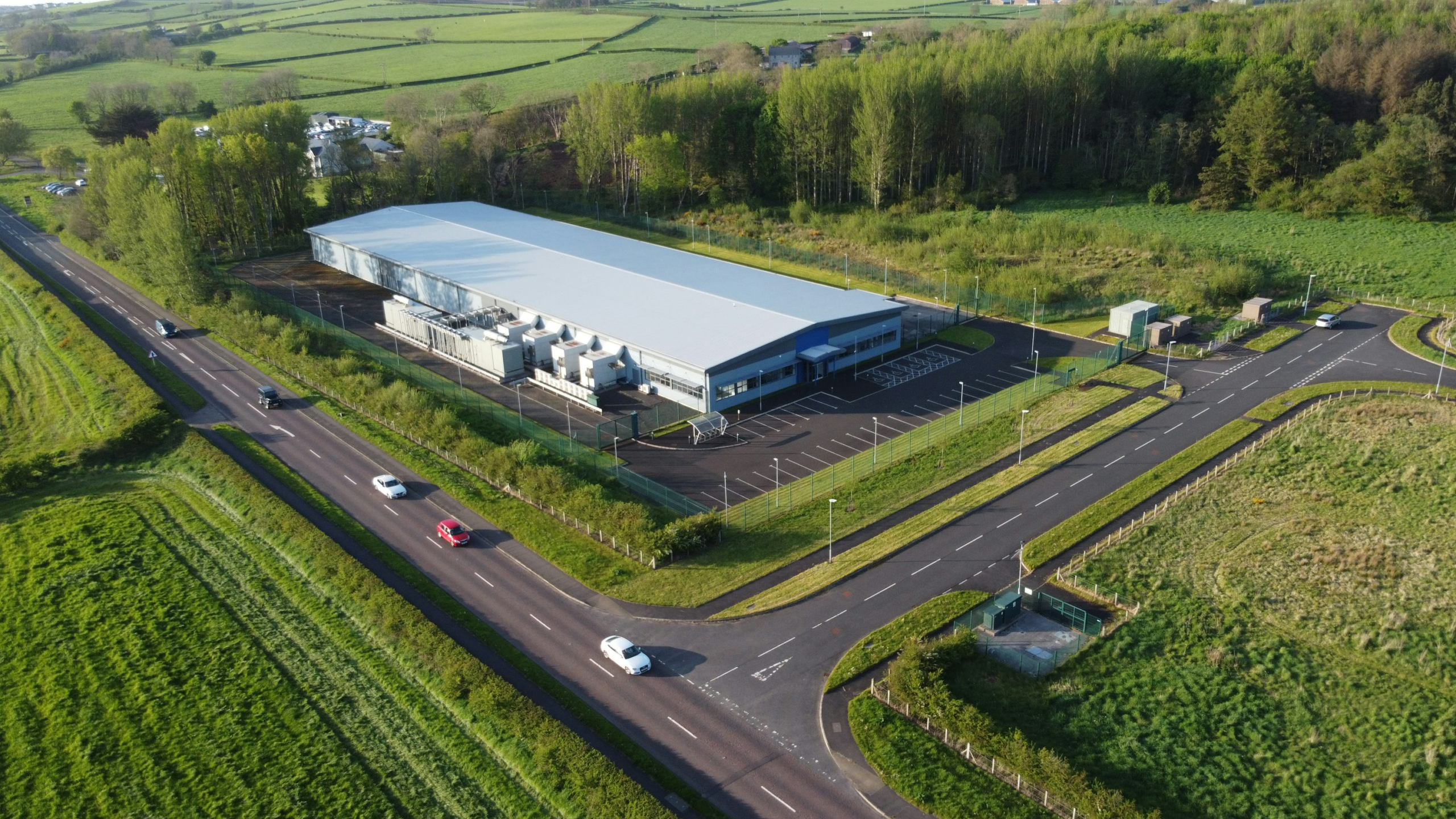
The proposed campus comprises six data halls on land beside the Tulla Road near the M18 motorway. An Coimisiún Pleanála granted permission in April 2024. A group of objectors, including Friends of the Irish Environment and Futureproof Clare, subsequently challenged the decision through the courts, raising questions about greenhouse gas emissions and the planning assessment.
The Supreme Court found that the leave application did not meet the constitutional threshold for a further appeal. It did not decide the merits of the planning application afresh or establish that environmental impacts had ceased to require management. The earlier High Court judgment upholding planning permission remains undisturbed.
Grid access remains a separate milestone
Joint founders Tom McNamara and Vincent Fogarty said electricity connection applications could now be processed and indicated that construction might begin in 2027 once the remaining arrangements are in place. That timetable is an expectation from the developer, not evidence that the grid operator has agreed energisation dates or that the entire project has a contracted power supply.
At the proposed scale, connection engineering is a major project in its own right. Transformers, high-voltage supply routes, switchgear, standby generation and internal distribution all have to be integrated with the data hall design. The nominal 200MW figure should be understood as proposed campus scale; the public reporting does not establish commissioned IT load or the exact split between computing demand and facility overhead.
The developers have also described plans for renewable electricity, grid-supporting generation and recovery of heat for agricultural and local heating uses. Those proposals could influence the campus’s relationship with surrounding infrastructure, but they require separate equipment, counterparties and delivery arrangements. Heat recovery, for example, only becomes a functioning energy service when a suitable customer, pipe network and commercially viable thermal demand are in place.
A development of this scale would also require detailed construction sequencing, environmental compliance and commissioning. Even with planning permission intact, each hall would need to be equipped and accepted before it could host live computing workloads. The site is therefore better described as legally advanced than operationally available.
The figures also need careful classification when financial or energy comparisons are made. The cited €1.6 billion is a proposed overall investment value, not money already spent on built infrastructure. The developers’ employment forecasts describe anticipated construction and operating opportunities, not measured jobs. Even a lawful planning consent does not establish a customer lease, the timing of occupancy or the share of the campus that will be delivered in each construction phase. These details will affect whether the full development proceeds together or is commissioned in increments.
The planning permission remains in force following the Supreme Court’s refusal of leave, while grid capacity, local infrastructure and energy policy remain separate constraints on delivery. The ruling neither orders construction to begin nor settles those outstanding technical arrangements.

