
Summary
- SWI Compute has launched as an AI infrastructure business within SWI Group.
- Its first UK deployment targets 30 MW, with nearly 7,000 NVIDIA Rubin GPUs and 3,500 Vera CPUs.
- The company has ordered approximately $1bn of NVIDIA systems and signed initial customer contracts, but commissioning remains scheduled for 2027.
SWI Compute has launched as a dedicated AI infrastructure business, outlining plans to bring an initial 30 MW of NVIDIA computing capacity online at Cambridge by the end of 2027.
The company forms part of SWI Group’s digital infrastructure operation and intends to develop and operate computing facilities using sites and electrical capacity assembled by the wider investment group across Europe and the United States.
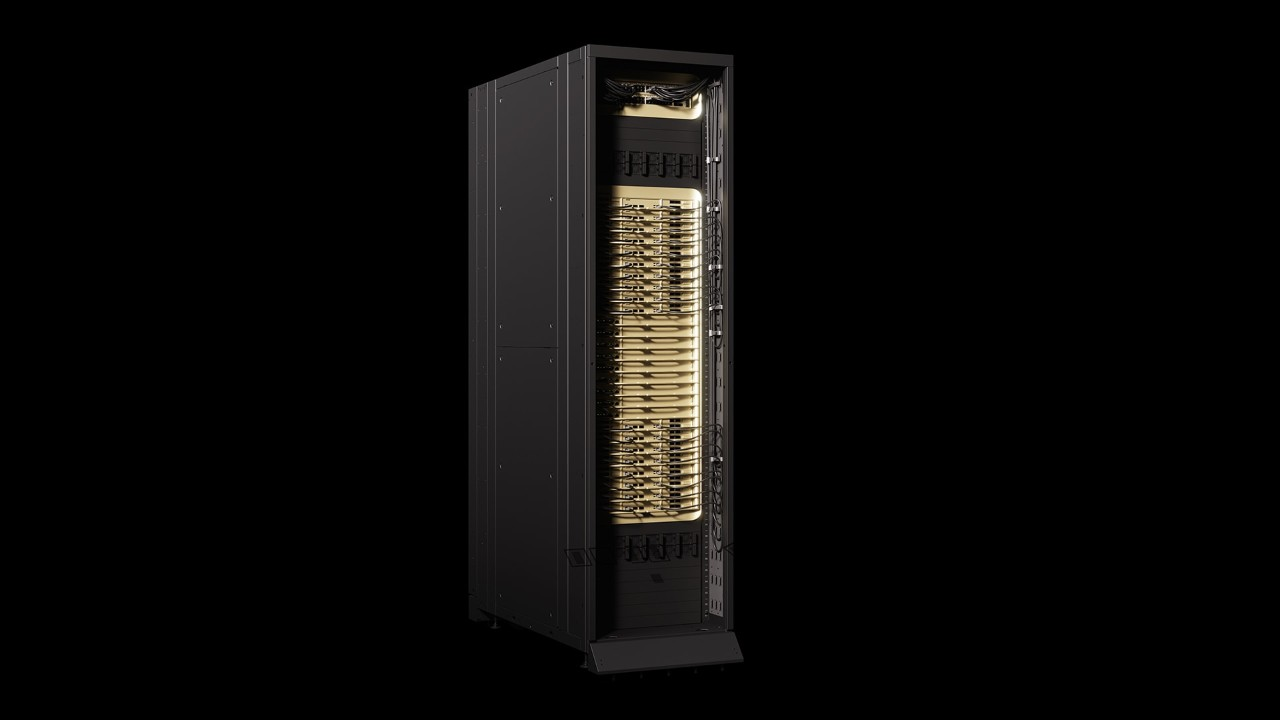
Its first large-scale UK installation is planned to contain nearly 7,000 NVIDIA Rubin GPUs and approximately 3,500 Vera CPUs, arranged in Vera Rubin NVL72 systems.
SWI says the initial deployment will form the first phase of a Cambridge campus with a proposed eventual capacity of 530 MW. The company also has a broader target of deploying 2.3 GW of NVIDIA AI factory capacity by 2029.
These figures represent different stages of the development programme. The 30 MW relates to the first planned computing installation, while the larger campus and group-wide targets depend on further construction, electrical infrastructure, equipment deployment, and commercial demand.
Neither the eventual Cambridge capacity nor the 2029 programme should be treated as commissioned computing infrastructure.
SWI Group says it has secured access to 3.6 GW of power capacity across 24 locations in Europe and the United States, following several years of development work.
That portfolio provides a potential foundation for further installations, although access to power capacity does not mean that every proposed data centre has been built or equipped with computing hardware.
Electrical infrastructure must be delivered in a configuration capable of supporting the planned IT equipment. Connection arrangements, transformers, power distribution systems, cooling equipment, and controls all influence whether a site can accommodate the intended installation.
SWI Compute has also ordered approximately $1 billion of NVIDIA systems and finalised contracts with its first customers. The company became a Preferred NVIDIA Cloud Partner in August 2026.
One initial customer is described as a US-based AI inference platform that has contracted capacity. SWI has not publicly established that the corresponding computing systems are already operating.
The Cambridge deployment will use NVIDIA Quantum-X800 InfiniBand and Spectrum-X Ethernet networking, connecting computing infrastructure intended to support AI training and inference.
High-density GPU systems require coordinated engineering across electrical distribution, cooling, networking, and compute hardware. The physical arrangement of these systems can influence achievable computing density and the reliability of the installation.
The supply of electricity is particularly important because expanding an AI installation from an initial deployment to a much larger campus requires more than additional server buildings.
Network capacity, substations, transformers, protection equipment, and backup arrangements must be compatible with the load introduced at each phase.
Cooling infrastructure must also be designed around the selected computing systems. Higher equipment density concentrates heat output, increasing the importance of liquid cooling capability, suitable coolant distribution, and tested heat rejection systems.
SWI intends to use NVIDIA’s DSX AI Factory Platform to coordinate computing, networking, electrical infrastructure, and cooling design across future developments.
Reference architectures can support standardisation, but they do not eliminate the need for site-specific engineering. Installation performance depends on the equipment ultimately delivered, the operating environment, and the completion of commissioning tests.
The company is moving beyond the development of powered data centre infrastructure into the operation of computing systems and services.
That transition also changes its commercial exposure. The performance of installed hardware, the cost and availability of electricity, equipment utilisation, and customer commitments will influence whether the planned facilities generate the expected returns.
SWI’s first Cambridge phase remains scheduled for operation by late 2027. Evidence of progress will come through completed electrical and cooling infrastructure, delivered computing equipment, commissioning, and the start of customer services.

