
Summary
- Systemair has won an approximately SEK 60m air-cooling order for a new Finnish data centre.
- The package comprises Geniox Tera Fanwall units with integrated controls and sensors.
- Manufacturing will take place in Turkey, with deliveries due to start in early 2027.
Systemair has secured an order worth approximately SEK 60m to provide air-based cooling equipment for a new data centre in Finland, adding a disclosed equipment contract to the country’s expanding construction pipeline.
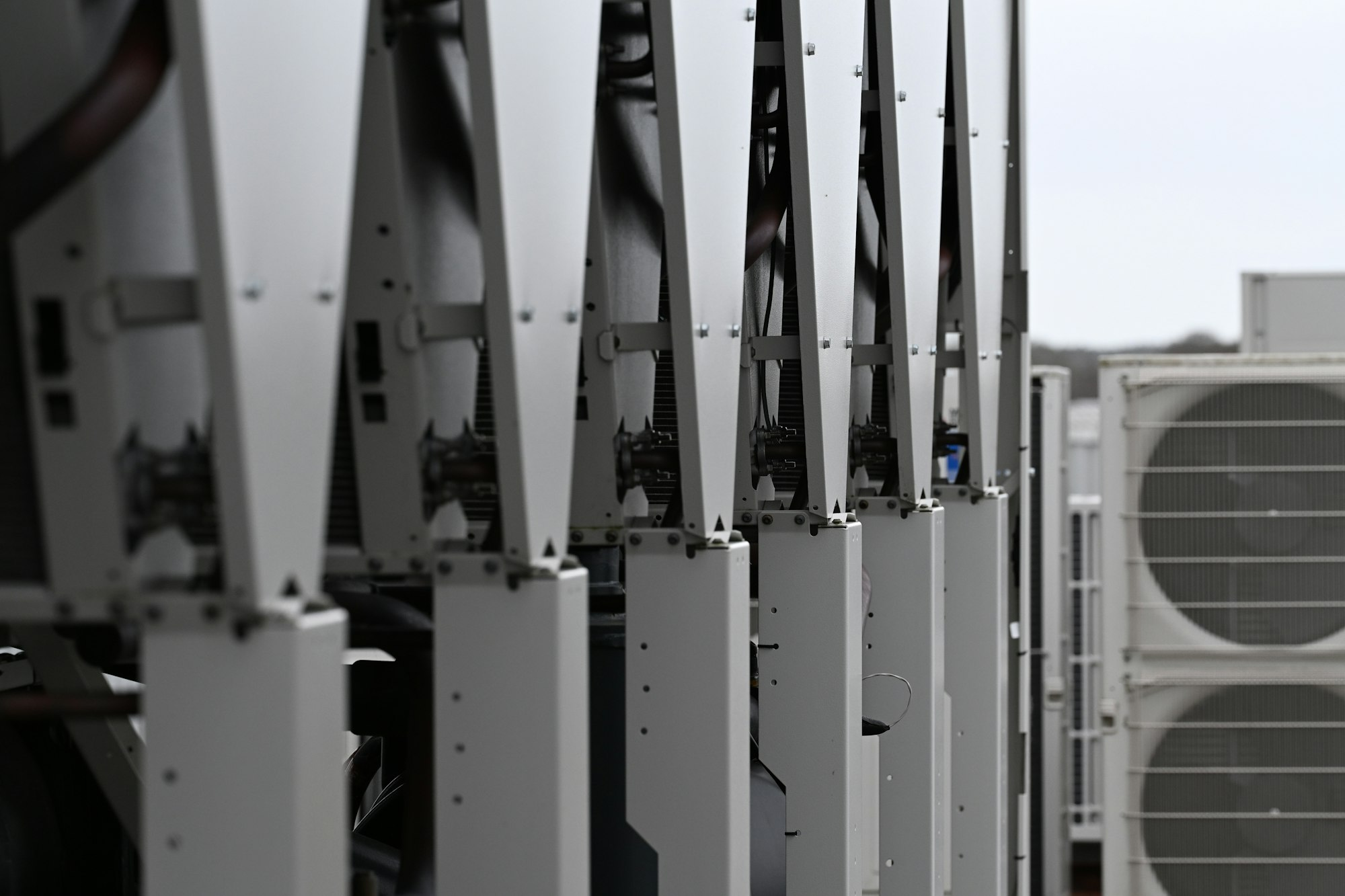
The Swedish ventilation manufacturer will supply Geniox Tera Fanwall units, with production taking place at its Turkish facility. Deliveries are scheduled to begin at the start of 2027.
Systemair has not named the customer, location, data centre operator, facility capacity, or total cooling duty covered by the order. Those omissions limit how closely the contract can be tied to a specific Finnish development, but the disclosed order value and delivery timetable show that cooling equipment has moved into procurement.
The Geniox Tera Fanwall is a modular air-handling system using multiple fans rather than relying on a single large fan arrangement. Systemair says the units include integrated controls and sensors, allowing the cooling system to be monitored and adjusted as operating conditions change.
The contract arrives as discussion around AI infrastructure increasingly concentrates on liquid cooling, but large data centres do not move from air to liquid in a single step. Conventional server areas, network rooms, lower-density racks, electrical spaces, and mixed-use halls can continue to require substantial air-handling capacity even where liquid-cooled AI clusters are installed elsewhere in the facility.
Cooling procurement follows Nordic construction
Finland has become one of Europe’s more active data centre construction markets, drawing projects that use the country’s comparatively cool climate and low-carbon electricity system. Ambient conditions can reduce the amount of mechanical refrigeration required for parts of the year, although the actual efficiency of any cooling system still depends on supply temperatures, humidity, heat rejection, server density, and operating setpoints.
Fanwall designs are attractive in large facilities because modular fan arrays can provide redundancy and allow capacity to be staged against load. Failure of one fan need not remove the whole airflow path, while variable-speed operation can reduce unnecessary fan energy when full output is not required.
Air movement itself remains a meaningful electrical load. As server power rises, operators have to manage both the energy consumed by cooling equipment and the amount of heat that can practically be transported through air before duct sizes, fan power, and temperature gradients become difficult to control.
That is why the boundary between air and liquid cooling is increasingly becoming hybrid rather than absolute. A facility may use direct liquid cooling for the hottest chips while retaining air systems for the remainder of the rack heat and for other technical spaces.
Systemair chief executive Robert Larsson linked the order to demand from mission-critical hyperscale data centres and rising AI-related investment. The company has not said whether the unnamed Finnish customer is itself a hyperscale operator, so that description should not be read as identification of the project.
The manufacturing location also exposes the supply-chain geography behind Nordic data centre construction. Equipment destined for Finland will be produced in Turkey and delivered from early 2027, meaning procurement, factory capacity, transport, installation, commissioning, and integration all sit on the schedule before the cooling plant becomes operational.
At SEK 60m, the contract is not a full data centre mechanical package, but it is a useful indicator of physical capacity moving through the supply chain. The next significant information would be the identity and scale of the Finnish project and whether its wider thermal design remains predominantly air based or combines the fanwall equipment with liquid-cooled high-density systems.

