
Summary
- A Mo i Rana municipal committee has approved data centre use for part of T1 Energy’s Giga Arctic building.
- T1 says an initial 50MW facility could operate in 2027 and holds a 396MW position in the grid-capacity queue.
- Only 161,000 sq ft of the 926,000 sq ft building has been rezoned so far, leaving expansion dependent on future approvals and power allocation.
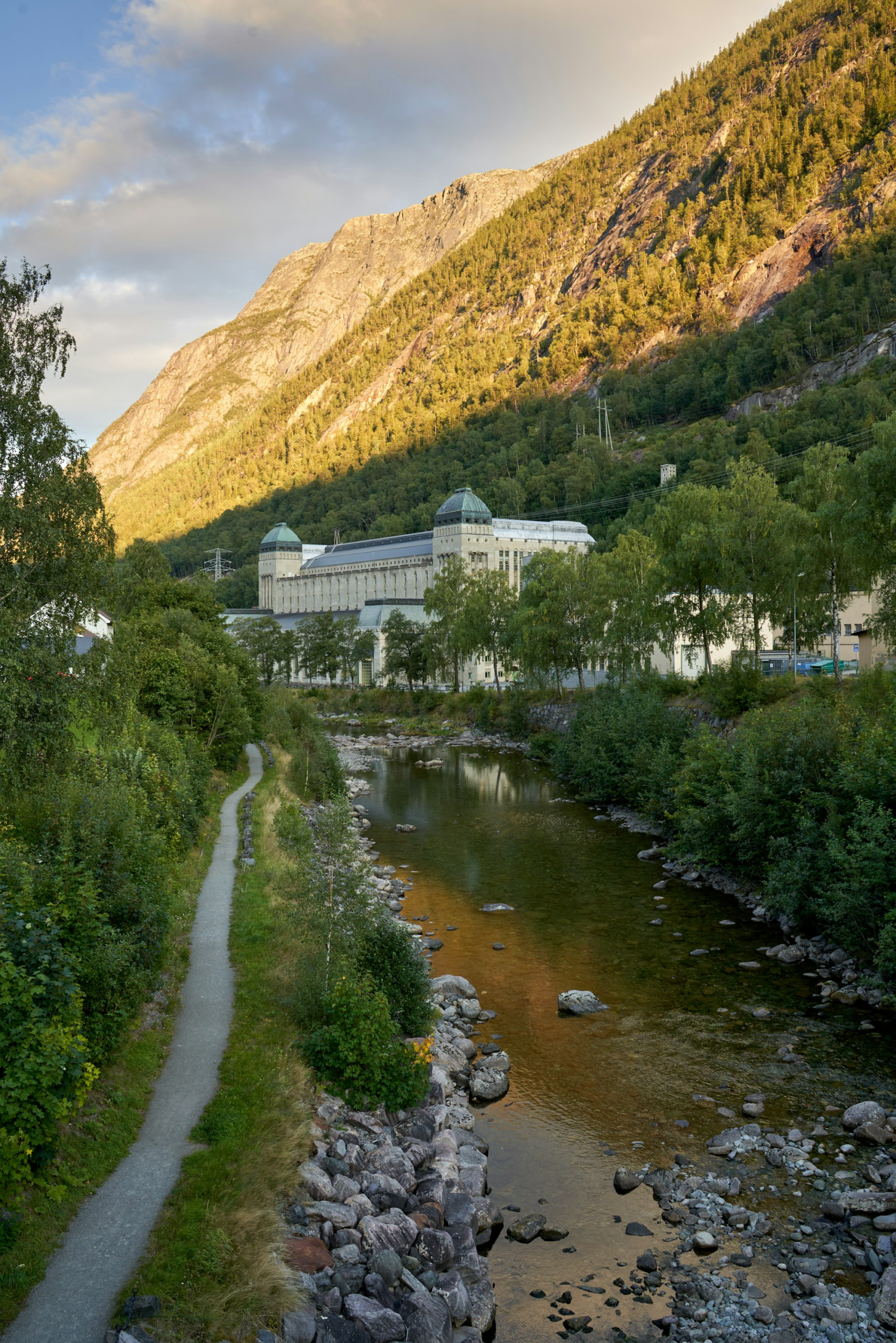
T1 Energy has secured municipal approval to use part of its Giga Arctic site in Mo i Rana, northern Norway, for a data centre, advancing a proposed brownfield conversion that could initially deliver 50MW.
A committee of the Mo i Rana municipal government approved a permit on 27 August allowing approximately 161,000 sq ft of the existing building to be zoned for industrial or data centre operations. T1 said the first 50MW facility could be operational during 2027.
The building is considerably larger than the portion covered by the latest approval. Giga Arctic extends to around 926,000 sq ft, but the remainder continues to be zoned for industrial development. Further conversion would require additional government decisions and, critically, further allocation of electricity capacity.
T1 said it currently holds a position in the grid-capacity queue for a total of 396MW. That gives the site a potentially substantial longer-term data centre opportunity, but a queue position should not be confused with electricity that has already been energised and made available for immediate use.
The company has not yet announced a data centre customer, operating partner, capital budget, or final development structure. It said it is in discussions with multiple parties as it considers how best to monetise the site.
A brownfield building with a power question
Giga Arctic illustrates why existing industrial assets have become increasingly interesting to data centre developers. A large standing building can shorten parts of the civil-construction programme and reduce the amount of new structural work required, provided that floor loading, ceiling heights, fire strategy, security, electrical distribution, and mechanical systems can be adapted to data centre use.
Those advantages do not remove the need for substantial technical conversion. A building developed for another industrial function still needs data-hall electrical systems, uninterruptible power, backup generation or alternative resilience arrangements, cooling plant, controls, network connectivity, and a physical layout capable of supporting maintainable redundant systems.
Power availability therefore remains the defining constraint. T1’s 396MW grid-queue position provides a route to much larger expansion if capacity is allocated, while the initial 50MW proposal is more closely aligned with the area currently approved for data centre use.
Mo i Rana’s energy system is part of the attraction. T1 points to access to relatively low-cost electricity generated predominantly from the region’s hydropower resources. Northern Norway has drawn growing interest from compute developers because of its renewable generation, cool climate, and availability of industrial land, but those advantages are increasingly being tested by competing demand for new grid capacity.
The project is also unusual because data centres are not T1’s core operating business. The US-listed company is primarily focused on solar manufacturing and energy infrastructure and is reviewing ways to extract value from legacy European assets. Giga Arctic is held on a 50-year lease, with extension options.
That makes the next commercial step as important as the planning approval. T1 could pursue a direct development, bring in an experienced operator, agree a lease or joint venture, or monetise the powered site through another structure. The company has not committed publicly to one route.
The 2027 operating target is ambitious enough to place emphasis on those decisions. Even with an existing shell, fitting out 50MW of resilient data centre capacity requires long-lead electrical and mechanical equipment, detailed design, customer requirements, and a clear grid energisation programme.
The latest approval nevertheless removes one of the early barriers. A portion of Giga Arctic now has a planning basis for data centre use, while the existing structure and grid-queue position give the project more substance than a speculative land announcement. Its eventual scale will be determined by how much power moves from queue position to firm allocation and which development model T1 chooses to finance the conversion.

