
Summary
- The project covers 43 buildings and approximately 56,000m² of heated residential space.
- Three 1.1MW heat pumps will raise recovered server heat from about 30°C to 65°C.
- The completed network is expected to save around 650 tonnes of CO₂ annually, with the residential conversion extending to approximately 2040.
Telehouse will supply recovered data centre heat to approximately 1,100 homes in Frankfurt under a project to replace individual gas heating systems across an established residential estate.
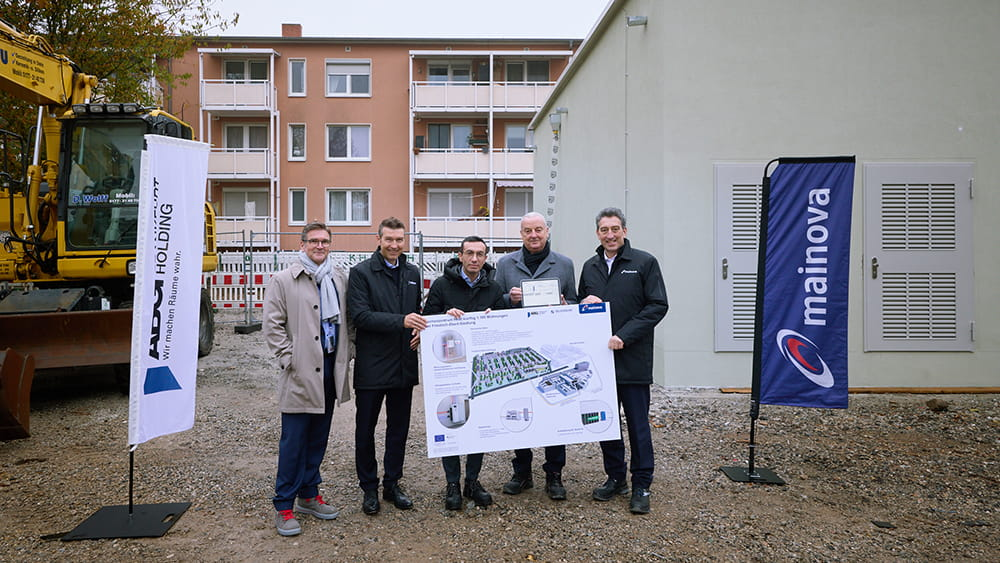
The German data centre operator is working with energy supplier Mainova and housing company ABG Frankfurt Holding to convert the Friedrich-Ebert-Siedlung in the city's Gallus district. Initial heat deliveries are planned for autumn 2027, with the conversion of the wider estate continuing over the following decade.
The scheme will serve 43 buildings covering approximately 56,000 square metres of heated floor space. Annual heating demand is estimated at 5.1GWh, while the partners expect annual carbon dioxide savings of approximately 650 tonnes once the project is fully operational.
Three water-to-water heat pumps, each rated at 1.1MW, will raise the temperature of recovered server heat from approximately 30°C to 65°C. The heating centre will also contain an 8,000-litre buffer tank and a transformer station.
Delivering the heat will require 600 metres of pipework connecting Telehouse's facility to the heating centre and approximately 1.6 kilometres of local distribution network, including connections to individual buildings.
Mainova will finance, plan, construct, and operate the heating installation under a contracting arrangement. The project will receive support from Germany's federal funding programme for efficient heating networks.
Converting server heat into residential supply
Data centre cooling systems remove heat produced by servers and associated equipment. That energy is often available at temperatures below those required by existing residential heating infrastructure, limiting its direct use without additional equipment.
The Frankfurt installation addresses the temperature difference through electrically driven heat pumps. These raise the temperature of the recovered energy to a level suitable for the estate's heating systems, allowing part of its gas consumption to be displaced.
The heat pumps themselves consume electricity, so the environmental benefit depends on their operating efficiency and the emissions associated with their electricity supply. The projected 650-tonne annual reduction includes an allowance for that consumption; it is not an observed saving.
The location of the data centre is also important. Shorter pipe runs can reduce some infrastructure requirements and heat distribution losses, while the existence of nearby residential demand provides a potential use for thermal energy that would otherwise be rejected.
Telehouse has operated in Gallus since 2012, subsequently developing a technical building and substation and expanding its Frankfurt site. The approximately 50,000-square-metre facility already contributes recovered heat to the neighbouring Franky development.
Extending the system to Friedrich-Ebert-Siedlung will require considerably more than connecting another building to a heat exchanger. Most of the estate dates from the 1950s, and 39 buildings still use individual gas heating systems.
Occupied homes require phased conversion
ABG expects to convert approximately 80 homes each year. Internal works will include replacing heating and water pipework, modifying radiators, removing individual gas boilers, and installing apartment-level heat transfer equipment.
The housing company plans to undertake work inside homes between May and September, when disruption to heating provision can be minimised. Residents will not need to move out, and temporary rent reductions are planned while work takes place in their apartments.
Consumption displays will be installed to provide information on heating and water use, with Mainova responsible for direct billing.
Some of the estate's electricity already comes from local renewable generation. Since 2019, photovoltaic systems with approximately 1.4MWp of installed capacity have operated across the roofs of 35 buildings. Those systems are separate from the heat recovery infrastructure.
The project illustrates how data centre waste heat can become part of an urban heating network, but also the extent of investment required beyond the source facility. Pumps, pipework, heat exchangers, building alterations, controls, and maintenance arrangements all determine whether the recovered energy can provide a dependable heating service.
The partners expect the first residential connections in 2027. Full conversion is targeted around the end of the 2030s, when the projected emissions reduction can be assessed against the system's actual operating performance.

