
Summary
- The laboratory system delivered more than 3.5MW of cooling from an 800V DC feed.
- Trane developed the proof of concept with Eaton and Danfoss.
- Testing indicated potential system-efficiency improvement of up to 2% over conventional AC counterparts.
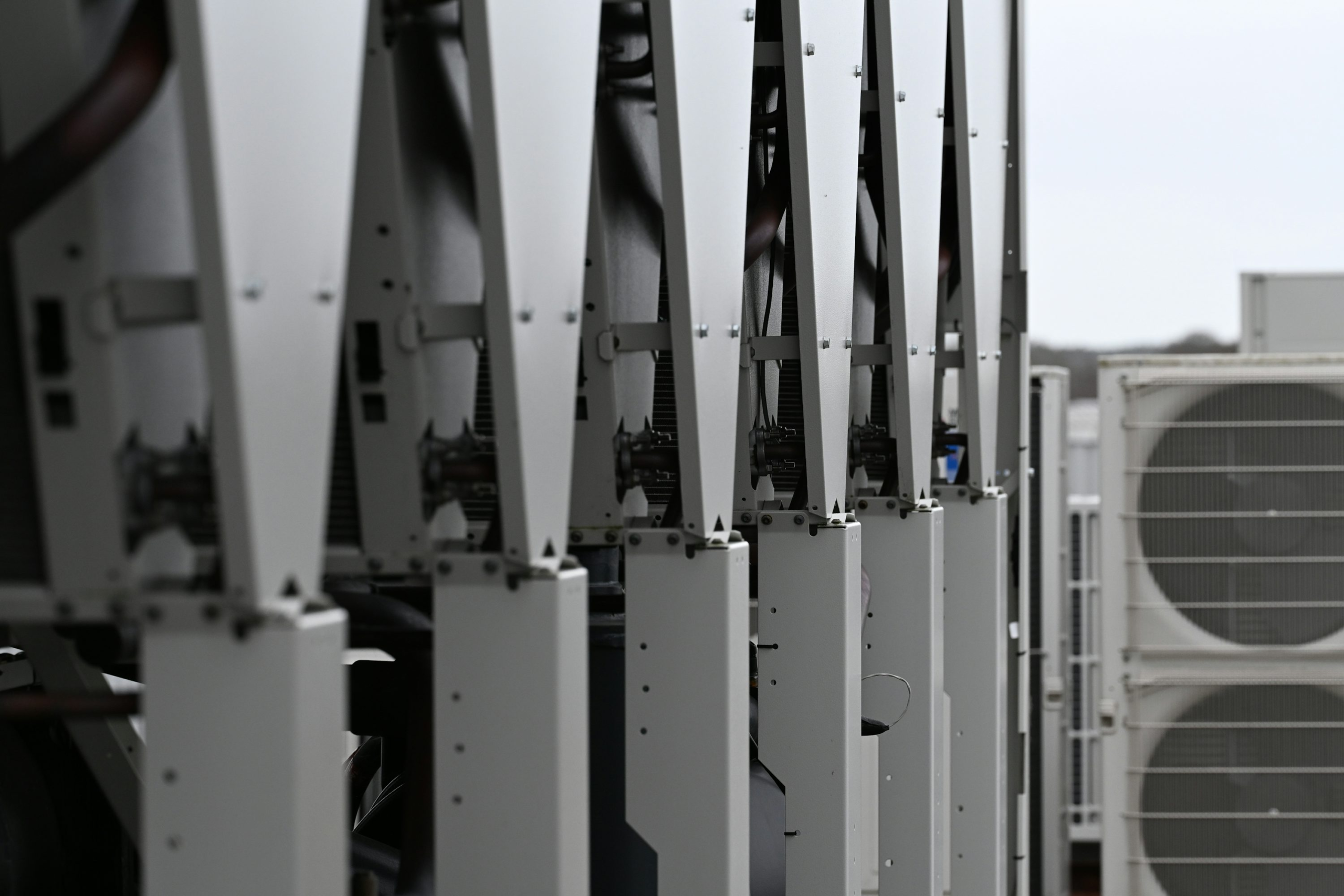
Trane Technologies has demonstrated a large chiller operating directly from an 800V DC supply, delivering more than 3.5MW of cooling in a laboratory test aimed at high density AI data centres.
The system was developed with Eaton and Danfoss by modifying an existing high efficiency chiller to accept an 800V direct current feed.
Trane said the test delivered more than 1,000 tons of cooling capacity and showed potential for system efficiency improvement of up to 2% compared with conventional AC counterparts.
The efficiency figure comes from the laboratory configuration rather than a live site. Actual performance would depend on the surrounding electrical architecture, plant loading, cooling design, and number of conversion stages removed.
Most utility electricity reaches a data centre as alternating current, while servers and many electronic loads ultimately operate internally on direct current. Power is converted several times between the grid connection and the processors.
AI systems are increasing the cost of those conversions because rack demand is rising fast enough to make conductor size, conversion losses, distribution equipment, and electrical room space material design constraints.
Several infrastructure suppliers are developing higher voltage DC systems that move large amounts of power through the facility with fewer conversion stages.
Cooling plant represents a substantial electrical load in its own right.
Direct to chip systems can carry heat efficiently away from processors, but that heat still has to move through pumps, coolant distribution units, heat exchangers, and the site’s central heat rejection plant.
Supplying a multi megawatt chiller directly from an 800V DC architecture could remove conversion equipment between the electrical distribution system and the cooling plant.
The work with Eaton and Danfoss also reflects the number of systems that have to change together.
An 800V DC architecture requires compatible switchgear, drives, protection, controls, maintenance procedures, and technician training. Fault behaviour and isolation methods also have to be engineered for direct current rather than conventional AC plant.
Interoperability will determine whether the approach becomes repeatable across multiple facilities or remains confined to a small number of bespoke projects.
A potential 2% efficiency improvement becomes material when applied to several megawatts of cooling plant over long operating periods. Lower conversion losses can reduce upstream electricity demand and the additional heat created by the electrical system itself.
The architecture also introduces operational risk if equipment supply, maintenance capability, or standards lag behind deployment.
Trane has demonstrated that the chiller can operate at 800V DC. Commercial deployment will depend on whether the complete electrical and cooling chain can be made safe, maintainable, and repeatable at data centre scale.

