
Summary
- The UK government says legislation has been amended to allow data centres to be directed into the NSIP regime.
- The route gives the Secretary of State responsibility for deciding development consent applications where projects qualify.
- The change sits alongside AI Growth Zones and rising pressure to speed large campus planning without ignoring power, biodiversity, and local impact.
The Department for Science, Innovation and Technology has confirmed that UK legislation has been amended to allow data centres to be directed into the Nationally Significant Infrastructure Projects regime.
The change appears in the government’s Digital and Technologies Sector Plan year-one update, which says data centres can now be directed into the NSIP process, where the Secretary of State decides applications for development consent. The update places the measure within a wider infrastructure programme that includes five AI Growth Zones and support for localised AI infrastructure.
The NSIP route is used for major infrastructure projects with national significance, including energy, transport, water, wastewater, and some business and commercial schemes. Making data centres eligible for direction into that process reflects the government’s treatment of large digital infrastructure as more than local commercial development.
The move follows a period in which data centres have gained prominence in UK industrial strategy, planning policy, and critical infrastructure discussions. The government designated data centres as critical national infrastructure in 2024, while large AI data centre proposals are now tied to national compute capacity, grid access, regional growth, and sovereign digital capability.
Planning pressure moves up the chain
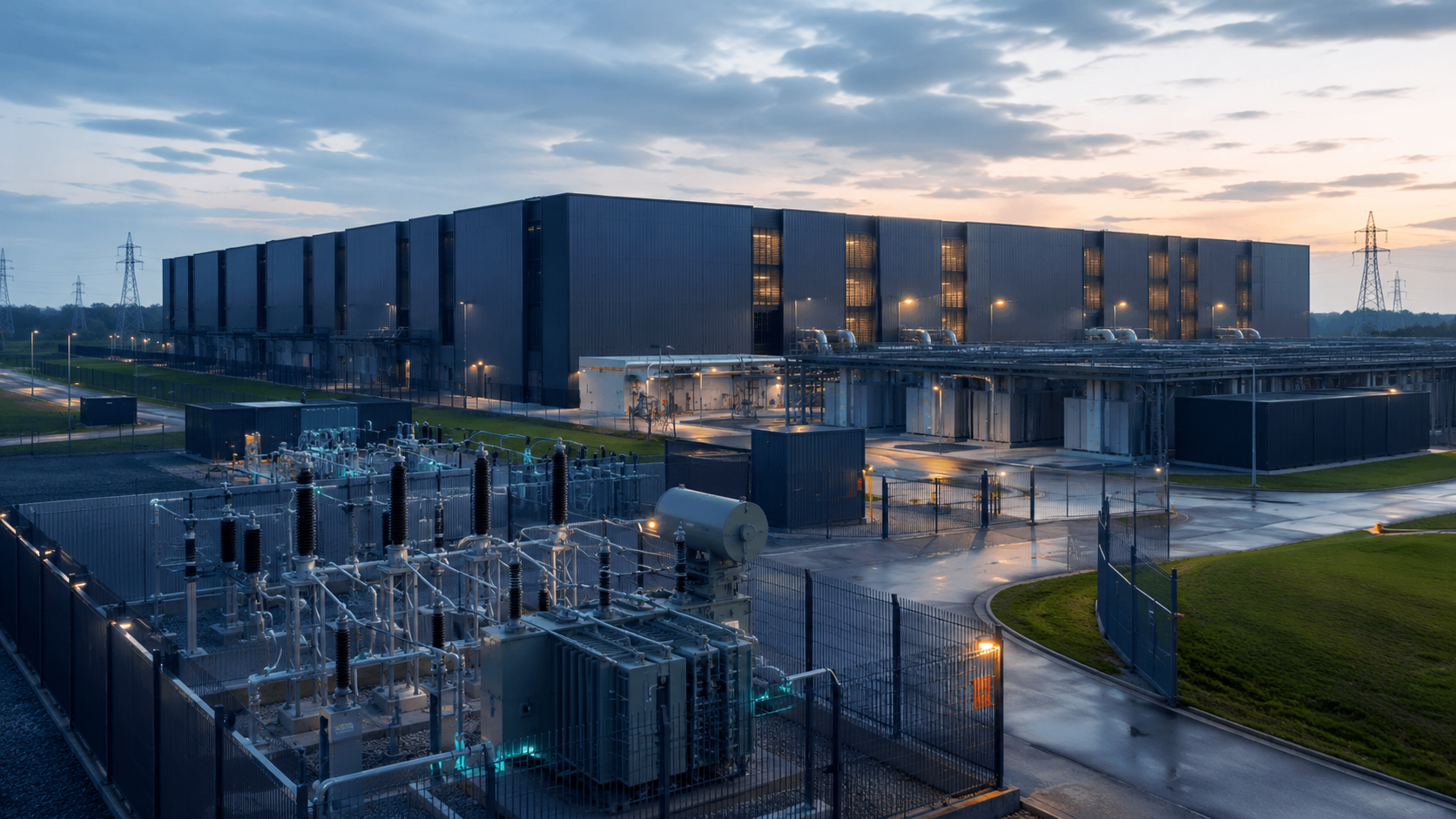
Data centre planning has become more politically exposed because projects are larger, more power-intensive, and more visible. A small enterprise facility or carrier hotel can often be handled through conventional local planning structures. A multi-building AI campus with its own substation, backup generation, security infrastructure, and hundreds of megawatts of load is a different proposition.
The NSIP route offers a way to centralise decision-making for projects that meet the threshold and policy case. It can reduce the risk of nationally important infrastructure becoming trapped in local planning uncertainty and may provide a clearer route for projects that cut across local authority boundaries or require major associated energy works.
Large data centres will not become easy to consent. The NSIP process is rigorous, document-heavy, and open to examination. Developers will still need to address need, alternatives, environmental impact, biodiversity, traffic, noise, water, energy, landscape, construction effects, and community concerns. The final decision, however, can sit with national ministers rather than a local planning committee.
Developers frustrated by inconsistent local treatment of data centres will welcome the policy direction. Local authorities and communities may be less comfortable if projects appear to move away from the places most directly affected. The credibility of the route will depend on whether national decision-making can accelerate appropriate schemes without diluting scrutiny of local infrastructure and environmental impacts.
Power remains the permission slip
The NSIP change does not solve the grid problem. Planning consent and electrical connection are connected, but they are not interchangeable. A nationally approved data centre still needs a credible power route, transmission or distribution capacity, substations, protection systems, construction sequencing, and long-lead electrical equipment.
AI Growth Zones sit alongside the planning change because the government is trying to concentrate compute infrastructure where energy capacity and infrastructure potential are stronger. The UK’s data centre pipeline is increasingly constrained by the interaction between land, grid, and planning. A national route may help consenting, but it does not create transformers, cables, substations, or grid headroom by itself.
Biodiversity net gain and environmental assessment will remain central. Data centre NSIPs will still need to address ecological impacts, while large campus schemes may face scrutiny over land take, water use, waste heat, local power reinforcement, and backup generation. Faster planning cannot mean weaker evidence.
Investors and developers now have a clearer policy signal that some data centres will be treated as strategic infrastructure. That recognition can support capital deployment, particularly for large AI projects where planning certainty is as important as customer demand. The policy will become more meaningful once the first major schemes are directed into the process and the examination of power, environment, and local impact begins.

