
Summary
- Viridor and Rivington Energy are planning up to 200MW of AI-ready data centre capacity across UK energy-from-waste sites.
- The first project is a proposed data centre at Viridor’s Avonmouth ERF in Bristol, where planning documents have been filed.
- Energy-from-waste offers a private-wire power route, but it carries carbon, air-quality, planning, and backup-generation questions.
Viridor and Rivington Energy are planning up to 200MW of AI-ready data centre capacity across UK energy-from-waste sites, starting with a proposed facility at Viridor’s Avonmouth energy recovery facility in Bristol.
The partnership would develop data centres at sites in Bristol, Greater London, Oxfordshire, and Fife, sourcing electricity directly from Viridor’s energy-from-waste assets rather than relying solely on conventional grid supply. The first planned facility at Avonmouth is expected to provide 40MW of capacity and has entered the local planning process.
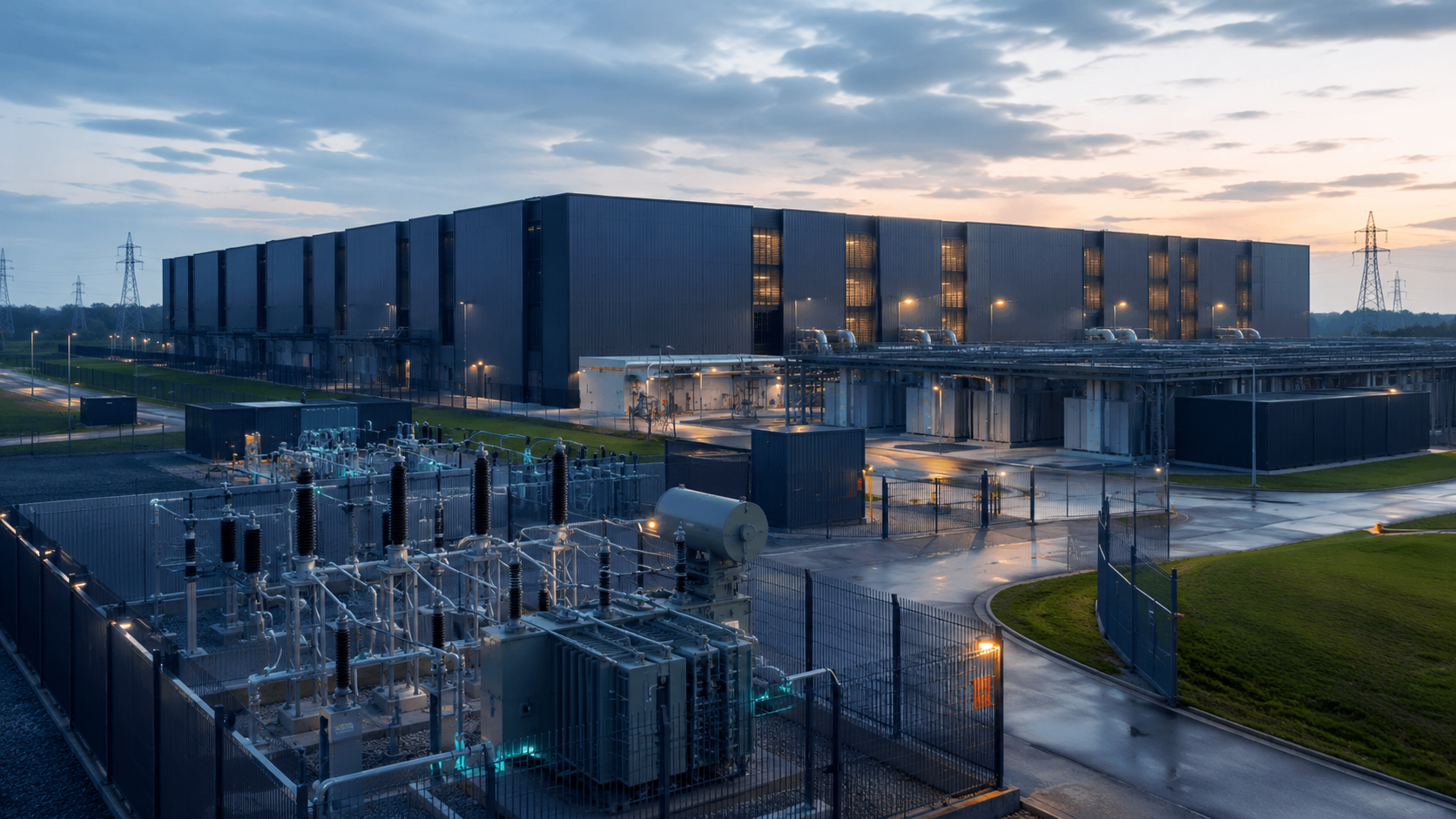
Planning documents lodged with Bristol City Council show a proposed change of use of the former polymers recycling facility at Viridor Avonmouth ERF for use as a data centre. The documents refer to external plant and generating equipment, elevational alterations, new access points, landscaping, and associated works.
The application material also covers fuel cell layouts, substation drawings, diesel tank details, fire safety, air quality, noise, transport, drainage, biodiversity, and energy and sustainability documentation. That detail makes the proposal a useful window into how AI infrastructure is starting to intersect with industrial energy sites and local planning systems.
Private-wire power moves into the mainstream
Grid connection delays, high power prices, and AI-led demand are pushing UK data centre developers towards sites where electricity can be accessed through private-wire arrangements, behind-the-meter generation, or direct association with existing energy infrastructure. Energy-from-waste plants fit naturally within that search because they generate baseload power and often sit on industrial sites with grid connections, planning history, and heavy infrastructure already in place.
A direct supply from an adjacent energy plant can reduce exposure to grid queues and create a clearer power story for an initial phase. It can also make productive use of electricity generated from residual waste that cannot be recycled, although the environmental case is more complex than a simple low-carbon label would suggest.
Energy-from-waste is not zero-carbon power. Combustion of residual waste produces carbon dioxide and other emissions, even where modern plants use pollution-control systems and displace landfill. Operators may argue that residual waste has to be treated and that baseload output has value in a constrained grid. Opponents will scrutinise carbon intensity, local air quality, and the risk that long-term waste contracts can weaken incentives to reduce waste volumes.
Avonmouth will test how planning authorities and local communities assess data centre energy strategies that sit between conventional grid supply and clean renewable generation. The relevant planning question is not whether energy-from-waste can be given a neat sustainability label. The project will need to demonstrate a credible operational, environmental, and local infrastructure case when power, emissions, backup, noise, traffic, and biodiversity are considered together.
AI density brings planning detail
The technical scope of the Avonmouth documents shows how data centre planning is changing. A scheme is no longer only a building shell with an IT use class attached. External plant, fuel cells, substations, diesel tanks, fire strategy, broadband connectivity, noise, drainage, flood risk, biodiversity net gain, and lighting all become part of the planning record.
The proposed 40MW first phase is large enough to raise serious questions about resilience, heat rejection, maintenance, security, and construction impact, while still being framed around the reuse of an existing industrial facility rather than a wholly new campus. Brownfield conversion may strengthen the planning case, but it does not remove scrutiny. Data centres still bring substantial electrical infrastructure, mechanical plant, security fencing, backup systems, and operational traffic.
Replication across the wider 200MW portfolio will not be automatic. Bristol, Greater London, Oxfordshire, and Fife have different grid conditions, planning sensitivities, labour markets, and local environmental pressures. An energy-from-waste data centre model that works at one site may need substantial redesign at another.
The partnership treats power as the starting point rather than a late procurement item. That reflects the direction of the UK market. AI demand may drive the customer case, but buildable capacity depends on sites where electricity, planning, cooling, resilience, and local environmental constraints can be made to fit. Energy-from-waste will not be an easy answer, but it has entered the UK’s search for power-led data centre capacity.

