
Summary
- WDP Romania and Lamas Invest are pursuing approvals for two proposed data centres at Ștefăneștii de Jos.
- The developments have been associated with two 190MW grid connections, giving 380MW of combined electrical capacity.
- A new 220kV substation would be required, while the project remains at an early pre-construction stage.
WDP is exploring the development of two large data centres at its industrial park in Ștefăneștii de Jos, outside Bucharest, with the proposed sites associated with 380MW of combined grid-connection capacity.
The Belgian logistics-property group’s Romanian subsidiary and Lamas Invest have begun work towards the approvals required for the schemes, according to Romanian reporting subsequently picked up by sector media. Each project is understood to have an approved connection level of around 190MW.
No IT capacity has been disclosed, and the 380MW electrical figure should therefore not be treated as 380MW of installed compute. Grid connection capacity has to support cooling, electrical losses, auxiliary plant, and other facility loads as well as the IT equipment itself.
The projects remain at an early stage. They are planned for WDP’s existing industrial estate in Ștefăneștii de Jos, where the company already operates approximately 13MW of photovoltaic generation for self-consumption. Current reporting points to a possible end-of-decade operating horizon rather than an imminent construction start.
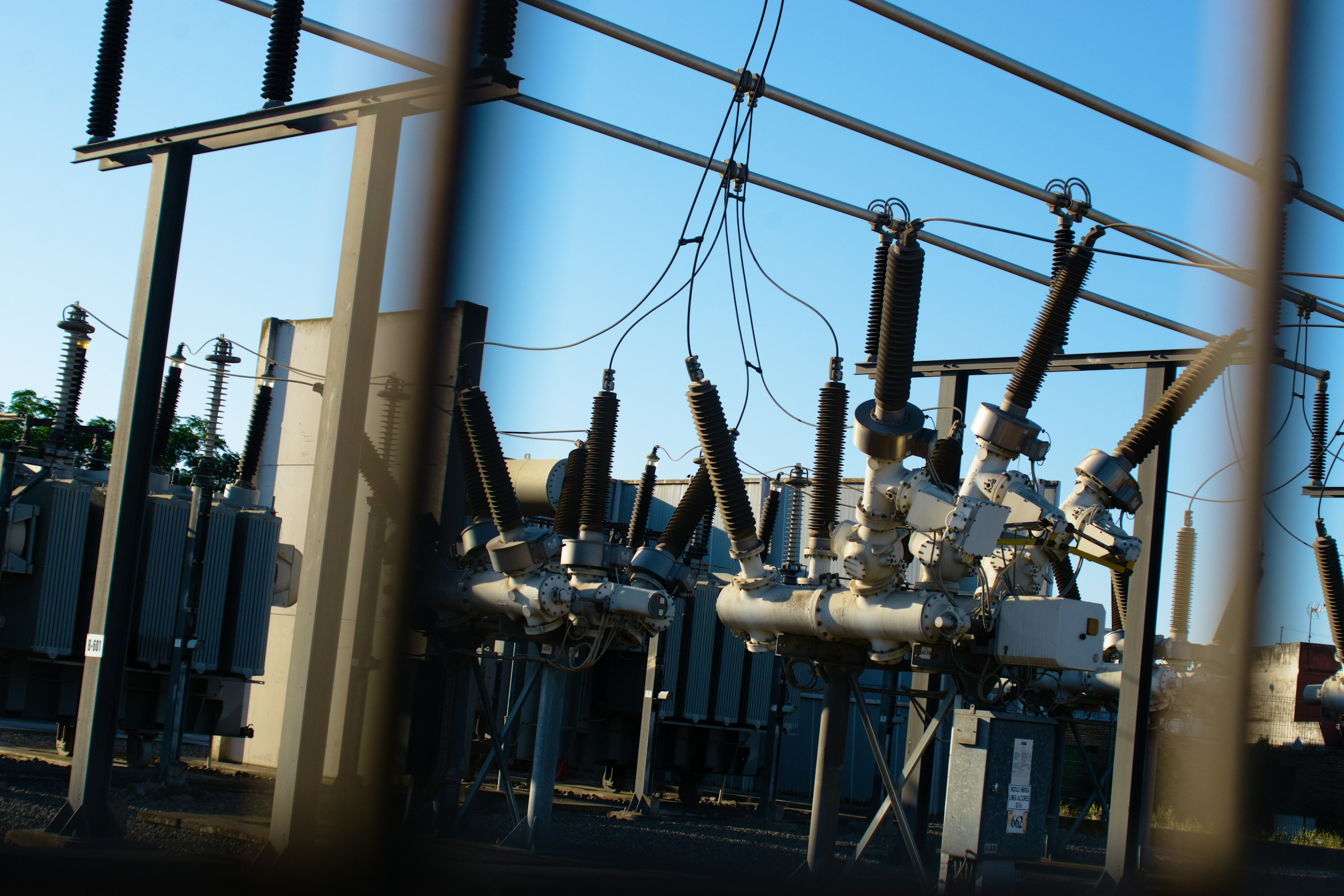
The most significant infrastructure requirement is the grid connection. The two data centres are expected to require a new 220kV transformer station linked to the Fundeni–Brazi Vest 1 overhead transmission line. That puts high-voltage electrical works at the centre of the development programme before any large compute load can be brought online.
Romania tests a much larger scale
If delivered near the proposed connection level, the development would mark a sharp increase in the scale of Romanian data centre projects. Local reporting has estimated the country’s existing data centre portfolio at roughly 100MW, although that comparison depends on how operational and planned capacity are counted.
The size of the proposed connections therefore deserves more attention than the number of buildings. A pair of sites drawing hundreds of megawatts would need transmission-level infrastructure, phased energisation, and a credible plan for how the underlying electricity system would absorb the load.
Ștefăneștii de Jos also reflects a broader convergence between industrial real estate and data centre development. Logistics landlords already control large sites with road access, established planning histories, utility corridors, and experience delivering technically complex buildings. What they do not automatically possess is the specialist operational capability required to run mission-critical digital infrastructure.
WDP has not disclosed whether it intends to develop the proposed facilities itself through to operation, partner with an established data centre operator, or prepare powered land and buildings for another investor. The final ownership and operating structure therefore remains open.
The site’s existing solar generation is useful but small relative to the proposed electrical demand. Thirteen megawatts of onsite photovoltaics cannot materially supply a pair of facilities connected for 380MW on its own, particularly because solar output varies through the day. The project would remain heavily dependent on the national grid and whatever additional energy-procurement arrangements are put in place.
Romania offers developers a combination of comparatively lower land costs, growing connectivity, and access to Central and Eastern European demand, but very large projects still have to prove that sufficient power, transmission infrastructure, customers, and capital can be aligned on the same timetable.
For that reason, the Ștefăneștii proposals are better viewed as a significant powered-development pipeline than committed operational capacity. The 380MW figure establishes the intended electrical scale. Planning progression, the proposed 220kV substation, financing, and an identified data centre operating model will determine how much of that scale ultimately reaches construction.

