
Summary
- ABB has agreed a $2.65bn enterprise valuation, with completion expected during the second half of 2027.
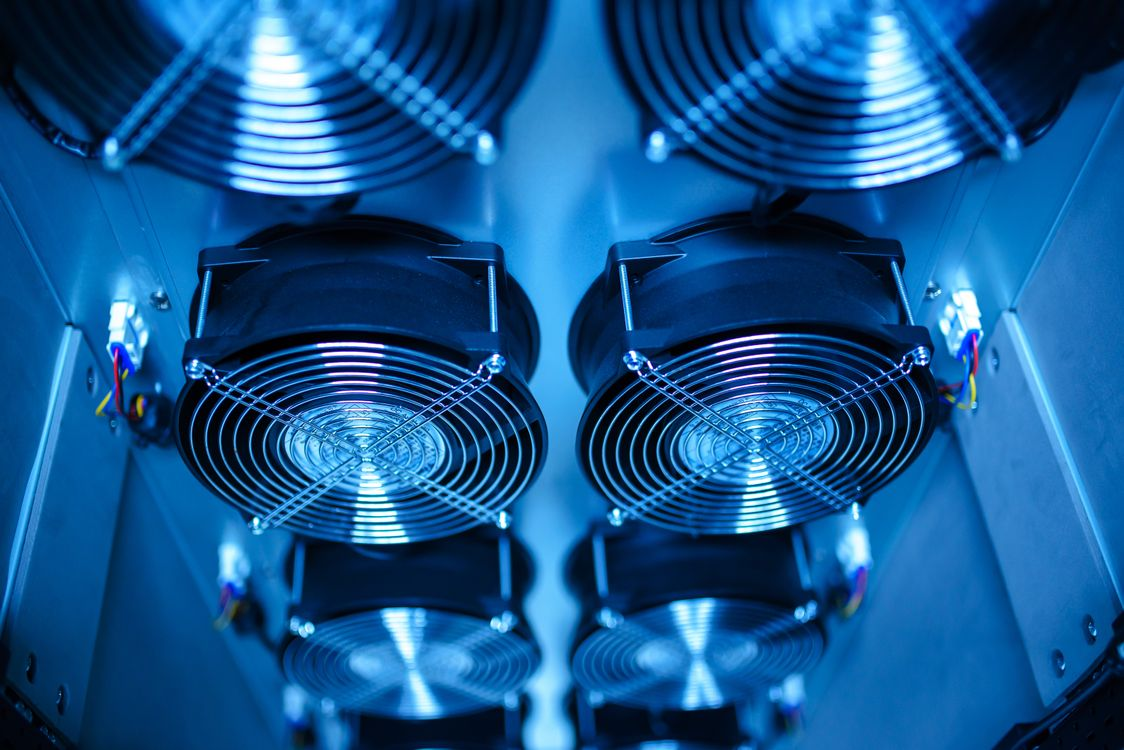
- Ziehl-Abegg manufactures fans, motors, and integrated controls used in data centre cooling and other industrial thermal management applications.
- The acquisition would expand ABB's cooling equipment portfolio as computing facilities place greater demands on electrical and mechanical infrastructure.
ABB has agreed to acquire German ventilation technology manufacturer Ziehl-Abegg at an enterprise value of $2.65bn, expanding its Motion business into equipment used across data centre cooling, commercial ventilation, and industrial thermal management systems.
The agreement, signed on 23 November, places an equity valuation of $2.22bn on the family-owned manufacturer. Completion is expected during the second half of 2027, subject to regulatory approvals and customary closing conditions.
Ziehl-Abegg manufactures electronically commutated (EC) fans, integrated electric motors, ventilation systems, and associated controls. Its products serve equipment manufacturers across industries including data centres, cleanrooms, medical technology, agriculture, and industrial processing.
ABB expects the business to generate approximately $1.4bn in revenue during 2026. Its operational earnings before interest, tax, and amortisation (EBITA) margin is forecast to be in the mid-single digits, with ABB targeting profitability broadly in line with its wider Motion business within three years of completing the transaction.
The acquisition also follows substantial investment by Ziehl-Abegg in its international manufacturing capacity. A €100m manufacturing, logistics, and research facility opened in the United States in 2024, followed by a separate €90m investment programme launched this year across Europe, North America, and Asia.
ABB intends to retain Ziehl-Abegg’s headquarters in Künzelsau, Germany. The company employs approximately 6,300 people internationally, including around 3,000 at its production facilities in southern Germany.
The expansion of computing infrastructure is contributing to demand for ventilation technology alongside growth in other industrial and commercial cooling markets. Increasing rack densities are changing the requirements placed on cooling equipment, particularly where facilities must accommodate several generations of computing hardware within the same mechanical infrastructure.
Cooling efficiency extends beyond refrigeration
Electronically commutated fans combine a motor, integrated electronic controls, and a fan assembly, enabling airflow to be adjusted according to operating requirements. Their use can reduce the need for separate motor control equipment while allowing cooling systems to respond to changes in thermal demand.
Within a data centre, fans can consume electricity continuously, including during periods when computing equipment is operating below its maximum capacity. Their selection and control strategy consequently influence the electricity required to maintain acceptable equipment temperatures throughout the facility’s operating life.
Under idealised fan affinity laws, power consumption varies approximately with the cube of rotational speed. Reducing fan speed by 20% could therefore reduce its power requirement by almost half under equivalent theoretical conditions, although actual savings depend on motor efficiency, system resistance, and the operating characteristics of the installation.
The benefits extend beyond reducing electricity consumption. Variable airflow can help facility engineers manage changes in thermal demand across equipment cabinets and mechanical systems without relying exclusively on fixed operating configurations.
Liquid cooling is changing where some of that airflow is required rather than eliminating fans from computing infrastructure. Direct-to-chip systems transfer heat into liquid circuits, but external dry coolers, air handling equipment, and residual air cooling within data halls can still depend on substantial fan installations.
Cooling equipment manufacturers must consequently coordinate the performance of fans, motors, heat exchangers, pumps, and controls across increasingly varied mechanical architectures.
Industrial supply chains adapt to computing demand
Ziehl-Abegg’s expertise in external rotor motors and ferrite magnet technology also complements ABB’s established motor and drive manufacturing capabilities.
Ferrite magnets can reduce dependence on rare earth materials in suitable motor designs, providing manufacturers with another option when assessing component availability and supply chain exposure. The appropriate motor architecture nevertheless depends on the equipment’s required performance, dimensions, and operating conditions.
Combining ventilation components with ABB’s broader electrical portfolio could enable equipment manufacturers to obtain more of their required technologies from a single supplier. Established customer relationships and distribution networks may also support the availability of engineering and maintenance services across different geographical markets.
Long-term equipment support is particularly important within critical cooling installations. Data centre operators may replace computing equipment several times during the operating life of a mechanical plant, requiring the associated cooling infrastructure to remain maintainable and capable of accommodating changing thermal loads.
The availability of compatible replacement motors, fans, and controls can influence whether equipment can be repaired during its expected operating life or requires more substantial replacement.
As investment in computing infrastructure increases, cooling equipment manufacturers are having to expand production while developing products capable of operating under more demanding electrical and thermal conditions. Those requirements extend from individual components to complete mechanical systems.
ABB’s proposed acquisition would increase its participation in that supply chain through a manufacturer already investing in production expansion. The transaction remains subject to approval, with the integration of the businesses and their respective product portfolios expected to follow completion in 2027.

