
Summary
- ABB will integrate digital models of switchgear, electrical distribution, and UPS systems into Nvidia Omniverse DSX.
- The work supports source-to-rack validation of AI data centre power systems before procurement and construction.
- AI rack densities are pushing design risk earlier into power, cooling, and prefabricated module planning.
ABB has expanded its collaboration with Nvidia by integrating digital models of its power infrastructure products into the Nvidia Omniverse DSX blueprint environment for AI data centre design.
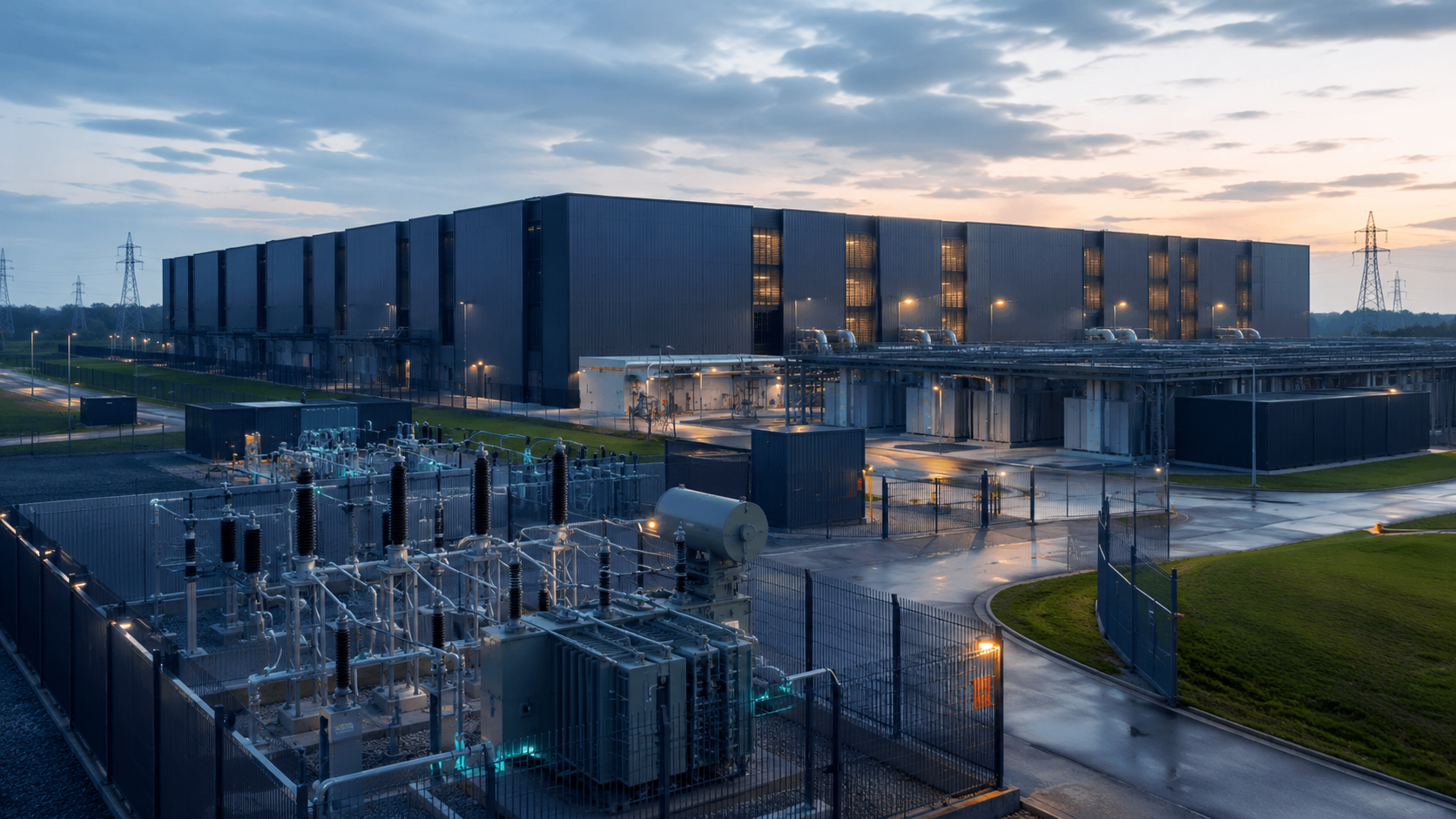
The integration will add ABB SimReady 3D digital assets for medium-voltage switchgear, electrical distribution equipment, and uninterruptible power supply systems. Engineers will be able to model and validate source-to-rack power distribution before ordering prefabricated infrastructure modules or committing to detailed construction.
ABB said the environment will allow electrical, thermal, and computing systems to be evaluated in a single digital twin. That joined-up design model reflects the direction of AI data centre delivery, where rack densities, power architecture, and liquid-cooling requirements are becoming too closely linked to treat as separate workstreams.
The latest work builds on an earlier ABB and Nvidia collaboration around 800V direct-current power architectures for next-generation AI data centres. Nvidia’s DSX framework is designed to support the design, simulation, build-out, and operation of AI factory infrastructure.
Design risk moves earlier
AI infrastructure is compressing the early design phase. Developers are being asked to deliver more power per rack, at faster speed, while dealing with long lead times for transformers, switchgear, UPS systems, chillers, and prefabricated electrical modules. When those supply chains are tight, late redesign can delay both energisation and revenue.
Digital-twin design is already familiar in critical infrastructure, but AI data centres give it a sharper role. The model has to do more than present a convincing visual environment. It has to support decisions on equipment selection, protection design, thermal load behaviour, modular interfaces, maintainability, commissioning, and failure response.
Source-to-rack modelling is valuable because the electrical chain is becoming more complex. Higher-density AI racks can push medium-voltage distribution closer to the load, make DC distribution more relevant, and require tighter co-ordination between electrical and mechanical systems. Cooling performance depends on compute load behaviour, while compute deployment depends on stable and resilient power.
For consulting engineers, MEP contractors, and operators, the practical test is whether the models reduce uncertainty in procurement and construction. A digital model that helps select switchgear, validate spatial interfaces, and test operating conditions can save time. A model that sits outside the delivery chain becomes another design artefact to manage.
ABB’s move also shows how critical power suppliers are moving upstream in the AI build cycle. Equipment supply alone is no longer enough when customers want validated reference architectures, modular delivery, and proof that electrical plant can support next-generation compute profiles. The commercial value shifts towards the design workflow that determines what gets built.

