
Summary
- ABB’s package combines a synchronous condenser, flywheel, starting system, cooling, auxiliaries, e-house, and optional noise enclosure.
- The system is designed to provide inertia and dynamic reactive power at the grid connection point.
- AI data centres are making voltage stability, frequency support, and grid approval part of the capacity delivery timetable.
ABB has launched a pre-engineered synchronous condenser package for AI data centres, targeting grid stability at the point where large compute loads connect to electricity networks.
The modular package combines a synchronous condenser, flywheel, starting system, lube-oil system, configurable cooling options, auxiliaries, an e-house, and an optional noise enclosure. ABB says the system is designed to provide instantaneous inertia and dynamic reactive power, helping stabilise voltage and frequency when large loads fluctuate.
Data centres and other power-intensive facilities are the target market. AI workloads place particular pressure on electrical systems because training and inference infrastructure can create high, fast-changing demand, especially where large GPU clusters operate as concentrated blocks of load.
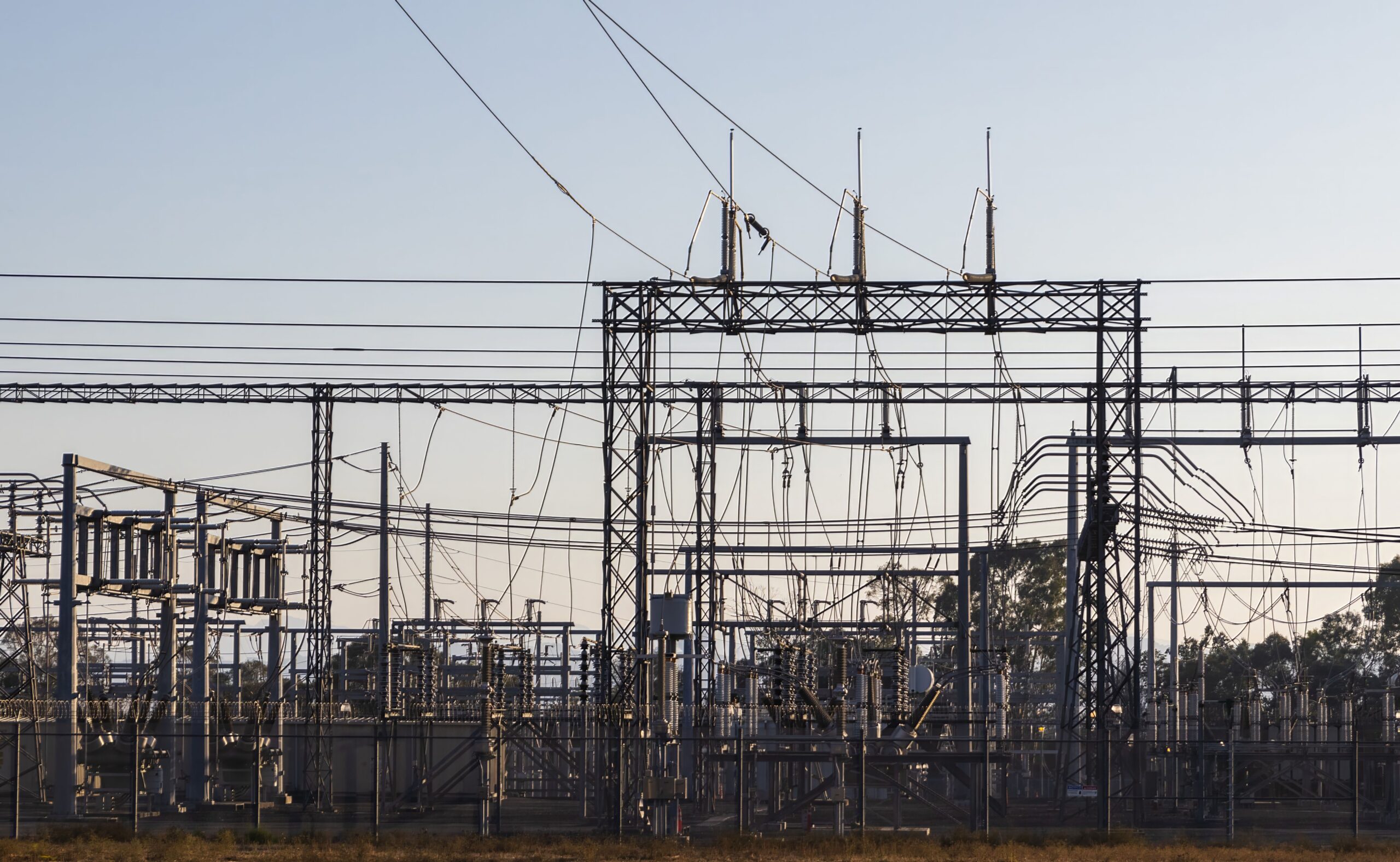
ABB is presenting the package as a way to simplify deployment, reduce on-site complexity, and address grid stability requirements earlier in project development. The system is intended to sit at the grid connection point rather than act as another component inside the IT power chain.
Grid approval becomes an engineering package
Data centre developers are facing a harder version of the power question. A site no longer becomes viable simply because a nominal capacity figure exists or a power-purchase agreement can be signed. Large loads must show how they will behave electrically, how they will affect voltage and frequency stability, and how they will respond to faults, switching events, and rapid changes in demand.
Synchronous condensers are one response to that challenge. They are rotating electrical machines that can provide inertia, short-circuit strength, and reactive power without generating active power. In the past, large synchronous generators supplied much of that stabilising behaviour across the power system. As grids add more inverter-based renewable generation and retire conventional plant, network operators increasingly need replacement sources of inertia and voltage support.
Data centres are arriving as that system shift accelerates. A large AI campus may connect to a grid already managing renewable intermittency, electrified transport, industrial electrification, heat pumps, battery projects, and constrained reinforcement timelines. Connection studies therefore become more demanding, particularly for sites seeking hundreds of megawatts.
Pre-engineered stability packages help turn part of the connection argument into a defined technical solution. A developer that can show voltage support, inertia, and reactive power needs have been engineered into the project from the start may reduce uncertainty in grid studies and connection negotiations. Faster approval is not guaranteed, but the technical basis for assessment becomes clearer.
The power plant boundary is shifting
ABB’s launch reflects the way data centres are starting to resemble energy infrastructure. Behind-the-meter generation, substations, batteries, grid-forming inverters, synchronous condensers, and advanced protection systems are becoming part of the development vocabulary. Facility design and energy-system design are no longer cleanly separated.
These systems bring capital cost, land take, acoustic considerations, maintenance requirements, and operational interfaces. They may also become necessary to unlock connection capacity or satisfy grid-code requirements. Developers that treat grid stability as a late-stage compliance issue risk discovering that the connection cannot be delivered on the assumed timetable.
Power quality also has a resilience dimension inside the fence. Voltage instability, poor frequency behaviour, or unexpected switching events can affect UPS systems, switchgear, transformers, cooling plant, and IT loads. As AI infrastructure increases electrical density, the tolerance for unstable conditions narrows. The financial value of uptime is rising as electrical systems become more complex.
ABB’s package will compete against other technologies and site-specific engineering approaches, including static compensators, STATCOMs, batteries with grid-forming controls, on-site generation, and hybrid systems. The right answer will depend on grid conditions, load profile, connection voltage, utility requirements, site size, and commercial appetite.
The direction is clear enough. AI data centres are not only asking grids for power; they are being asked to prove how they will behave as large, dynamic electrical assets. Grid stability is now part of the capacity delivery timetable, and suppliers that can convert abstract connection requirements into buildable packages are moving closer to the centre of data centre development.

