
Summary
- Utrecht University has lodged an open-ended damages claim with KPN after the NorthC Almere data centre fire.
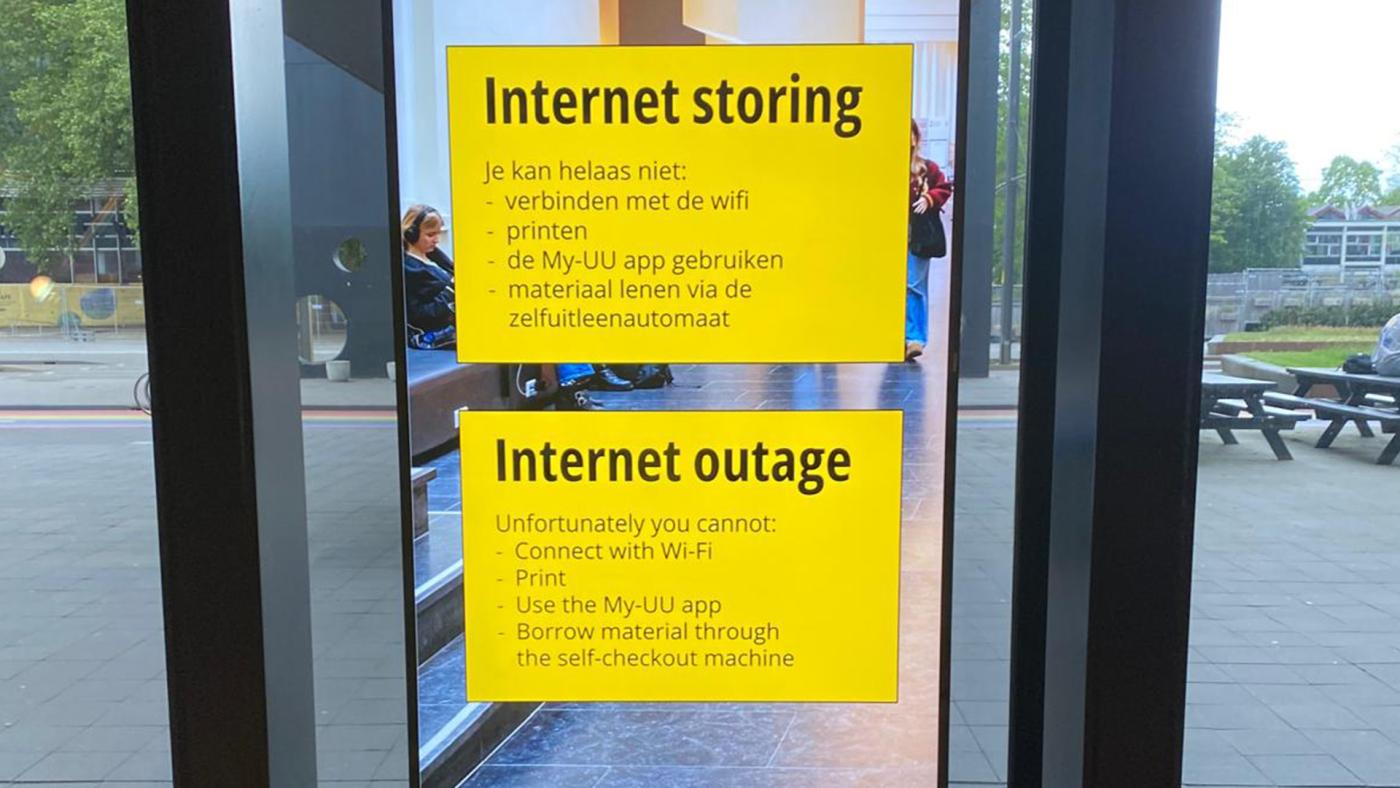
- The university says its systems were affected for more than a week, although no university data was lost.
- The case exposes the legal and operational complexity of resilience when customers buy data centre services through layered contracts.
Utrecht University has lodged an open-ended damages claim with KPN after a fire at NorthC’s Almere data centre disrupted the university’s IT systems for more than a week.
The university’s contract runs through KPN, which procures services from the NorthC facility in Almere on its behalf. That contract path explains why the claim has been directed at KPN rather than NorthC, even though the physical incident occurred inside the data centre.
The value of the claim is still being calculated. Utrecht University has said the process may account for extra staff hours, additional software and hardware, and costs linked to systems being unavailable during the disruption.
A fire in the technical layer
The fire broke out on 7 May at NorthC’s data centre on Rondebeltweg in Almere. NorthC said the building was evacuated, safety protocols were activated, emergency services attended, and no injuries were known. The fire was located at the rear of the building, where technical facilities are housed.
NorthC later activated temporary, redundant power supply and cooling, allowing customers’ ICT systems to be restarted in phases under controlled conditions. Utrecht University’s recovery updates described problems with networks, applications, and websites, with effects across staff, students, teaching, and research.
Critical systems were working again by 19 May, according to the university, although some disruption could continue as services restarted. No university data was lost. The claim now moves the incident beyond restoration and into the commercial and legal consequences of service interruption.
Data centre incidents are often judged by whether IT hardware was damaged, whether data was lost, and how quickly systems were brought back. The Almere case adds a wider measure: institutional downtime, exam uncertainty, manual workarounds, staff pressure, temporary recovery costs, and the accountability chain between customer, service provider, and facility operator.
Layered contracts can blur operational control
Many organisations do not contract directly with the facility where their systems ultimately sit. Services may pass through telecoms providers, managed service providers, cloud platforms, resellers, or integration partners. The physical incident happens in one place, while responsibility is distributed across several contractual layers.
That structure can simplify procurement and operations for the customer, especially where a managed service is preferred over a direct colocation relationship. During an incident, the same structure can complicate communication, liability, service-level enforcement, and recovery responsibility.
Power restoration, cooling reinstatement, safe access, temporary generation, customer equipment checks, network routing, and application recovery may sit with different parties. A customer may experience one outage, but the recovery path can depend on a chain of suppliers working through separate obligations and escalation routes.
The university’s claim will therefore be watched for more than its eventual settlement value. It may show how customers quantify disruption after a data centre event and how providers respond when the facility layer, network services, managed infrastructure, and user-facing applications are intertwined.
Resilience has to survive contact with recovery
The incident also exposes the gap between resilience design and recovery under awkward real-world conditions. Backup and failover arrangements are normally designed around expected failure modes. Fire in technical facilities can create messier conditions: access may be restricted, emergency power may be damaged, cooling may need temporary support, and restarts may have to occur in phases.
Redundancy is only useful when the whole chain can operate through the incident. A data hall may be untouched, yet services can remain unavailable if power infrastructure, controls, cooling, or access procedures are compromised. Customers then discover whether their continuity plans reflect the physical dependency beneath the service.
Across Europe, critical infrastructure rules are pushing organisations towards stronger evidence of resilience. Data centres, cloud providers, telecoms networks, universities, healthcare systems, and public authorities are increasingly joined by shared digital dependencies. A facility-level event can affect services that were not publicly understood as being connected to that site.
Almere shows why resilience cannot be reduced to a certificate, uptime tier, or supplier promise. It sits across power rooms, cooling systems, fire compartments, monitoring, access control, backup topology, communications, contracts, and rehearsal. Each layer can perform well in isolation and still fail to protect the customer from disruption if the operating chain is weak.
For NorthC, KPN, and Utrecht University, the immediate question is damage and responsibility. For the wider market, the case sharpens the commercial side of operational resilience. Customers will look harder at where workloads sit, who controls failover, what the service contract actually guarantees, and whether recovery procedures have been tested against facility-level failure rather than routine IT incidents.
The fire has moved from an emergency response into a contractual reckoning. Its final cost will depend not only on what burned, but on what stopped, who was responsible for restoring it, and whether the promised resilience chain held together when the power layer failed.

