
Summary
- Amazon has signed a 600MW PPA with Skyborn Renewables for the Gennaker offshore wind farm in the German Baltic Sea.
- Gennaker is planned at up to 976.5MW, with 63 15MW turbines and expected operation towards the end of 2028.
- The deal gives Skyborn revenue certainty while tying hyperscale load growth to long-term renewable power procurement.
Amazon has signed a 600MW power purchase agreement with Skyborn Renewables for electricity from the Gennaker offshore wind farm in the German Baltic Sea.
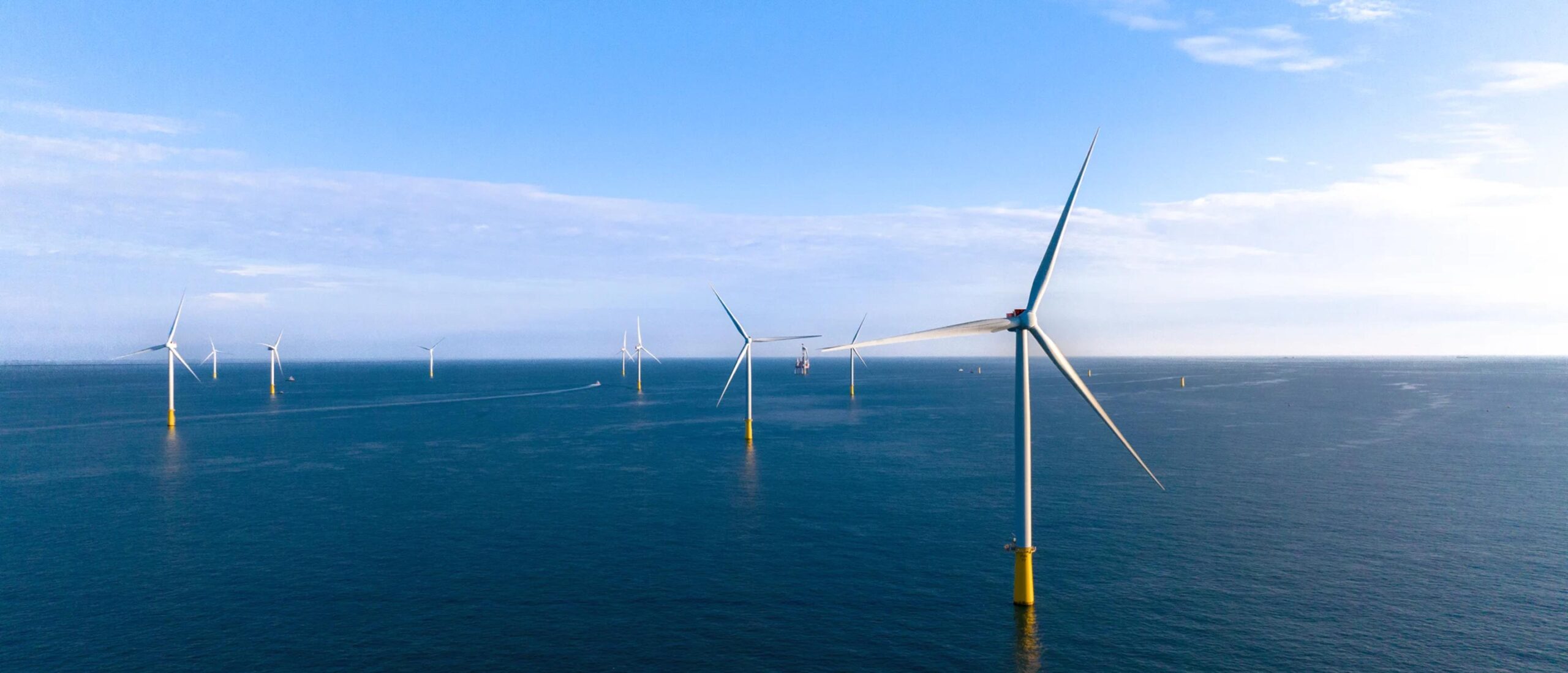
The agreement covers about 61% of Gennaker’s planned capacity and has been described by Skyborn as the largest single PPA signed in Germany. The offshore wind project is planned north of the Fischland-Darß-Zingst peninsula in Mecklenburg-Western Pomerania, with a total capacity of up to 976.5MW.
Gennaker is expected to use 63 Siemens Gamesa 15MW turbines and become operational towards the end of 2028, subject to financial close and construction. Skyborn secured state planning approval for the project in December 2025 and expects construction to begin after financial close in summer 2026.
Power procurement follows the load
The scale of the PPA pushes the deal beyond conventional corporate renewables buying. Amazon’s data centre and cloud presence in Germany is expanding around Frankfurt and the wider Rhine-Main market, where new digital infrastructure is being shaped by grid access, land pressure, permitting, and the power demands of AI workloads.
A long-term PPA does not deliver electricity directly into a specific data hall in the way a private wire connection or onsite generation plant might. It can, however, help bring new generation into the market by giving a developer clearer revenue certainty. For capital-intensive offshore wind, that certainty can be central to financing, procurement, and construction sequencing.
Skyborn said Gennaker will add up to 976.5MW of new offshore wind capacity to Germany’s electricity system and generate enough power annually for the equivalent of more than one million German households. The project is also expected to involve €3bn of investment in Mecklenburg-Western Pomerania, with monopile foundations manufactured by EEW Special Pipe Constructions in Rostock.
Those regional supply-chain details place the agreement inside a wider infrastructure economy. A hyperscale buyer is helping to underwrite offshore generation; a German industrial manufacturer is tied into foundation supply; and a Baltic Sea energy project is being pulled closer to the electricity needs of cloud and AI infrastructure.
Germany’s capacity problem is local as well as national
Germany’s data centre market has the demand profile that most European regions want and the power constraints they fear. Frankfurt remains one of Europe’s main interconnection and enterprise cloud hubs, yet large new loads must navigate grid queues, substation availability, planning scrutiny, and competition with other industrial users.
Corporate PPAs can support decarbonisation claims and help finance new renewable assets, but they do not remove the physical work of connecting data centres. A new campus still needs transformers, switchgear, grid capacity, backup generation, protection systems, cooling plant, and a commissioning path that lines up with customer demand.
Offshore wind also has its own delivery risks. Turbine supply, installation vessels, offshore substations, cables, port capacity, permitting conditions, and weather windows can all affect project timelines. A 2028 generation date sits on a different rhythm from data centre leasing and fit-out cycles, particularly where AI customers want capacity faster than traditional grid and generation projects can be delivered.
Amazon’s PPA therefore solves one part of the energy equation while leaving several others in place. It supports new renewable generation at scale, but local grid reinforcement and power delivery around data centre clusters remain separate engineering and policy tasks.
PPAs become part of buildability
Data centre development in Europe is increasingly being judged by whether announced capacity can be powered, not only by how many megawatts appear in investor decks. Planning authorities, grid companies, customers, and investors are asking harder questions about connection timelines, load behaviour, emissions evidence, and resilience during system stress.
Large PPAs form one route through that pressure. They can support new renewable capacity, stabilise long-term procurement, and show that data centre growth is not detached from energy-system investment. They can also become a competitive tool where customers and regulators scrutinise the carbon footprint of AI and cloud workloads.
The Gennaker deal is significant because of its size, its location, and its connection to new generation rather than merely existing certificates. It also reflects a deeper shift in the role of hyperscale buyers. Cloud operators are no longer only consuming electricity from markets built by others; they are increasingly shaping which generation projects are financeable.
That influence will draw closer political scrutiny as large data centre loads grow. If hyperscalers help unlock new clean generation, they strengthen their case for expansion. If local grids remain constrained while corporate procurement sits elsewhere on the system, the tension between national energy accounting and local connection reality will remain.
Amazon’s 600MW agreement gives Skyborn a major offtake anchor for Gennaker and adds a substantial German renewable procurement instrument to the cloud company’s European portfolio. The next test is physical delivery: offshore construction, transmission integration, and whether Germany’s data centre regions can convert power procurement into usable capacity on the ground.

