
Summary
- Bitzero says its Nordic pipeline includes a 110MW Norway campus and Finnish pre design work for up to 520MW.
- The Norway site includes transformer foundations, substation expansion, Siemens GIS switchgear, and a proposed 15 year lease.
- The disclosure points to interconnection, long lead equipment, customer contracts, and construction execution as the main delivery tests.
Bitzero has used its first week of Nasdaq trading to set out a Nordic AI and high performance computing pipeline built around sites in Norway and Finland.
The company says it owns four data centre locations across North America and the Nordics, with its main European projects in Namsskogan, Norway, and Kokemäki, Finland. Its case is based on renewable power, cooler climates, competitive electricity pricing, and rising demand for AI and HPC deployments.
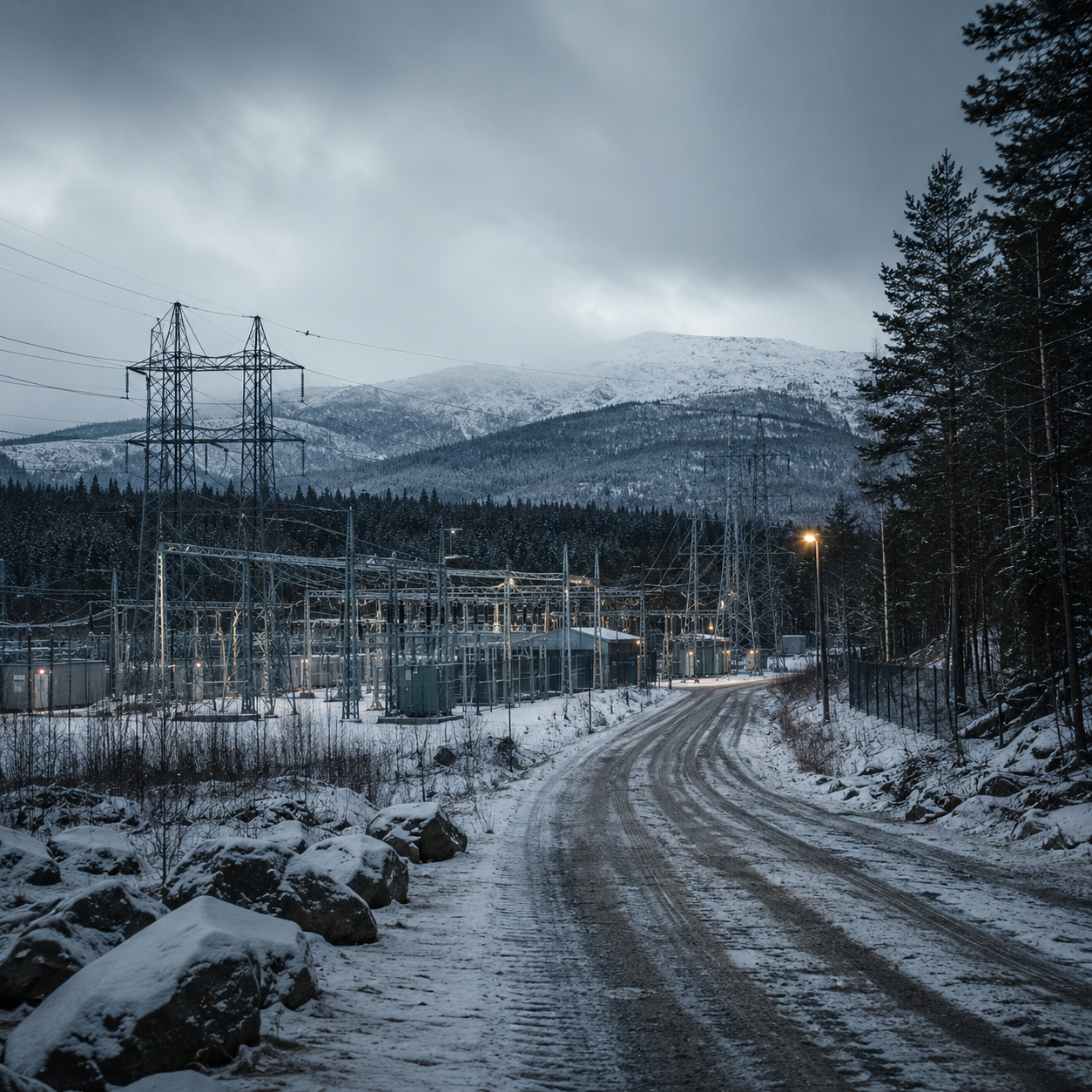
At Namsskogan, Bitzero says construction is under way on foundations for two new 60MW transformers due for delivery in September. The regional grid operator is also expanding its substation to accommodate new Siemens GIS switchgear, supporting the next phase of power infrastructure at the 110MW campus.
Nordic sites still require heavy electrical work
The Nordic data centre market is often described in terms of clean power and cool weather, but Bitzero’s update points to the practical infrastructure behind those advantages. Transformers, switchgear, substation works, grid interconnection, customer agreements, and construction sequencing are what turn a site into usable AI capacity.
Cooler climates can reduce some cooling demand, and renewable electricity can support a lower emissions profile, but high load AI facilities still need resilient electrical distribution, thermal design, network routes, controls, maintenance, and site operations. The climate helps only if the rest of the facility works reliably.
Bitzero says it has signed a binding letter agreement with OneQode Networks for a 15 year lease of the full 110MW capacity at Namsskogan. The proposed lease would generate about US$2.6bn in total revenue over its lifetime, excluding annual escalation adjustments, power costs, and phased deployment timing.
The company has also set out the remaining gap between agreement and contract. A definitive lease had not been executed at the date of the release, and completion remains subject to due diligence, technical specifications, and credit support arrangements. Those conditions are material in a market where many announced megawatts never become operating capacity.
Finland offers a larger option
In Finland, Bitzero says it has completed engineering due diligence for its Kokemäki campus with Red Engineering Design. The report supports pre design work for up to 520MW, with an initial phase of up to 80MW targeted for service delivery in 2027.
The company says the site has an identified 400kV high voltage connection point and municipal support. It is being developed towards longer term planned capacity of 600MW to 1GW, which would make it one of Europe’s larger proposed AI infrastructure sites if the full build is delivered.
Those figures need to be read against the delivery requirements. A 400kV connection point is valuable, but energisation still depends on grid studies, permits, connection agreements, substation build, customer phasing, equipment supply, and capital.
Bitzero’s update reflects the wider movement of AI capacity beyond the main Frankfurt, London, Amsterdam, Paris, and Dublin markets. Developers and compute buyers are looking at regions with land, power, and political support, although those regions still need deep fibre, operational talent, resilience, and customers willing to place workloads away from traditional hubs.
The most useful details in the update are not the largest capacity figures. They are the transformer works, GIS switchgear, foundations, due diligence, and lease conditions, because those are the points where a development plan becomes physical and contractual.

