
Summary
- Green Horizon has received zoning and planning approval for Norway 1, a 36MW data centre in southwest Norway.
- The project is designed for AI, HPC, and GPU deployments, with liquid cooling and excess-heat reuse.
- Norway’s data centre pitch is shifting from cheap renewable power alone towards integrated power, cooling, and heat-use models.
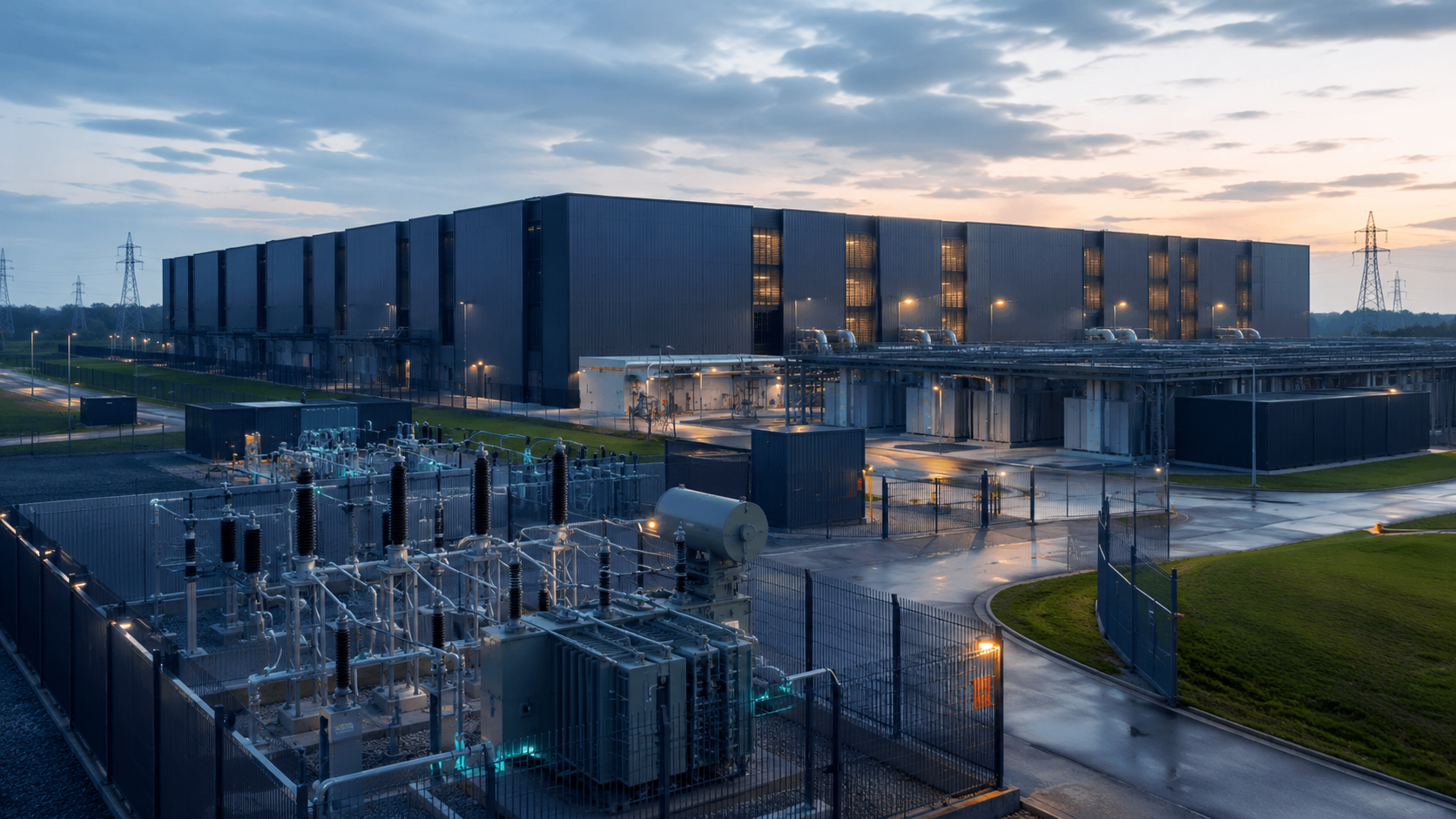
Green Horizon has secured zoning and planning approval for Norway 1, a 36MW data centre near Stavanger designed for AI, high-performance computing, and GPU-heavy deployments.
The project is moving through detailed electrical and mechanical design, with construction expected to begin later in 2026 and capacity due online in 2027. Norway 1 is the first phase of Green Horizon’s wider southwest Norway platform, where the company says it has secured further sites for customer demand.
The facility is being designed around hydropower-backed electricity, high power density, liquid cooling, and heat reuse. Green Horizon’s published site material refers to symbiotic partnerships and local heat-use arrangements, including greenhouse integration and the supply of excess heat to nearby commercial greenhouse operations.
Norway 1 is smaller than the largest hyperscale campus proposals now moving across Europe. Its sharper point is the infrastructure model: renewable power, planning consent, liquid-cooled density, and local heat offtake combined in a Nordic market where sustainability claims are increasingly tested against practical energy-system integration.
Norway’s data centre offer is changing
Norway has long appealed to data centre investors through renewable power, cool climate, land availability, and low electricity-carbon intensity. Those advantages remain powerful, particularly for workloads that can operate at greater distance from Europe’s largest connectivity hubs. AI training, batch compute, and research workloads can often tolerate a different latency profile from financial trading, enterprise colocation, or metro cloud services.
Renewable electricity alone is no longer enough to carry the market. Data centres now compete with industrial electrification, hydrogen, batteries, and other power-intensive sectors. Norwegian authorities have also sharpened their interest in data centres through security, electronic communications, and national-interest lenses, which adds policy weight to site selection and operational transparency.
Norway 1 fits that more demanding context because heat reuse is built into the site narrative from the start. Nordic operators have often discussed waste heat as a natural advantage, but delivery depends on temperature levels, distance to heat users, commercial agreements, and year-round demand. Greenhouse use can provide a practical route because heat demand can sit close to the facility, reducing the cost and complexity of long-distance heat networks.
Liquid cooling may strengthen that case. Direct-to-chip and other liquid systems can produce higher-grade heat than traditional air-cooled environments, making reuse technically more attractive. The challenge is to design the whole chain around that goal: rack density, coolant temperatures, heat exchangers, controls, redundancy, maintenance, and the contractual relationship with the heat user.
AI density meets local infrastructure
Green Horizon’s focus on AI, HPC, and GPU deployments reflects a wider change in facility design. High-density workloads require more than larger electrical feeds. They affect floor loading, rack layout, distribution boards, coolant routing, monitoring, fire strategy, maintenance access, and the sequencing of IT hardware refresh cycles.
A 36MW site can be a useful scale for this kind of integration. Smaller AI-focused facilities may be able to tie power, cooling, and heat reuse together more tightly than sprawling campuses with multiple phases and changing customer requirements. They can also become more closely connected to local industrial or agricultural users that can absorb waste heat.
Planning approval does not remove delivery risk. Detailed design, equipment procurement, grid connection delivery, customer contracting, commissioning, and operational readiness still sit ahead of the project. Liquid cooling and heat reuse also create interfaces that must be managed throughout the facility’s life rather than solved once during design.
Norway 1 shows how Nordic data centre development is moving beyond the old formula of cheap, clean power and cool ambient temperatures. Stronger projects now need to link electricity, cooling, density, heat offtake, and local planning into a coherent operating model. Smaller than the gigawatt-scale AI campus narratives elsewhere in Europe, Norway 1 may become a more useful test of whether high-density compute can work as part of a local energy system rather than as an isolated power sink.

