
Summary
- Ark's four-building, 7.3-hectare Bushey proposal returns to Hertsmere's planning committee on 26 November.
- Revised proposals introduce pale cladding, weekday generator testing restrictions and additional community contributions.
- Officers continue to recommend conditional approval, but water supply, noise and local environmental effects remain under scrutiny.
Ark Data Centres‘ proposed campus near Watford will return to Hertsmere Borough Council’s Planning Committee on 26 November, following revisions to building appearance, generator testing arrangements and community contributions after councillors deferred a decision earlier this month.
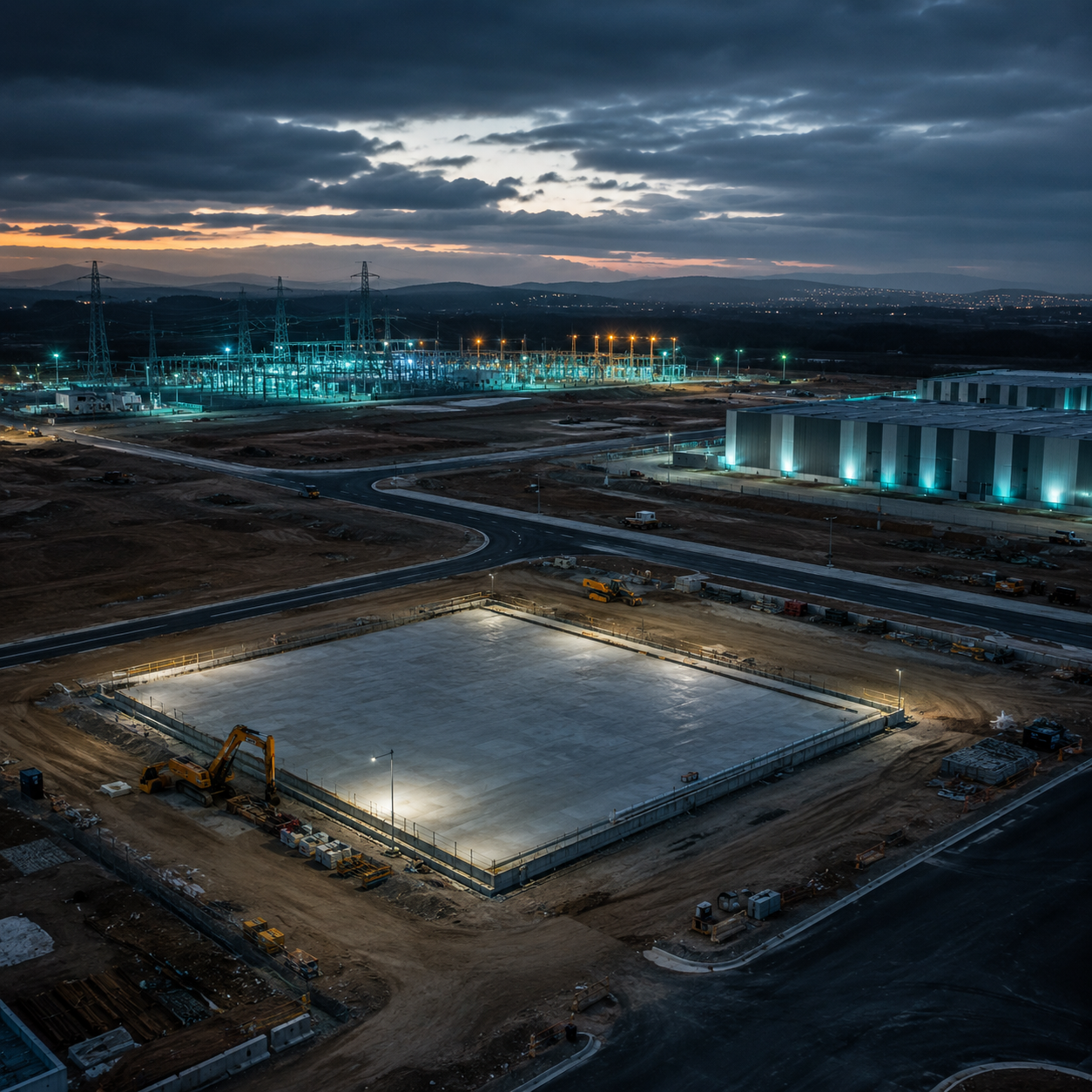
The application, submitted by Ark Estates 5 Ltd under reference 25/1781/FUL, seeks permission to redevelop the former Mercure Hotel site at Tylers Way in Bushey into a four-building data centre campus.
The proposed development occupies approximately 7.3 hectares near the A41 and Sandy Lane, with buildings reaching up to 36.25 metres in height. Supporting infrastructure includes electricity and water systems, access arrangements, landscaping and operational plant.
Councillors deferred the application on 5 November, raising concerns about water supply, the scale and appearance of the buildings, and the contributions the developer would make to the surrounding community.
A revised report accompanying the 26 November committee agenda addresses those matters while retaining the principal scale of the development. Council officers continue to recommend approval, subject to the relevant planning conditions and obligations.
The amended drawings introduce white and pale blue cladding to upper sections of the buildings, intended to reduce their apparent visual bulk. The buildings’ height and number of floors remain unchanged.
Officers have indicated that more substantial reductions, including removing or setting back floors, would materially alter the proposed scheme rather than amounting to a limited design adjustment.
The project has been associated with approximately £2.5bn of investment, but permission remains outstanding. The revised plans do not establish that the site can proceed to construction or that its proposed computing capacity has been commissioned.
Generator testing and noise receive new conditions
A proposed planning condition would restrict routine testing of backup generators to weekdays between 8am and 8pm, addressing concerns about the effects of the equipment on neighbouring properties.
Backup generators are commonly installed to support critical electrical loads during interruptions to normal supply. Their operational role requires testing and maintenance so that equipment can be relied upon when needed.
Testing can nevertheless produce noise and exhaust emissions, with the effects depending on engine specifications, acoustic treatment, operating duration and the location of nearby receptors.
The amended documentation describes routine testing lasting approximately one hour each quarter, alongside an annual four-hour test. Across the site, testing could amount to approximately 126 hours annually under the worst-case assumptions considered.
Noise assessments identify predicted changes at several neighbouring locations. Cooling plant could increase night-time levels by approximately two to three decibels above background at two of the six locations assessed.
Generator testing was also assessed as producing a greater change at the Sandy Lane traveller site, where the predicted increase was approximately seven decibels.
Those figures describe modelled effects under the assumptions used in the assessment. Actual operating noise will depend on the installed equipment, mitigation and operating arrangements.
Restricting routine testing hours may reduce disturbance during more sensitive periods, although it does not remove the need for suitable acoustic design or ongoing compliance monitoring.
Any final condition must also distinguish routine testing from emergency operation, since equipment intended to support critical loads may need to operate during an unexpected electricity interruption.
Water supply and community obligations remain contested
Water availability was among the principal concerns raised at the earlier committee meeting. The developer has provided further information about the intended cooling arrangements and estimated water consumption.
Ark’s submitted estimates suggest annual water use would be substantially lower than that of the former hotel, with consumption also compared against the requirements of fewer than 90 homes.
These are applicant-provided projections rather than measurements from an operating facility. Actual demand will depend on the installed cooling equipment, occupancy and operating conditions.
A proposed condition would impose a limit on the development’s water consumption, providing a planning control distinct from the arrangements governing the water supplier’s infrastructure.
The availability of local supply and the technical capacity of the water network remain separate from the amount of water a completed facility is expected to consume.
Changes to the Section 106 package introduce further proposed contributions for landscaping, local employment, community projects, carbon offsetting and air quality monitoring.
The package also includes a study examining whether recovered heat from the data centre could support a local heat network.
That study does not establish that a district heating system will be constructed. Delivering useful heat would require suitable temperatures, distribution infrastructure, customers and commercial arrangements.
The applicant has proposed a steering group involving councillors and Ark to oversee some community expenditure. Financial amounts remain subject to negotiation and are expected to be presented during the committee’s consideration.
Visual effects remain under assessment as well. The submitted daylight study identified 14 neighbouring windows with more substantial reductions in available light, alongside three with modest reductions and 35 assessed as unaffected.
Officers have assigned moderate weight to the identified daylight harm, which must be considered alongside other planning factors when determining the application.
The amended proposals have been subject to renewed consultation. Officers recommend proceeding with approval if that process produces no new material issues requiring further consideration.
Hertsmere’s Planning Committee is scheduled to meet at 6pm on 26 November. Until a decision is reached, the revised building design, operating conditions and proposed contributions remain elements of an undetermined application.

